



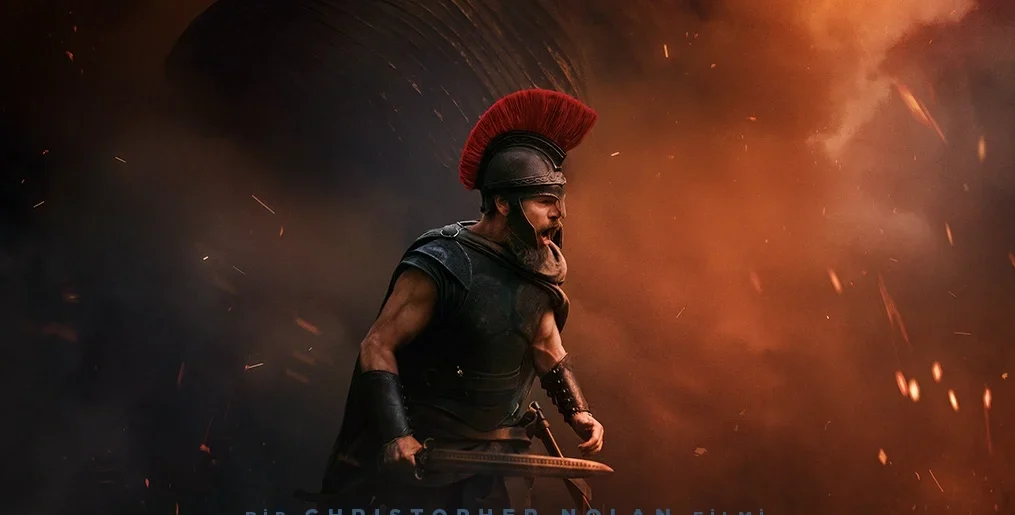
According to research from Hub Intel, cinema continues to play a significant cultural role despite the growing dominance of streaming, gaming and the creator economy. Cinema may no longer be the biggest entertainment business, but few mediums can still turn a release into a shared cultural event quite like film.
The global theatrical box office remains significantly smaller than industries such as television, video games, publishing and the creator economy. Yet box-office performance alone does not explain cinema’s place in popular culture. Movies continue to generate conversation, create collective experiences and amplify intellectual property across different corners of the entertainment ecosystem.
So why does film continue to hold such cultural weight in an increasingly fragmented media landscape?
Why Does Opening Weekend Still Matter?
One of cinema’s greatest strengths is its ability to create urgency.
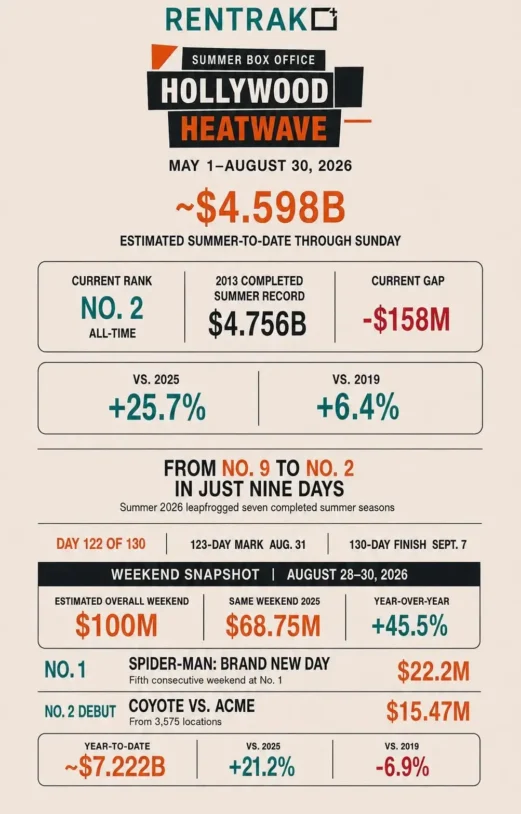
Streaming has made entertainment increasingly flexible: audiences can watch a series whenever and wherever they want. Theatrical releases, however, still operate around specific moments. Opening weekends can become events in themselves, creating a sense that audiences need to participate in the conversation immediately.
Recent phenomena such as Barbenheimer demonstrated how two theatrical releases could extend far beyond ticket sales and become part of a wider cultural conversation. The same dynamic continues to give major films a visibility that is difficult to reproduce through streaming alone.
Paul Dergarabedian, head of marketplace trends at Rentrak, argues that the theatrical experience has an impact far beyond the size of the box-office business itself. Watching a film in a cinema means experiencing it collectively, surrounded by other viewers, which can give the moment greater emotional and cultural weight.
There is also another important difference: box-office success and failure are highly visible.
The commercial performance of theatrical films becomes entertainment news in its own right. Opening-weekend numbers, records and unexpected hits can generate headlines and discussion outside traditional film circles.
Streaming films rarely operate with the same public scoreboard. As entertainment analyst Entertainment Strategy Guy has argued, many streaming titles face another problem altogether: rather than becoming clear hits or failures, they simply disappear into anonymity.
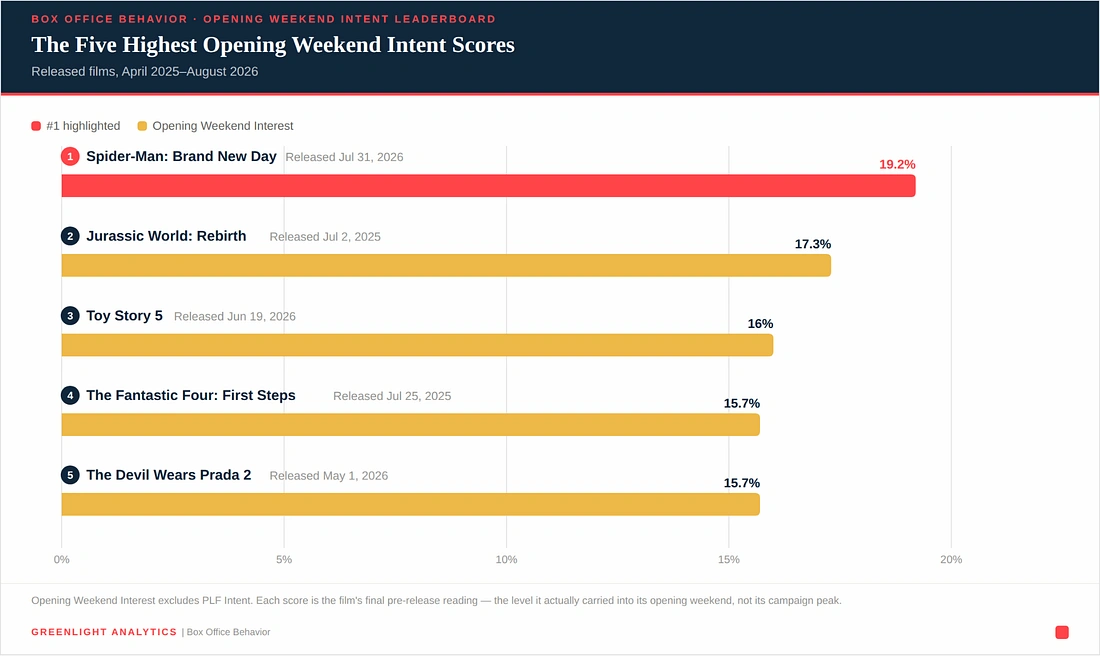
How Does Cinema Turn Existing IP Into Global Events?
Film’s influence increasingly works in both directions.
Historically, movies created franchises that later expanded into television, publishing, games, merchandise and other media. Star Wars remains one of the most obvious examples, growing from a theatrical franchise into an enormous cross-platform entertainment ecosystem.
Today, however, intellectual property increasingly travels in the opposite direction.
Films are frequently adapted from video games, books, comics, social-media phenomena and other existing communities. Cinema may no longer be the place where a cultural property begins, but it can still become the platform that pushes that property into the mainstream.
That effect can be seen across several recent releases.
Following the 2025 release of A Minecraft Movie, the wider Minecraft ecosystem reportedly recorded increases in console and in-app sales as well as active players.
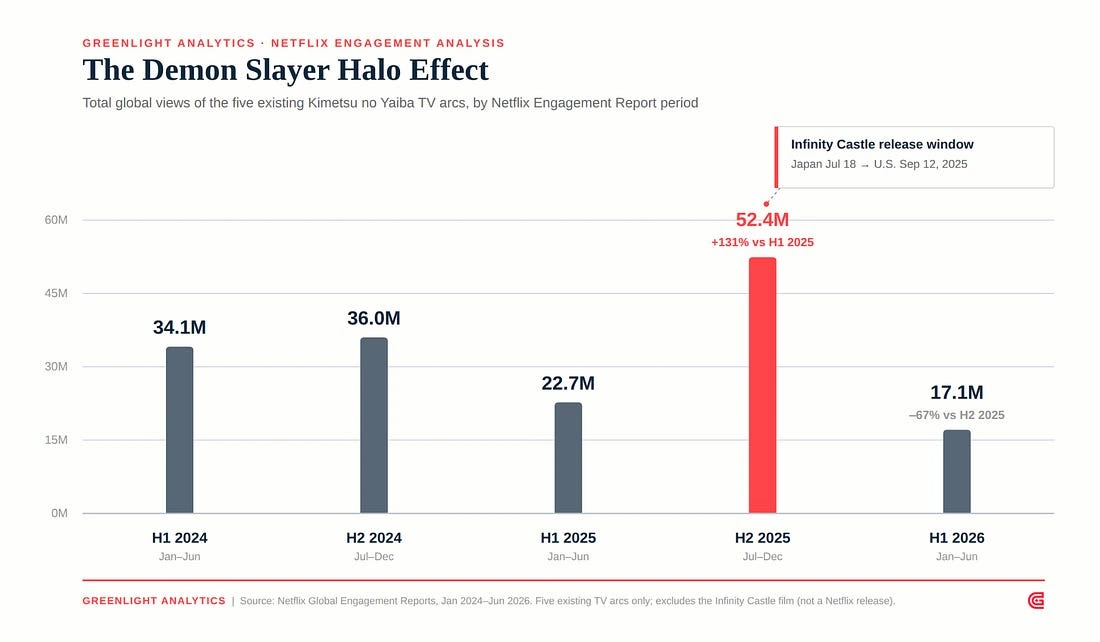
Similarly, after Demon Slayer: Infinity Castle opened in Japan in July 2025 and later in the United States, global Netflix viewing of the Demon Slayer anime series rose sharply during the second half of the year. Views increased by 131%, while viewing hours climbed 133% compared with the first six months of 2025.
The theatrical release of Wicked produced another form of spillover. One month after the film reached cinemas, the Broadway production became the first show in history to gross $5 million in a single week.
The pattern suggests that theatrical success can generate a “halo effect” around the wider franchise, pushing audiences back toward the original game, series, stage production or source material.
Is Social Media Replacing Cinema as Culture’s Starting Point?
Cinema’s position has nevertheless changed.
YouTube, TikTok, Instagram, podcasts, Roblox, Webtoon and Discord now allow cultural communities to develop before Hollywood becomes involved. With billions of people using social platforms around the world, entertainment trends can emerge from almost anywhere.
Michael D’Oliveiro, author of The Streaming Media Guide, argues that social media and the gaming-focused creator economy have increasingly become the primary engines of culture.
That does not necessarily mean film has lost its influence. Instead, its role may be shifting.
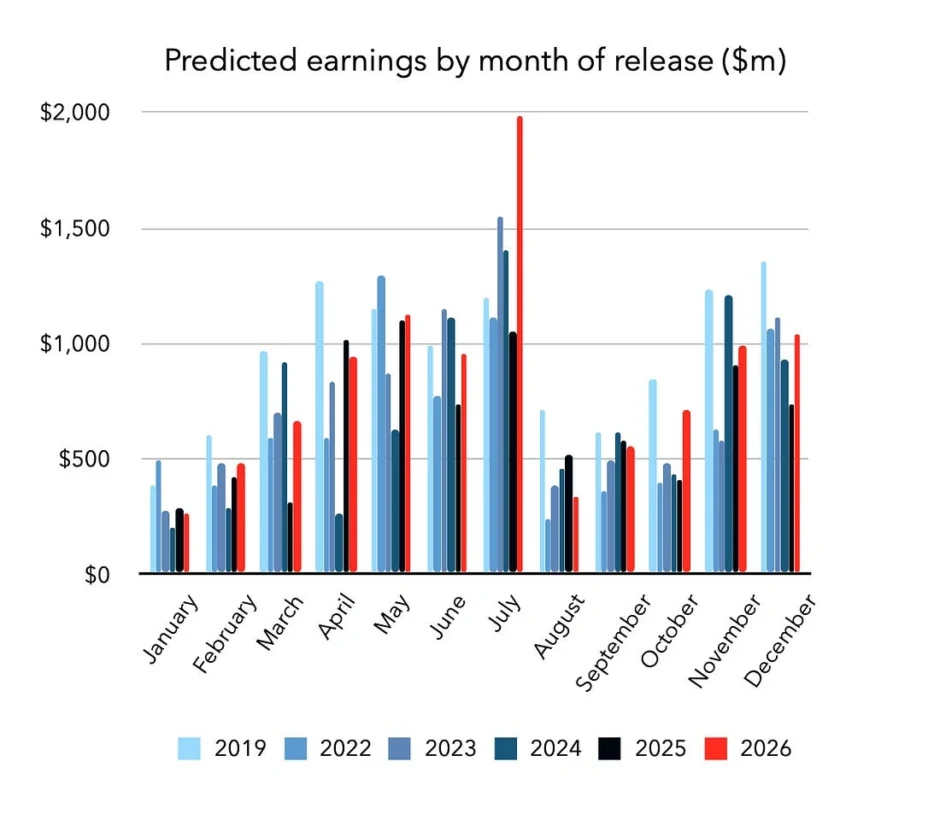
Rather than always creating the next cultural phenomenon, cinema increasingly acts as an amplifier. A property might begin as a game, online community, social-media trend or niche fandom before a theatrical adaptation introduces it to a much broader audience.
Bruce Nash, founder of box-office analysis platform The Numbers, has similarly noted that audiences are increasingly turning online fandom into physical participation. Communities that first develop around content consumed on phones or computers can later gather in cinemas to experience that interest collectively.
Why Does Cinema Still Matter in a Fragmented Entertainment World?
Entertainment culture is now more fragmented than ever. Audiences move between streaming platforms, social networks, games, podcasts, books and online communities, often building highly individualized media habits.
That fragmentation may actually make cinema’s ability to create shared moments more valuable.
Film is no longer necessarily entertainment’s dominant economic force, nor is it always the place where major intellectual property originates. But it remains one of the most effective ways of transforming niche enthusiasm into mainstream attention.
Stories today can begin almost anywhere.
Cinema’s enduring power lies in its ability to make them feel bigger.