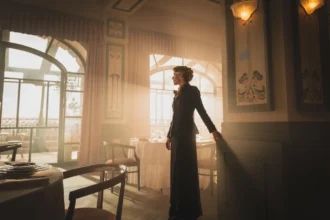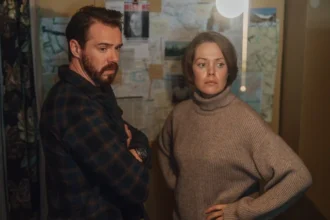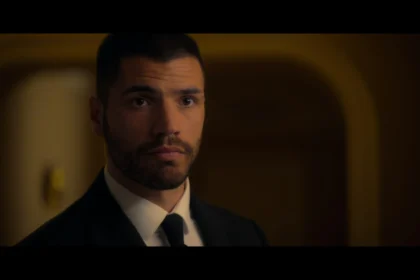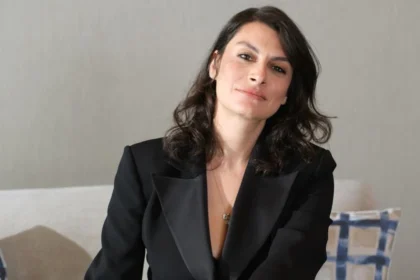




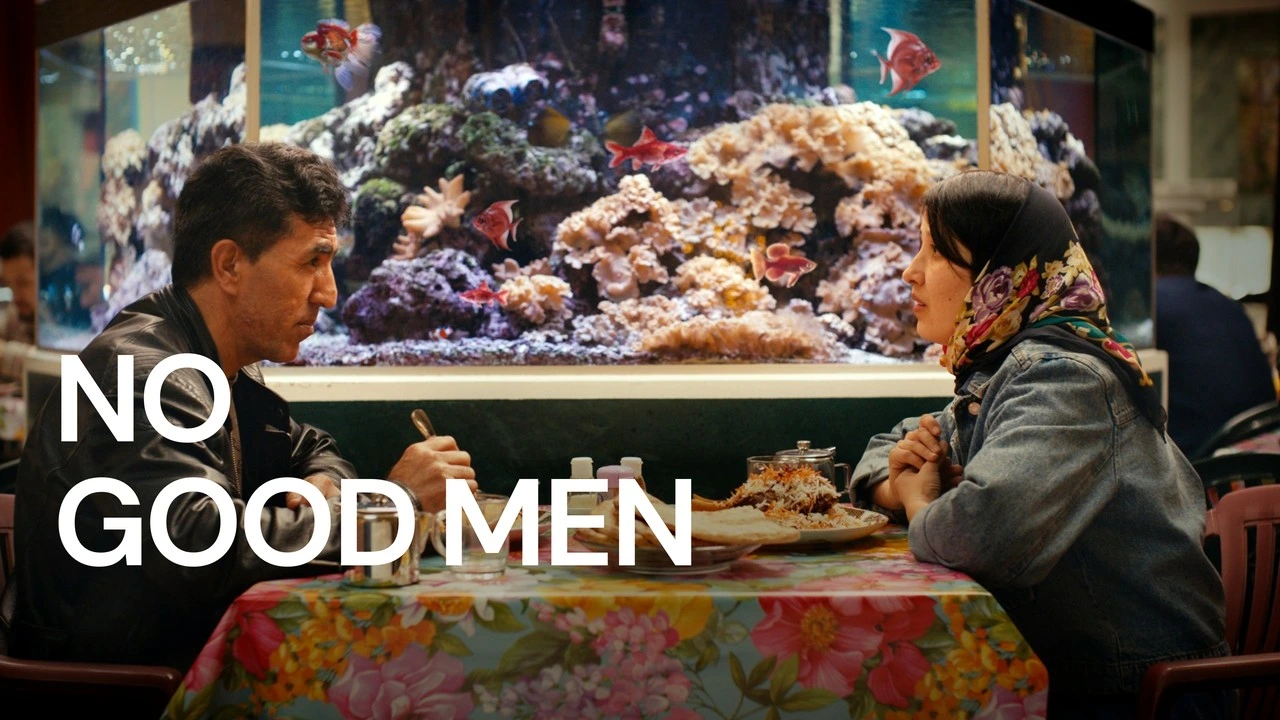
Eda Akça explores No Good Men, available on MUBI.
A single question asked in a street interview in Afghanistan stays in your mind for two hours: “Are there any good men?” Having its world premiere as the opening film of the 76th Berlin International Film Festival, No Good Men is a film about how love can sometimes be as political as war.
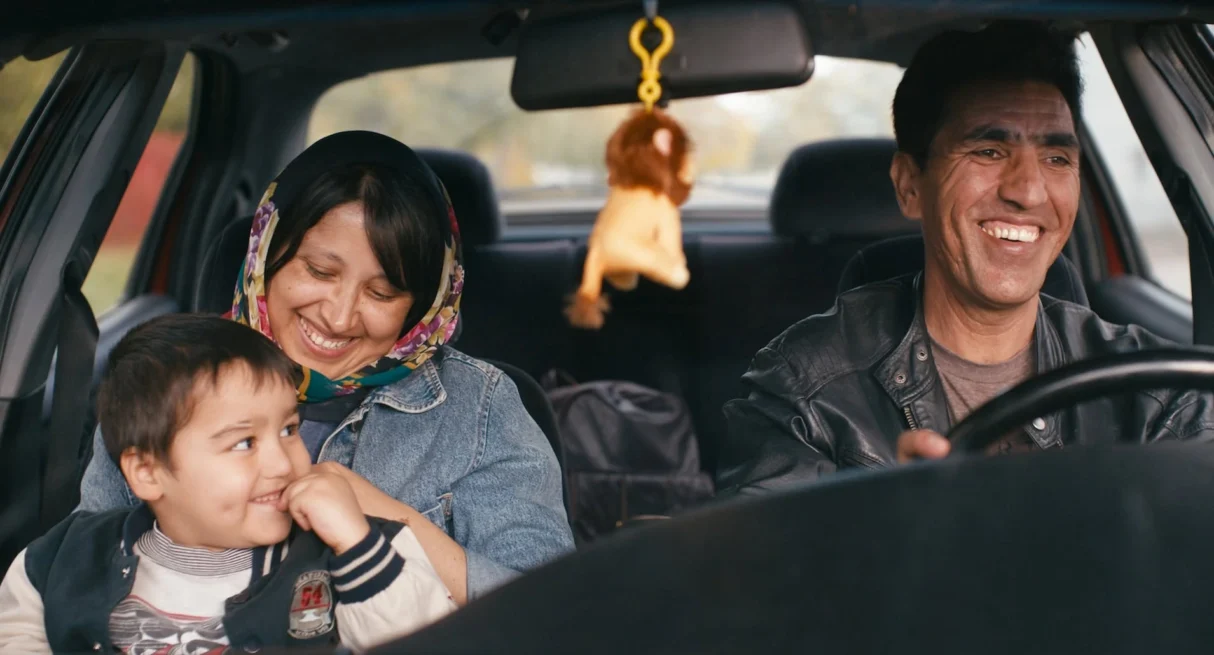
Shahrbanoo Sadat takes on the roles of director, screenwriter, and lead actress in No Good Men, playing Naru. Following its festival run, the film is now available on MUBI. Naru works as a camera operator for a television channel. Despite being talented, she is constantly assigned to entertainment programs. All she wants, however, is the opportunity to pursue real news stories like her male colleagues.
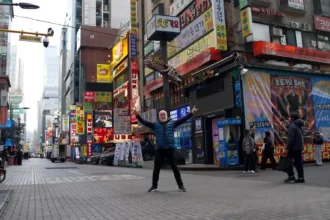
One day, she manages to convince her manager to let her cover an interview with a government official. But before the camera is even turned on, the interview is cancelled. The reason? Naru is a woman and has not covered her head during filming. On the way back, Qadiri (Anwar Hashimi), the reporter she works with, gets her out of the car to do a street interview about Valentine’s Day, partly to keep her occupied and partly to salvage the day. What initially seems like an insignificant assignment, however, becomes the starting point of the film’s real story.
Naru begins asking people on the street questions about love. Most of the men do not want to talk; some simply walk away, saying, “Those days are behind me.” Unexpectedly, the women begin to speak. Naru asks whether their husbands have ever told them “I love you.” Almost every answer leads to the same conclusion. Most of the women say they have never heard those words in their lives.
Naru then turns the question around: “Have you ever said it?” Some explain that they used to say it but no longer do; others admit they have never said it to their husbands. Naru’s final question becomes the film’s central question: “Are there any good men in Afghanistan?” All the women agree on the answer: “No.”
Afghanistan Through a Woman’s Camera
The interview does more than reveal what women think about men; it also exposes a society whose relationship with emotions has been shaped by years of war, poverty, forced marriages, and oppression. In a world where people barely have enough space even to love, the question “Are there any good men?” moves far beyond the confines of a street interview and becomes the film’s central concern.
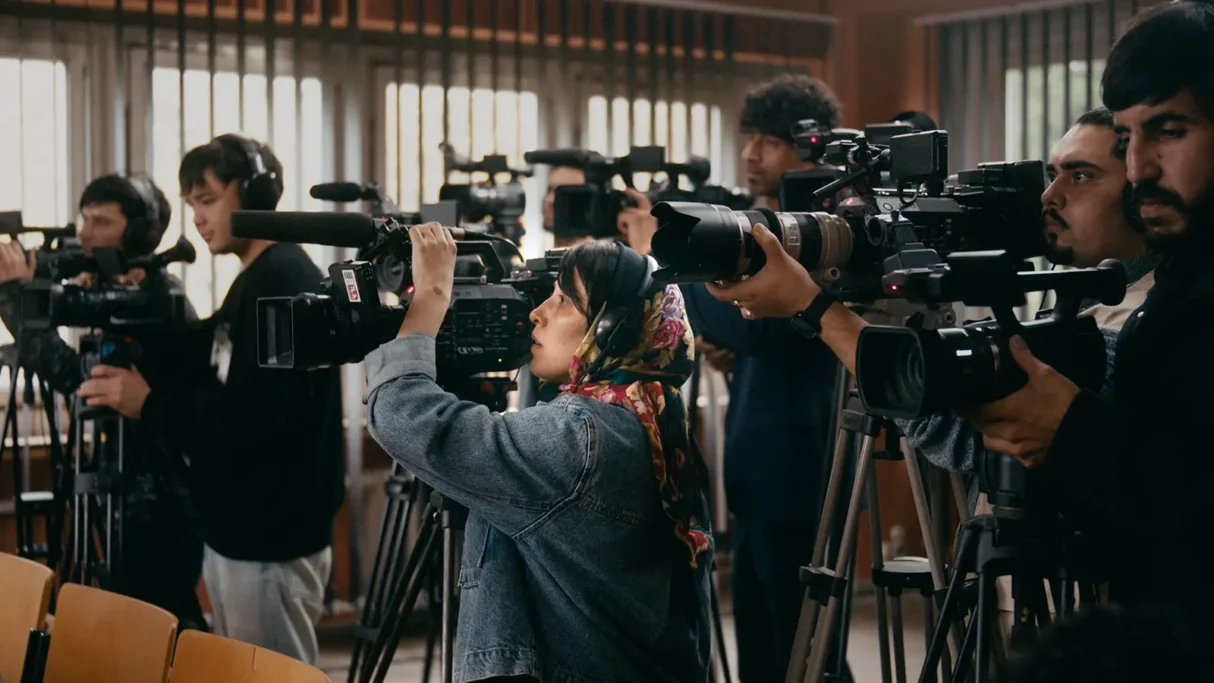
The interview Naru puts together makes a major impact at the television channel where she works. For the first time, a woman has gone into the field, and because of this, women are willing to speak to the camera for the first time. This also catches the attention of Qadiri, a war correspondent like others on the team.
Qadiri brings Naru onto his team as a camera operator, and they begin working together. From interviewing women held by the Taliban to covering stories in the field, they take on a number of important assignments.
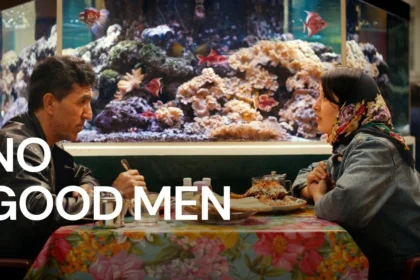
At this point, the film also focuses on women’s visibility in public spaces and the struggle they face simply to exist there. In a restaurant, female customers are directed to the “family section.” Unlike the darker, more secluded area reserved for them, the section where men sit is larger, brighter, and even more thoughtfully decorated, complete with an aquarium. Naru objects. Insisting, “We’re not family, we’re friends,” she refuses to sit in the family section with Qadiri and insists on joining the men.
We see a similar attitude in a scene where she objects to security guards not searching women’s bags and deliberately asks them to search her own. What Naru wants is not special treatment; she wants to be treated the same way as men. Sadat places the film’s political stance precisely within these seemingly small moments of everyday life.
Who Is a “Good Man”?
Qadiri is the first character who makes us reconsider the definite answer we have been given to the question posed from the beginning of the film. He respects Naru, recognizes her talent, and supports her. He stands by her through the difficulties of her divorce, protects her son, and works with her as a genuine equal teammate. At a certain point, we as viewers begin to doubt our own answer, just as Naru does. Perhaps there really are good men.
But Sadat refuses to offer an easy answer here. Qadiri is married, has children, and eventually develops feelings for Naru. This is where the film’s grey area emerges. Is being more understanding, more egalitarian, and more respectful than other men enough to make him a “good man”?
Or does falling in love with another woman while he is married also make him part of the same social contradictions? The film does not resolve any of these questions with a definitive answer. Qadiri shakes Naru’s long-held belief that “there are no good men,” but he does not completely dismantle it.
“We’re both walking.”
“I’m on my own path.”
The final part of the film intertwines the personal story with the fate of the country. Because of the television channel’s commitment to impartial reporting, an attack is carried out at the wedding of one of Naru and Qadiri’s colleagues, killing many members of their team. The Taliban’s advance then accelerates.
Prisons are emptied, the state collapses, and people flood the airports in an attempt to flee the country. The film succeeds in telling the story of one of the greatest humanitarian crises of recent years through the eyes of individuals.
In the midst of this chaos, Qadiri’s status as a member of the press gives him the opportunity to leave the country. But before making use of that privilege, he finds Naru and her son. He takes them to the airport, somehow convinces them to leave, and manages to get them there. At the moment of their separation, they kiss for the first time—and most likely the last.
So why does Qadiri choose to save Naru and her son rather than himself, his wife, or his own family? Is it an act of sacrifice, the final gesture of a love story, or a selfish choice? Sadat offers no clear answer to any of these questions. Because No Good Men is not a film about whether good men exist; it is a story about how war and patriarchy transform people’s choices and the relationships they build with one another.
Thorns and Flowers
The film does not treat war, romance, and humor as three separate genres. On the contrary, it shows that in Afghanistan, all three already exist simultaneously within everyday life. Naru and Qadiri joking with one another, rushing to the scene of a death in the very next scene, or finding moments of happiness under the shadow of the Taliban remind us that war cannot reduce life to a single emotion. People fall in love, laugh, grieve, and return to their lives the next day. This balance is precisely what makes the film’s tone so compelling.
This approach is evident from the very first minutes of the film. The cacti that appear during the opening credits serve as a powerful metaphor that encapsulates the world of the story. Like flowers blooming at the ends of thorn-covered stems, the people in this story continue to live, love, and hope amid war, oppression, and loss. Sadat’s camera neither ignores the thorns nor focuses solely on the flowers; it reminds us that both can exist at the same time.
Scars
The thorns of the cacti evoke not only the atmosphere of the film but also the marks war leaves on people’s lives. The film asks how those thorns leave their traces on individuals. In a brief but striking conversation among the women, one of them says that Afghan men also carry the burden of war, that they too have been traumatized. Naru’s response summarizes the film’s entire political stance in a single sentence: “Don’t women have them too?”
This question does not deny the trauma experienced by men; on the contrary, it acknowledges it. But it also makes an important distinction. Trauma can explain a behavior, but it cannot justify it. The fact that men have grown up surrounded by war for years does not change the reality that women have carried the burdens of that same war as well.
By the time the film ends, the question lingering in our minds is no longer simply “Are there any good men?” Instead, we are invited into a much deeper interrogation: In a world shaped by war and patriarchy, is it really possible to remain good?