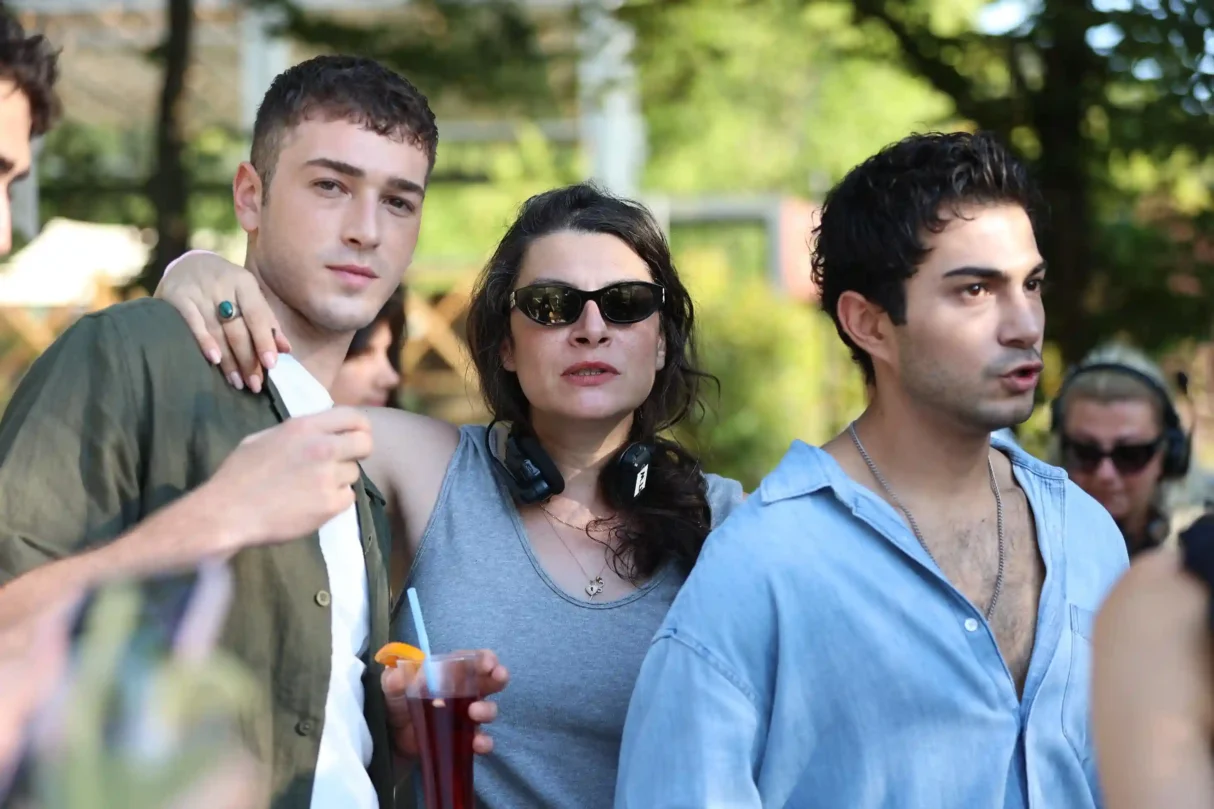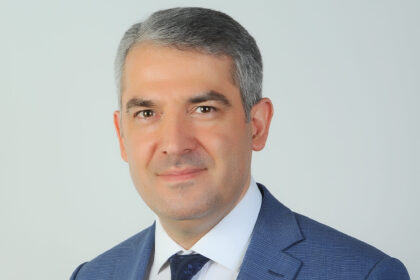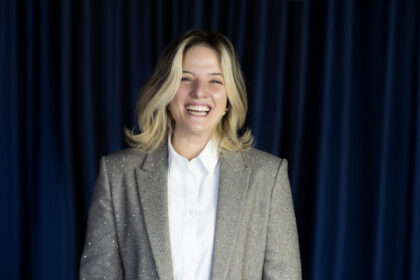




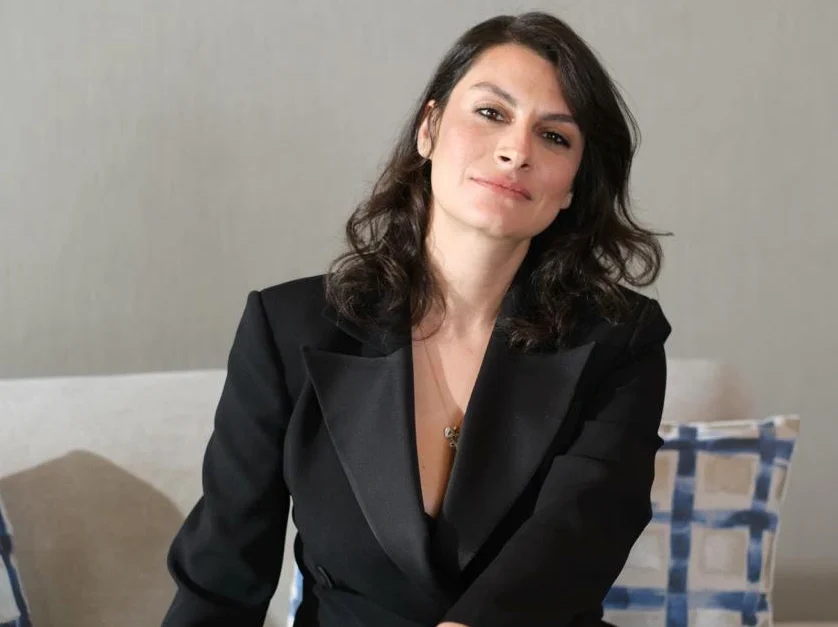
Eda Akça talked to Müge Uğurlar, the director of ATV Distribution‘s Different Lives for our August issue.
Different Lives became the show that brought Müge Uğurlar, who had not directed a TV series for three and a half years but had directed two feature films, back to television with in her own words its story about “children in love with hope.” Uğurlar highlights how the show is not a conventional summer series despite airing in the summer season on ATV, saying emotions don’t have a season.
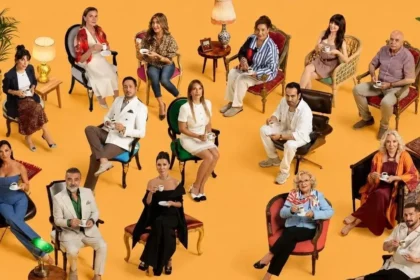
We talked about the story that brought her back to screens, Istanbul’s “below” and “above”, football’s place in the story, her working process with a young cast, and her evolution as a director with Uğurlar, who called the production team the moment she read the script.
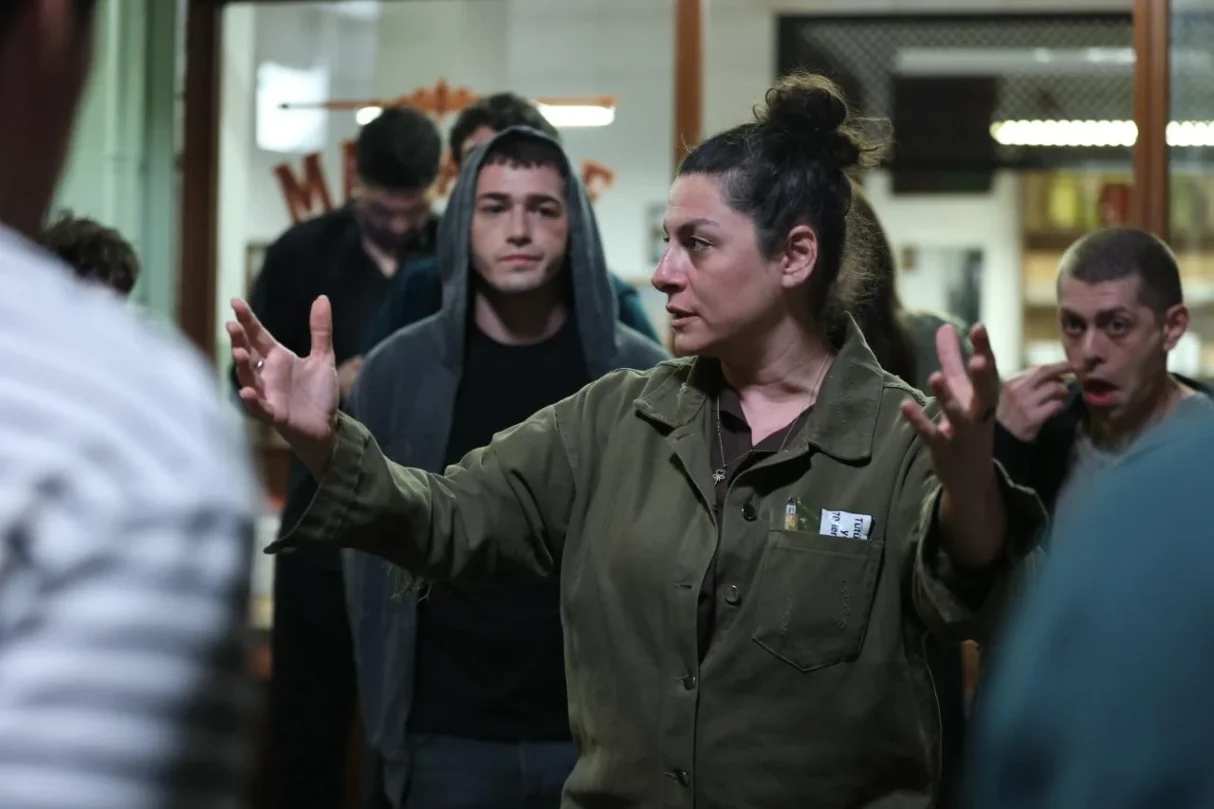
It has become quite difficult to find an authentic neighborhood feel in Istanbul. Also, it was impossible to find an Adana neighborhood in Istanbul where people from Adana predominantly lived. But we were lucky; we found the neighborhood and made it come to life. We have an incredible cast. They and the neighborhood have become so intertwined. It is all one whole. The right cast, the right language, the right costumes, the right locations… The result: Authenticity.”
What kind of a world did you picture in your mind when you read the script for Different Lives? What affected you most about the story?
About three and a half years ago, I had stopped working on TV projects. I could even say I had fallen out with television. I directed two feature films during that time. Honestly, I wanted to continue my journey with films. Then the story of Different Lives came my way, which was called Adana Diaries at the time. An Adana neighborhood in Istanbul… Children in love with hope… Well, I’m a seventh-generation Adana native; I got really excited. I called them after reading the first paragraph and asked, “What time should I come tomorrow?” Only a story like this, and a company like this, could have brought me back to TV. I’m glad I came back.
While summer series are generally associated with a lighter atmosphere, Different Lives greets the audience with a major loss and a powerful dramatic conflict from the first episode. What kind of a narrative did you want to build while determining this opening tone?
First of all, we didn’t create this project as a summer series. Neither our producer Mehmet Yiğit Alp nor I nor our screenwriters Yekta and Hilal were approaching it as a summer project. We envisioned a drama where everyone could find a piece of themselves. And it turned out exactly like that. Human emotions are the same in every season. Emotions and life have no season. While the sun shines for you, a storm rages for another. Different Lives is actually life itself.
While watching the series, you feel as though Istanbul turns into a living character. A symbolic contrast is built between the “below” and the “above” of Istanbul right from its name (The series’ original title is Below and Above Istanbul). Were there any elements you placed emphasis on in order to make this sense of “two different Istanbuls” visible?
The “below” of Istanbul is Ziyankâr. Its night is a loss; its day, a gain. Actually, Istanbul’s “below” was the thing we cared about the most during the development. The more authentic and real we made the “below,” the more authentic and real the “above” would be. And it was.
In Turkish television, the neighborhood has been an important narrative element for many years. The neighborhood atmosphere is quite vivid and alive in Different Lives, and it gives it the feeling of a world living with its characters. What kind of preparation process did you go through regarding location selection, actor direction, and visual atmosphere in order to capture this reality?
It has become quite difficult to find an authentic neighborhood feel in Istanbul. Also, it was impossible to find an Adana neighborhood in Istanbul where people from Adana predominantly lived. But we were lucky; we found the neighborhood and made it come to life. We have an incredible cast. They and the neighborhood have become so intertwined. It is all one whole. The right cast, the right language, the right costumes, the right locations… The result: Authenticity.
My actors communicate easily with me; we talk about the character, we talk about the scene, we talk about posture, we talk about costumes. It’s a collective effort. Everyone is doing more than their part. I’m grateful for every single one of them. All our actors are amazing… we have an incredible cast.”
Football, just like neighborhood culture, is one of the series’ most important narrative elements. Football isn’t just about matches; it shapes the characters’ lives. What kind of meaning did you attribute to football in this story?
Football is quite central to the story. It is also a leading character for us. Football is the hope of Ziyankâr’s young people. Football is the wound carried by Emir’s father, football is the source of Galip’s strength, football is the reason behind Bahtiyar’s land.
How important is directing actors to the success of a series? Can you explain the working style you’ve developed with actors on set?
I’m not very good at explaining myself professionally. However, when an actor takes ownership of their character, it is beneficial, not harmful. My actors communicate easily with me; we talk about the character, we talk about the scene, we talk about posture, we talk about costumes. It’s a collective effort. Everyone is doing more than their part. I’m grateful for every single one of them. All our actors are amazing… we have an incredible cast.
You are working with a cast where young actors are central to the story. How did this situation affect your directing process? How do you think their energy has reflected on the set and in the story?
I’ve worked with young actors a lot throughout my career. It is something I’m familiar with. This situation keeps me dynamic and lively. All the young people are very, very good. Having an impact on them, guiding them in their acting journeys, and watching their growth is an honor for me. Let me make a special mention of Rahimcan. I knew he was a good actor. But simply as Emir in Different Lives, he delivered and continues to deliver a masterclass in acting. It’s a good thing we entrusted Emir to him.
Until today, you’ve taken part in both mainstream shows and projects that reach the festival audience. How does your directing approach evolve when creating for different genres and audiences?
Diversity is good. My first film was an independent film: Derun. Derun travelled the world. It won almost 30 awards. It was an unbelievable journey for me. I’m going to continue creating independent films. Then I filmed a box-office film: Aşk ve Yemek. It was a pleasant job. I’ve filmed series in various genres. They all improved me. I always built upon what I had learned. Doing different types of work with my team constantly helps us improve.
You’ve been in the television industry for many years. How did your directing approach evolve from the first project you directed to today?
The feeling is the same, the excitement is the same. But I have grown, developed and transformed, and I’m always trying to build on what I’ve achieved. I’m always trying to hold on to that version of myself. And I will continue to do so.
Are there any cinematic references, directors or works that inspire your directorial approach?
There are many but let me give just one answer… I’d say Christopher Nolan, and leave it at that.