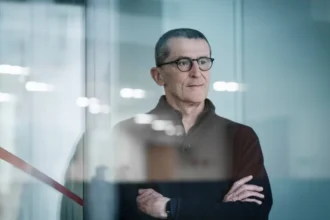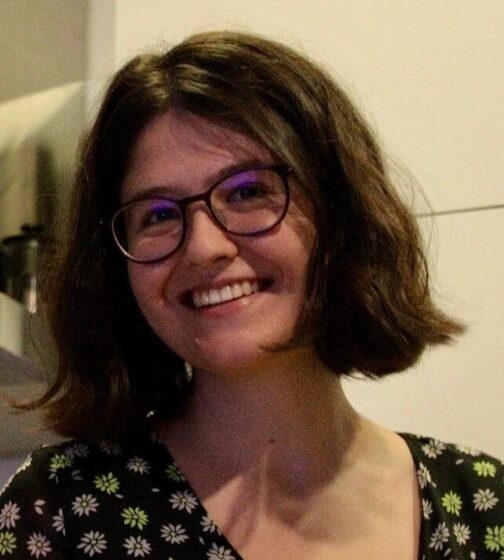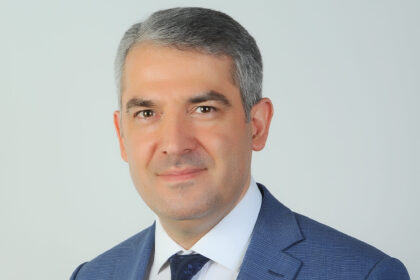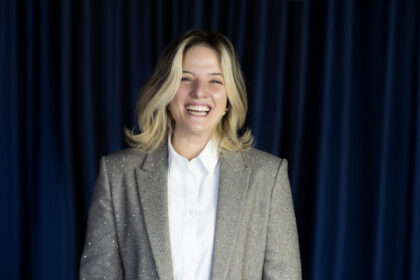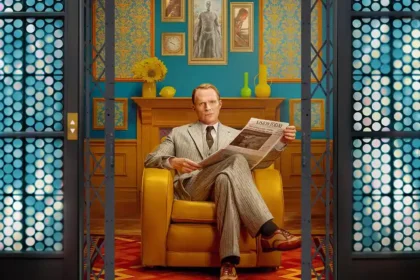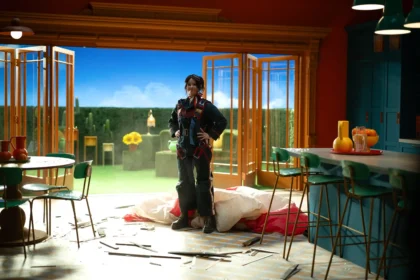




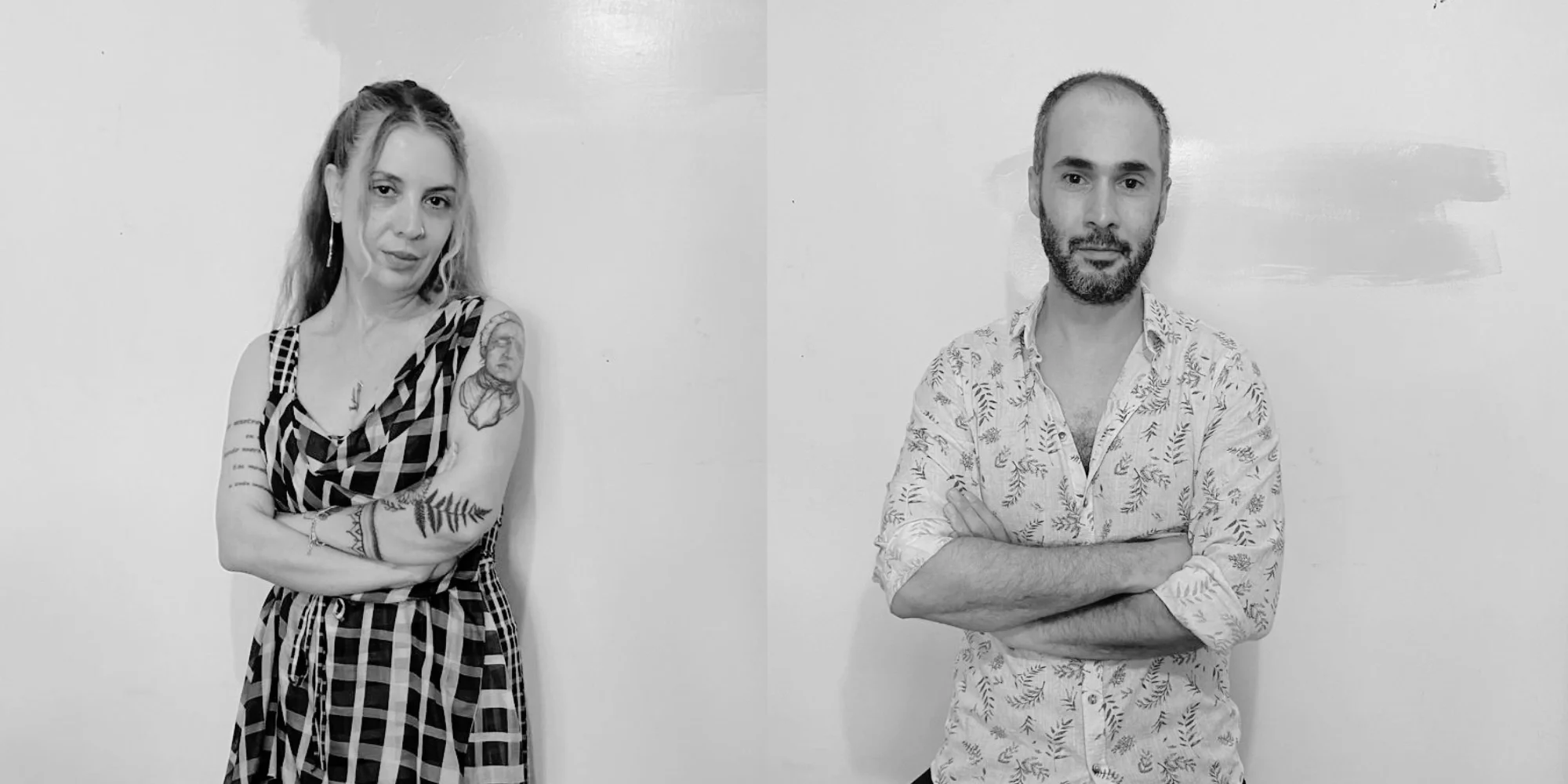
Eda Akça spoke with Gökhan Korkusuz and Redife Zerener, the screenwriters of Kanal D International’s popular series Torn Apart, for our August issue.
Built around the idea that “there is no one stronger than a child searching for their family,” Torn Apart centers on Aras’s journey to find his brother while weaving themes such as family, siblinghood, loneliness, belonging and growing up into its story. Set against the atmosphere of Bodrum, the series connects the characters’ pasts and present through the medallion, opening the door to new questions with every episode.
We spoke with the series’ screenwriters, Gökhan Korkusuz and Redife Zerener, about how Torn Apart came to life, the place of the crow symbol in the story, the theme of siblinghood and the world that awaits viewers in the episodes ahead.
There is a writing team behind Torn Apart. When different writers are working on the same story, how do you maintain a shared narrative voice?
At its core, there are two of us. Since we have been working together for many years, we are able to understand each other easily when building a story and choosing one path among the many possible ways of telling it. This is both creatively enriching and technically helpful. For this particular project, we expanded our team starting with episode nine. Since they joined a project where the main storylines were already established and the narrative language had already taken shape, the adaptation process was not difficult.
How did the story of Torn Apart come about?
We had one sentence as our starting point for this story: “There is no one stronger than a child searching for their family.” Aras is a character we created by following that idea. The more we developed him, the more we began to understand him. And the more we understood him, the more we internalized his inner world, his wounds, his past, his memories, his dreams and the things he holds on to, almost as though he were someone we knew rather than someone we had created.
Then his world, his surroundings and his relationships began to emerge around him. These elements ultimately shaped the universe of his story. It is actually a fairly classic way of constructing a story, but Aras came first.
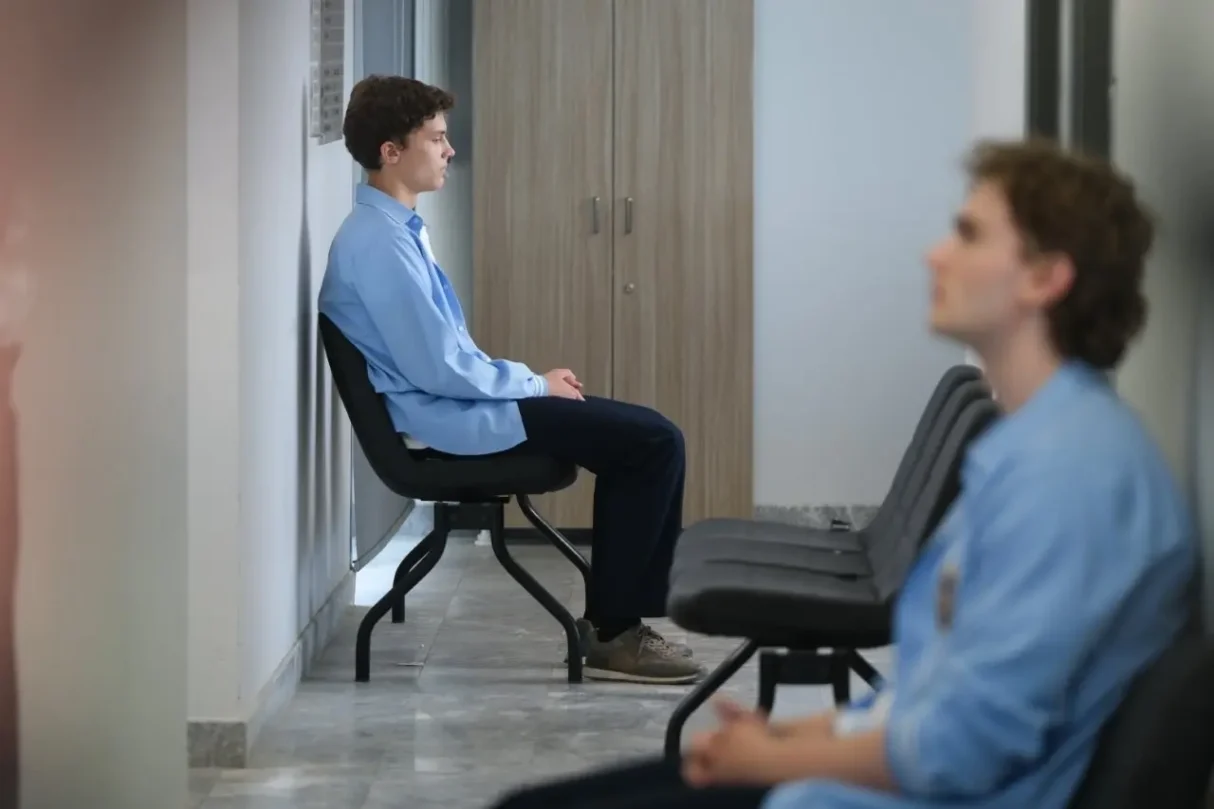
The title Torn Apart (Turkish title Daha 17 translates to Just 17) feels like that threshold just before growing up. Why did you choose this title? What does being 17 mean to you?
First and foremost, being 17 means being impatient to us. It is an age when a person is impatient in every sense: physically, mentally and emotionally. It is a wonderful age to fall in love, get into a fight, scream, defend something endlessly or hate something with equal intensity. In a broader sense, it is also an age when you are very prone to making mistakes.
At the same time, we are talking about an age that may seem to be on the threshold of adulthood but is actually still very far from it. It is an age when people begin expecting clear answers from you before you have even learned to ask yourself the right questions. It is one of those periods in life when existential struggles become visible. Because it is also a process of forming an identity, it is perhaps the age when those struggles hurt the most, or when that pain is felt far more intensely than it actually is.
The reason we chose the title Daha 17, alongside all of these things, is that the suffering our protagonist goes through is far beyond his age. Sometimes even we have to remind ourselves how old Aras actually is.
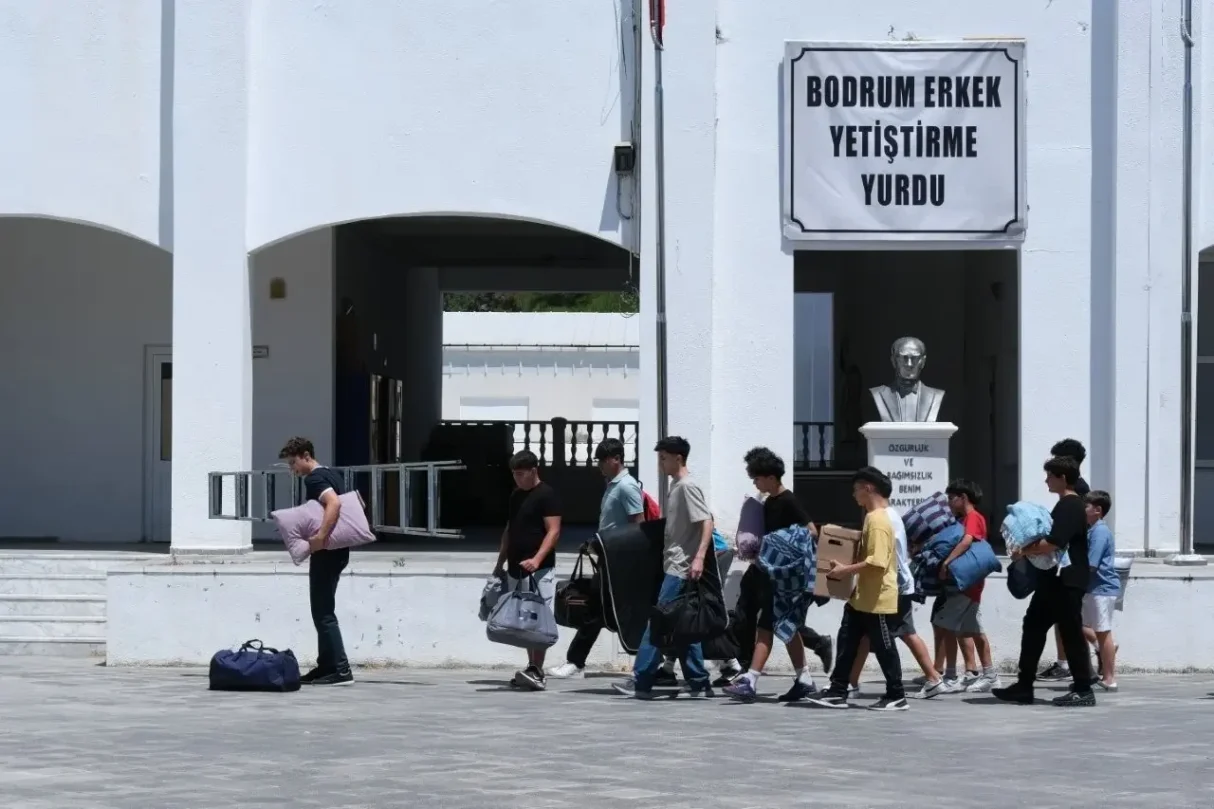
Was setting the story in Bodrum a deliberate choice? How did Bodrum’s atmosphere and its summer setting contribute to the world of Torn Apart?
We had always imagined telling a story set in a coastal town. We had created a story world in which people from different economic and social backgrounds were forced to coexist because of the setting itself. On paper, we initially had several different location alternatives in mind.
However, as the project began to take shape, Bodrum was considered more suitable in many respects. At that stage, we revisited certain technical aspects of our narrative, and the atmosphere the story has today emerged from that process.
The medallion is one of the strongest symbols in the series. One side says Aras and the other says Demir. But as the story progresses, it begins to feel as though it represents not only the two brothers but also the missing piece within every character. What does the medallion mean to you?
Your observation that everyone has a missing piece is correct. The thematic side of our storytelling is built around this idea as well. Although siblinghood lies at the heart of this theme, it takes narrative form across the episodes through many subjects, including family, being alone in the world, home, loneliness and solidarity.
This creates a recurring thread through our characters’ journeys as they search for their missing pieces, while also establishing connections between the episodes and allowing the story to develop a memory of its own.
To give an example, the uprising organized for Aras at the care home in episode one and the uprising Aras leads for his brothers at the home in episode nine come together around the theme of solidarity.
For us, the medallion represents the visible side of a person and their shadow side. Aras is on one side, Demir on the other. Aras represents a conscious search, while Demir represents an unconscious state of waiting. The light of one inevitably falls on the other, just as the darkness of one falls over the other. In our view, it is impossible for the two to exist independently of one another.
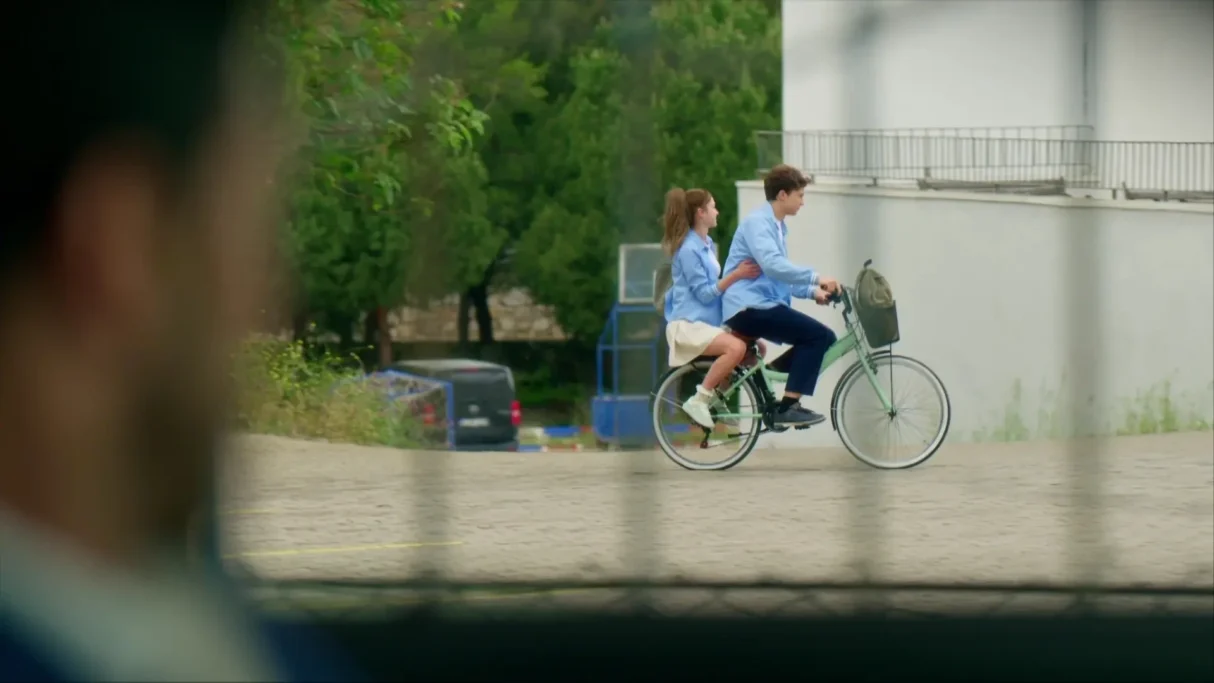
Aras and Teoman are affected by the same event, yet they are pulled in completely different directions. One is shaped by longing, the other by anger. How did you find the balance between these two brothers while writing them?
Our answer to the question about the medallion actually answers much of this question as well. That is precisely why it is the most fundamental dramatic object in the story.
Even though Aras has never been certain that he will find him, he has continued searching without losing hope and has made an effort not to forget. Every day, he has reminded himself again and again of his brother’s face, his voice, his scent, the things he loved, the things he feared and the way he used to call him “abi.”
Teoman, meanwhile, has always sensed, under the influence of his unconscious memory, that something in his life was wrong, but he has never been able to define it. The repression he experienced caused him not only to lose the answers but even to forget the questions themselves. This turned into an anger he wears like armor against the world, along with an exaggerated sense of cynicism.
Aras’s arrival causes this unconscious memory to resurface at times through his body. That is partly why he feels so strongly drawn to Aras.
One has devoted his entire life to searching, while the other has been waiting to be found without even knowing what he lost. Which of them do you think carries the heavier burden?
If Demir had simply been adopted and raised in a family where he was loved, we could easily answer this question by saying Aras.
In our story, beyond the difficulties Aras faces while searching for his brother and everything he has been put through since childhood, there are also many long years in which he wakes up every morning with new hope and falls asleep each night feeling hurt and exhausted.
Demir, on the other hand, has had his identity, his memory and his personality forcibly taken away from him. He has been made to believe that conditional attachment is real love, and deep down he has always felt alone in the place he knew as home.
To be honest, even we cannot decide which of these two burdens is heavier.
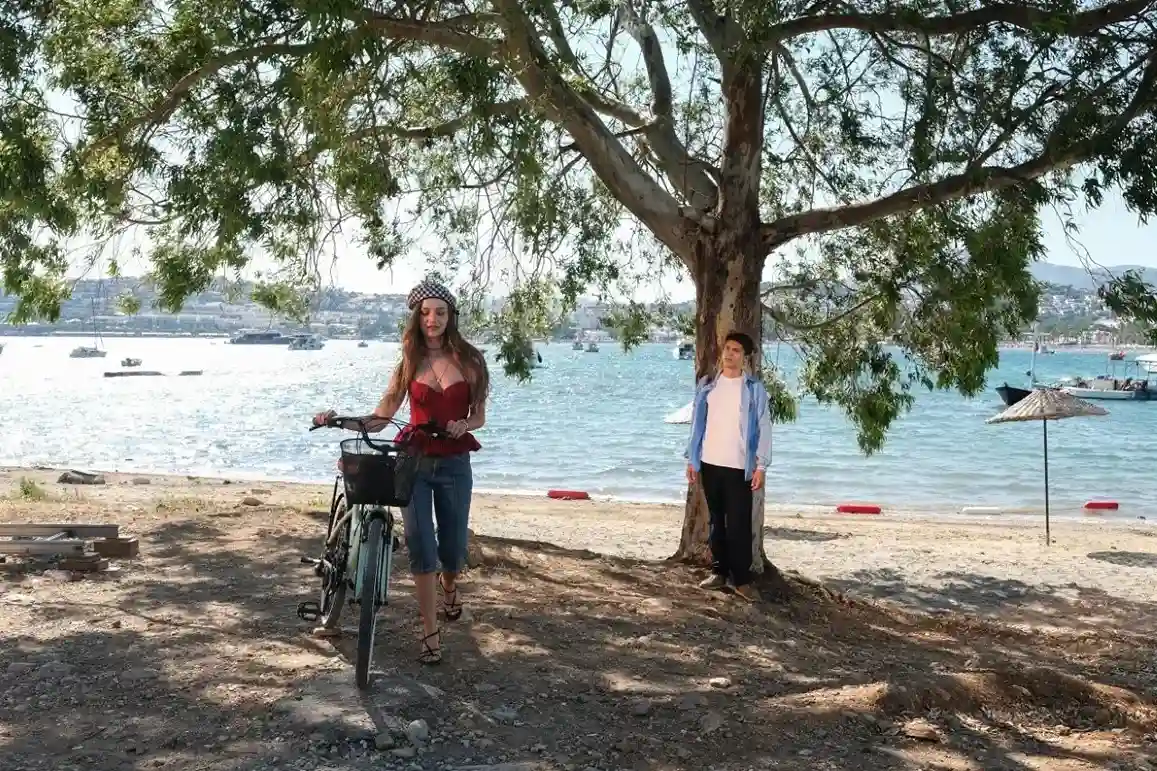
There is a scene where Leyla tells Aras, “You look at things as if you came from outer space.” Aras does not come from space, of course, but it feels almost as though he has come from another time, from the past. How did you construct his gradual return to the present once Leyla entered his life? How would you describe the effect Aras and Leyla have on one another?
The greatest effect Aras and Leyla have on one another is a sense of uncertainty and disorientation.
Aras is a stubborn young man with a clear objective, someone who moves toward his goal with determination and refuses to let obstacles stand in his way. There are thick curtains between the central purpose of his life and the rest of the world — even, so to speak, between him and worldly pleasures.
Leyla is an exceptionally courageous character who dares to pull those curtains aside despite all of Aras’s stubbornness and resistance, and who, in contrast with her name, enters his world like a source of light. That is what causes Aras to lose his footing. Once that light has entered, Aras knows that no matter how tightly he closes his eyes, there is no escaping it.
For Leyla, the situation is connected not only to the person Aras encounters in her but also to her own existential journey. Getting to know Aras is surprising and challenges everything she is accustomed to, certainly, but through him Leyla also realizes that she herself is brave enough to pull back those thick curtains surrounding Aras. That is the main source of Leyla’s own uncertainty.
The girl everyone sees as a princess does not hesitate to wound herself while trying to break through the walls of the glass cage in which others are attempting to imprison her. What gives her that courage is not only love but also her moral independence.
At the same time, Leyla demonstrates just how profound a meaning love can have for a person. Her love is not merely about romance. She is someone who can see Aras’s deepest wounds and is deeply afraid of causing those wounds further pain. She is extraordinarily gentle. Moreover, she is strong enough to experience that love even without Aras.
Alongside the medallion, the crow is another important symbol in the story. We encounter this motif repeatedly, from Demir’s childhood affection for crows to Teoman’s tattoo and the Picture Deniz draws for Aras. Why did you specifically choose the crow?
When Cain killed Abel, he did not know what to do with his body and carried it on his back for days. Eventually, he saw one crow burying the body of another in the ground, and he did the same. That is how one myth tells the story.
In another myth, after a flood, a crow is released from a ship surrounded by water and does not return, thereby giving humanity hope that there is land somewhere within reach. Another myth speaks of the crow as a messenger.
Yet another tells of how it was originally white before being cursed and turned black. From the oldest texts to children’s fairy tales and prehistoric cave paintings, the crow has always been there somewhere. In other words, it is one of the oldest witnesses to humanity’s journey on Earth. That has always made us think of it as a kind of memory that has recorded humanity’s journey.
In a sense, Torn Apart is also a story about memory, remembering and resisting forgetting, whether consciously or unconsciously. For us, the crow symbolizes the fact that there is always someone who remembers, and it represents the resistance against forgetting despite all the pain and oppression.
The crow motif also seems to create an invisible connection between Deniz and Teoman. Could we think of them as two sides of another medallion within the story?
At first glance, Deniz and Teoman appear to be two of the most contrasting characters in the story. For example, Deniz is deeply introverted, while Teoman has an equally strong desire to be seen.
While Teoman tries to drown out the questions whose answers he is avoiding with noise, Deniz is someone who is not afraid of the answers she might receive. Even beside Deniz’s childlike nature, Teoman’s cynicism can make him seem more adult. Yet both of them are like two children unable to answer the same questions.
What does home feel like, for example? What is love, really? What does it mean to grow up? These questions emerge in different forms every time the two come together.
And it is not only Deniz, the seemingly more mature one, who provides the answers. When Teoman looks at her and asks, “Do you have anyone?” Deniz suddenly finds herself with a brand-new question to confront in life.
Alongside all their arguments, conflicts, differences and class contradictions, theirs is ultimately a story about growing up together.
Since its first episodes, Torn Apart has become one of those series in which viewers have formed a particularly strong bond with the characters. Did you expect the story to be embraced to this extent?
We always believed the story would resonate and form an emotional connection with viewers. But to be honest, the response and sense of ownership we encountered went beyond our expectations.
Before something actually happens, it is difficult to imagine it reaching that level at least that was the case for us. We would like to thank our viewers for that.
Without giving away any spoilers, what kind of journey awaits viewers from this point onward?
First and foremost, Aras’s difficult journey will continue, although at a certain point it will begin to take a different form. Some of his questions will be answered, but those answers will lead him to new questions. Throughout this journey, every character will continue to be tested and to grow.
Which of the characters in the story do you feel closest to personally?
I suppose there is inevitably a piece of us in all of them.