




Eda Akça reviewed Kanal D International‘s new youth series, Torn Apart.
As children, we are very afraid of getting lost. Years ago, Aras and Demir’s father gave them a medallion with their names written on it so his children wouldn’t be afraid. The purpose of this small medallion, with Aras’s name written on one side and Demir’s on the other, was to ensure they wouldn’t lose each other.
No one could have known that what seemed like a game that day would, years later, turn into the only memory binding the two brothers together. The medallion at the center of Torn Apart carries exactly this kind of meaning. This small item that binds the two brothers becomes the only sign that will reunite them years later.
Aras and Demir are actually two sides of the same medallion. One has spent years searching for his brother, while the other grew up without even knowing what he had lost. Aras turned his entire life into a search to find his lost brother; during the years spent in orphanages, he could never feel like he belonged anywhere because there was always the same hope in a corner of his mind: finding his brother.
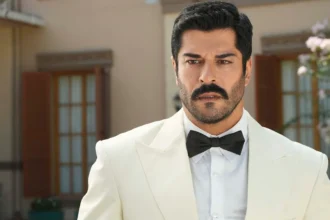
Demir, on the other hand, appears before us as Teoman. Pugnacious, harsh, and angry. Although he seems like the person we should stand against at first glance, as the episodes progress, we realize that he too is a child who grew up in lovelessness and loneliness, left incomplete.
At this point, the story of Torn Apart ceases to be just a story of brotherhood and turns into the story of two lives raised in different ways by the same loss. On one side, there is longing. On the other side, anger. On one side, searching. On the other side, getting lost.
Their past is one, but their present is separate. Because they grew up in completely different lives and completely different ways, they turned into completely different people. Although they are parts of the same story, they stand on opposite sides. They are like two sides of the same medallion; they belong to each other, but they are strangers to each other.
Not From Space, From the Past

“If you can’t manage on your own, let me know, maybe I’m passing through those parts.”
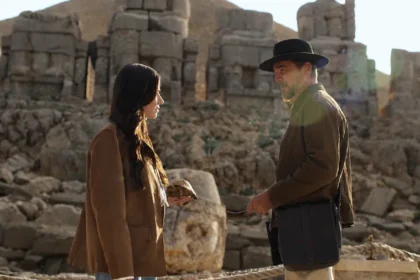
For Aras, the past, present, and future intertwine in the first episode. Because on the day he arrives in Bodrum, two people enter his life one after another: Teoman, the person coming from the past, and Leyla, the person representing the future, while the present has not yet gained its meaning.
The lost side of his medallion still says Demir, the brother Aras has been chasing for years. However, when he arrives in Bodrum, the first person he encounters is not Demir, but Leyla. Aras’s life has been spent searching for the missing piece for years. That’s why he always looked back at the past, always tried to find what he lost.
Leyla’s saying to Aras, “You’re looking like you came from space…” is meaningful. Aras may not come from space, but he comes from another time. From a time when he lived inside the past for years, dedicating his life to finding his lost brother. Leyla, on the other hand, enters his life not from the past, but from today.
Their story, which begins by bumping into each other, allows Aras to look not only at what he lost, but also at what he could have. Leyla, Deniz, and Barış. For years, Aras was looking for the missing side of his medallion, his brother. But sometimes, while trying to reach the person they are looking for, a person encounters a family they realize they never had.
Two Sides of Another Medallion
When we look at Torn Apart, we see that not only Aras and Demir, but many characters carry wounds that reflect each other. If Aras and Demir are two different results of the same loss, Deniz and Teoman stand like different reflections of the same deficiency.
They don’t share more than a few scenes yet, but the series places a striking dynamic between them right from the first episodes. What is missing in Teoman’s life is his father’s love. In Deniz’s life, it is her mother’s attention. Teoman turns this deficiency into anger; by fighting, scaring, and trying to make himself visible.
Deniz, on the other hand, alongside all her anger, sets her own childhood aside and parents her younger sibling. Even though they grew up in different ways, it is as if both have learned to live around a similar void. Perhaps another side of the medallion is them.
Perhaps what Torn Apart tells is not about getting lost, but about growing up incomplete. On the missing side of Aras’s medallion, Demir’s name is written. But it seems that everyone in this story is looking for the piece that was left missing somewhere in their lives.