



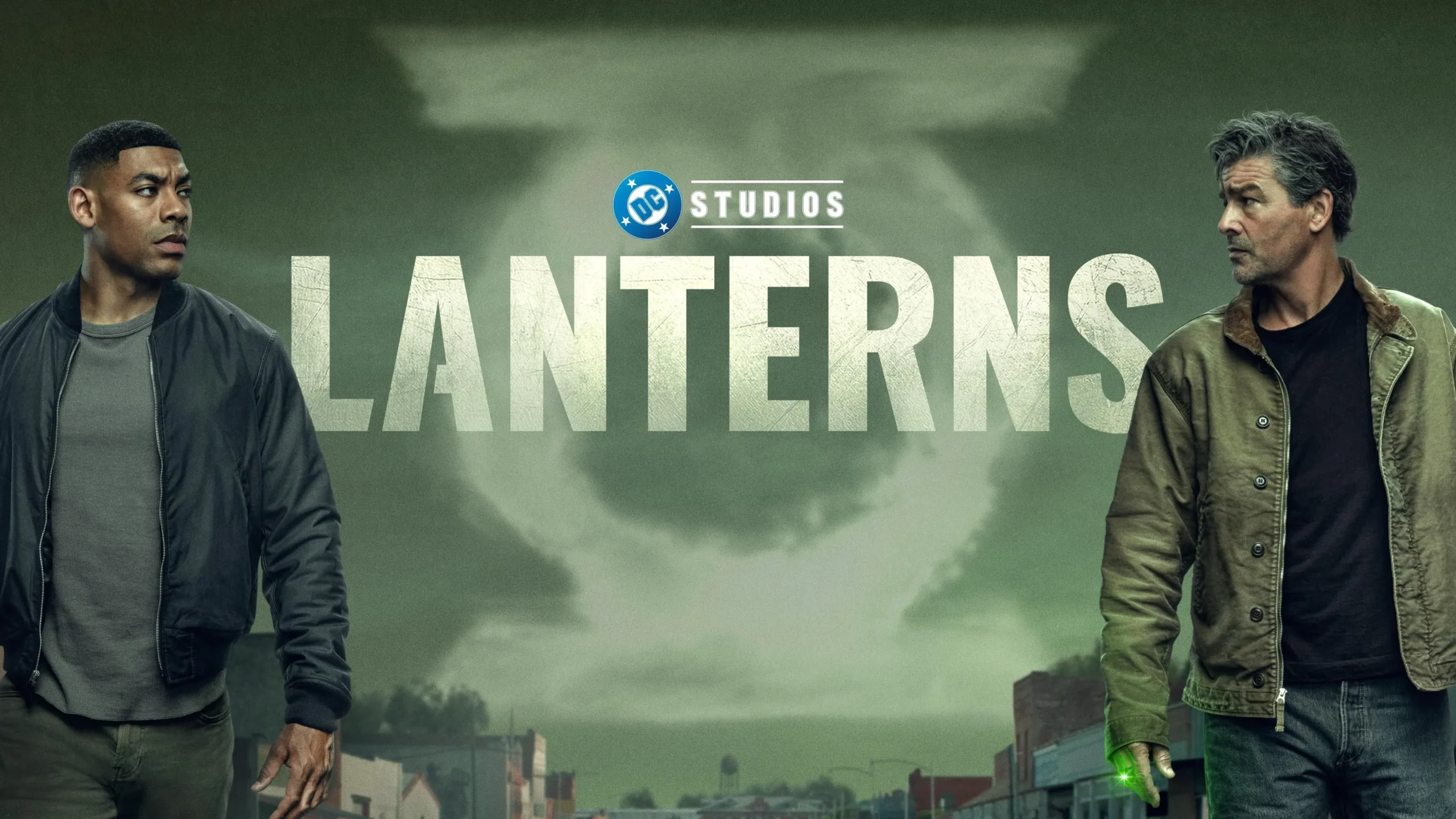
HBO Max’s highly anticipated new DC series, Lanterns, blends the superhero narrative with a dark detective story.
We spoke with the series’ stars Nathan Fillion, Kelly Macdonald, and Jason Ritter about this gripping universe.
I watched the series before the interview, and I genuinely loved it. The DC universe has always fueled my imagination, filled with rich visual spectacles. But unlike many superhero series, Lanterns offers a dark detective story set on Earth, along with a fascinating murder mystery.
The series seamlessly blends the superhero genre with a gloomy, realistic crime drama in the style of True Detective. The early reviews already released seem to confirm this success; the high scores from Rotten Tomatoes and Metacritic demonstrate just how solid the project is. In particular, the on-screen chemistry between Aaron Pierre (John Stewart) and Kyle Chandler (Hal Jordan) serves as the series’ main driving force.
That quiet bar scene in the first episode immediately draws the viewer in as Hal tries to talk about his past while attempting to bury his demons. Hal’s classic bar fights when trying to get information, as well as his “who has jurisdiction?” dispute with Sheriff Kerry, add fantastic dynamism to the story. With the Macon family entering the picture, this power struggle deepens, signaling what awaits us throughout the season.
Ahead of this ambitious production, which is set to meet audiences on HBO Max, Nathan Fillion (Guy Gardner), Kelly Macdonald (Sheriff Kerry), and Jason Ritter (Billy Macon) answered questions from members of the press at an international press event. During this special gathering, attended by journalists from different countries, the actors discussed everything from their character-building processes and comic-book backgrounds to the atmosphere of the filming locations and their personal fears.
Nathan Fillion
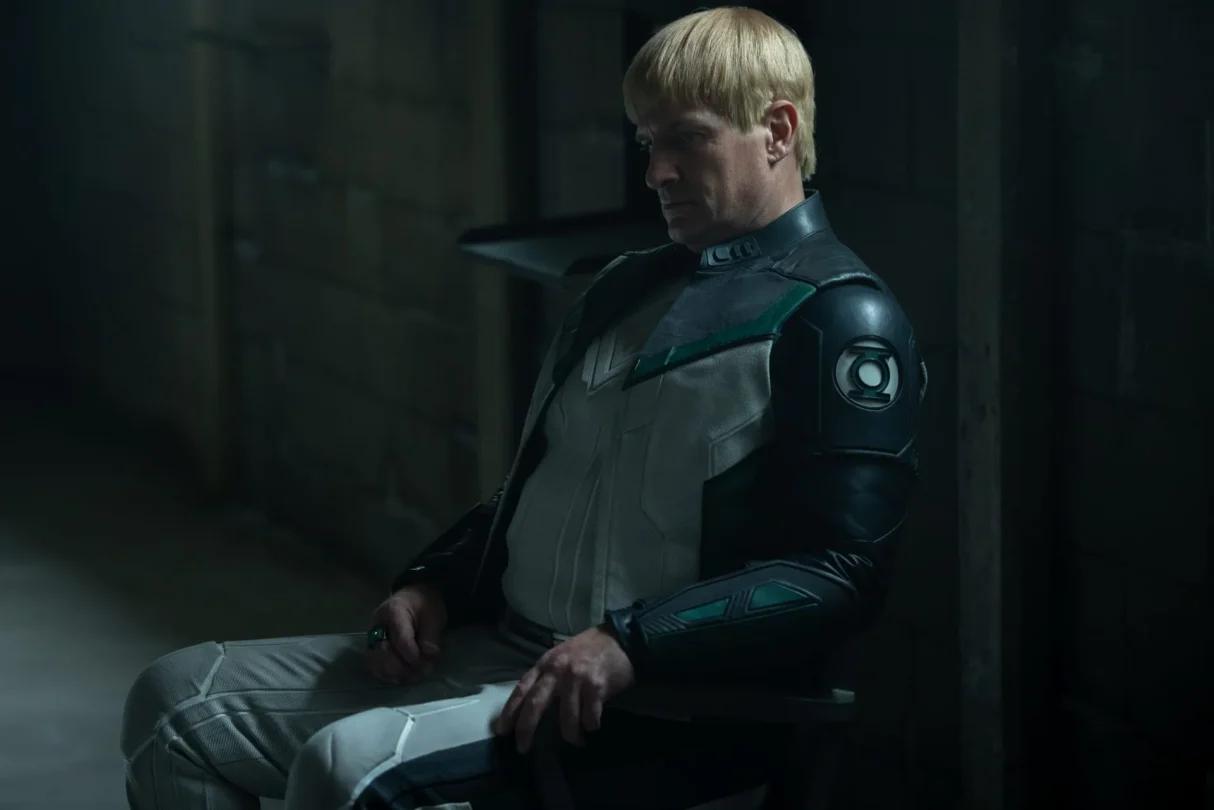
DC Universe’s Most Brazen Lantern Returns to the Screen.
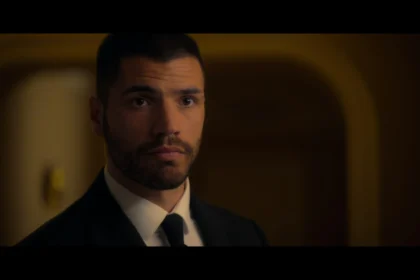
The ambitious Lanterns series and Superman film, launched as part of the new era of the DC Cinematic Universe under James Gunn and Peter Safran, have come to shake up the Lanterns mythology from its roots. Beloved actor Nathan Fillion plays Guy Gardner, the universe’s most controversial, rule-breaking, and unfiltered member. In the comics, Guy Gardner is an extremely irritable and off-putting yet equally beloved character. When portraying him, there must be a fine line between being unlikeable and remaining endearing.
Fillion begins answering the questions by saying, “The most fundamental thing you need to understand about Guy Gardner is that he’s not a malicious person. He’s simply completely unfiltered, extremely confident, and someone who says the first thing that comes to mind immediately. It would have been very easy to turn him into a caricature and make him nothing more than an annoying guy. But I tried to show the human being behind his unstoppable bluntness.”
In the series, which has a darker, mystery-focused atmosphere compared to other DC productions, characters like Hal and John carry the story’s heavy, serious, detective-like burden; when Guy enters the room, however, he brings an entirely different dynamic. The energy and lightly humorous tension the character introduces further emphasizes the series’ dark tone, giving the story room to breathe.
Did you have the opportunity to offer your ideas regarding Guy Gardner’s appearance and costume? How much input did you have into the character’s iconic style?
Nathan Fillion: They were already doing an incredibly extensive amount of work on the costume design. But as an actor, the attitude and physical presence you bring to a character directly changes how the costume is perceived. Guy’s iconic haircut and distinctive posture are already like a written statement in the comics. What I did was preserve Guy’s “I almost couldn’t care less” attitude within that wardrobe and reflect how confidently he owns what he’s wearing.
You mentioned on a YouTube program that you were inspired by the character Sophia Petrillo, played by Estelle Getty in The Golden Girls. How exactly did you draw inspiration from Estelle Getty when creating Guy Gardner?
Nathan Fillion: When watching The Golden Girls, it’s impossible not to be fascinated by Estelle Getty’s screen energy. Sophia Petrillo was at a point where she would say whatever came to mind without filtering it at all, completely unapologetically. But the magic was that the audience could never really get angry with her; instead, they would eagerly wait for the next outrageous thing to come out of her mouth. That was exactly the dynamic I felt when studying Guy Gardner.
Like Sophia, Guy stands at a point where the filter is completely broken and the protocols of politeness are switched off. Estelle Getty’s timing, seriousness, and “I’m just telling the truth” attitude in that role were an incredible guide for me. When building Guy’s annoying yet simultaneously captivating comedic side, I always had Estelle’s iconic performance in the back of my mind.
Have you ever wanted to have a completely unfiltered “Guy Gardner moment” in your own life?
Nathan Fillion: Ha, absolutely! I think there’s probably a little Guy Gardner inside all of us who wants to blurt out the first thing that comes to mind. Sometimes, in a meeting or social situation, I have moments when I think, “I wish I could just set the rules of politeness aside and say the raw truth that’s on my mind.” But thankfully, most of us have a filter that works in our brains; with Guy, that fuse has already blown. That’s also what makes playing him so liberating and fun!
Sometimes in everyday life, no matter how hard you try, you react to a situation so sincerely and bluntly that afterward you think, “That was completely a Guy Gardner move.” I’ve certainly had moments in my own life when I set social expectations aside, said exactly what was on my mind in that moment, and caused a bit of chaos. The difference is that I feel embarrassed afterward, whereas Guy doesn’t even look back!
Kelly Macdonald – Jason Ritter
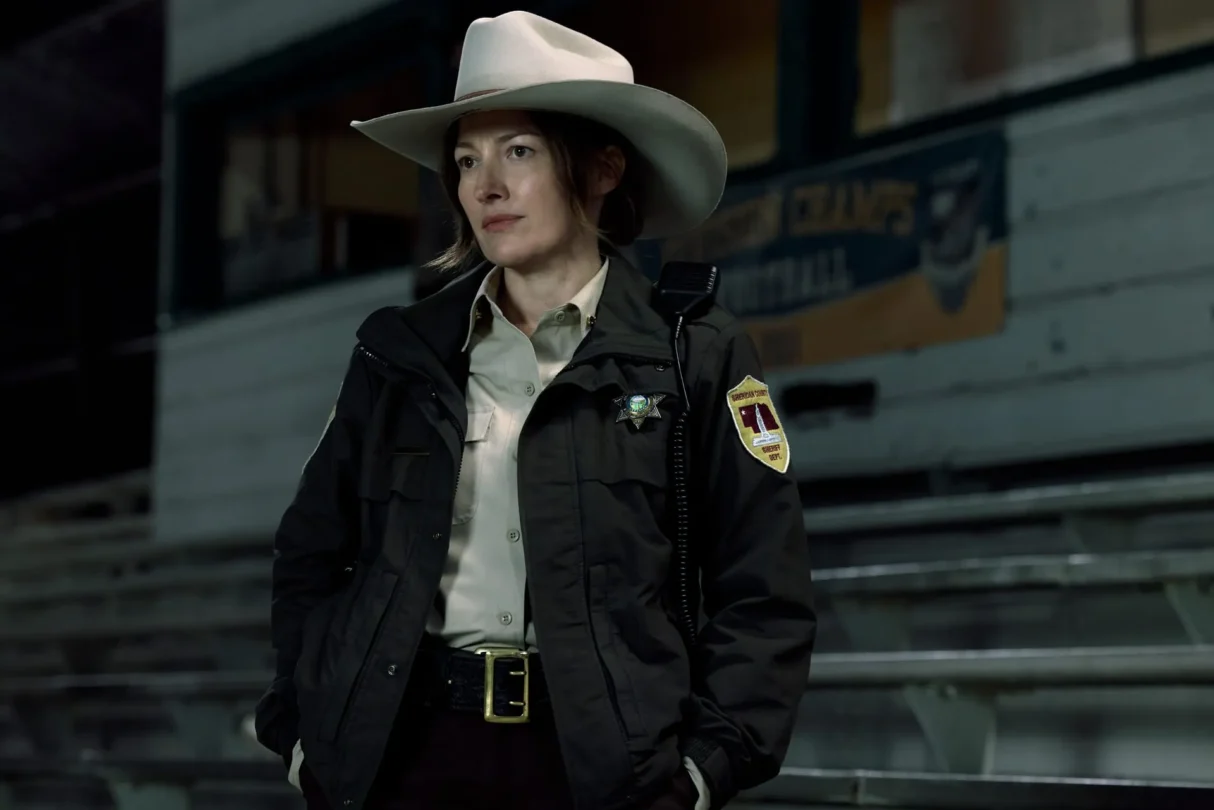
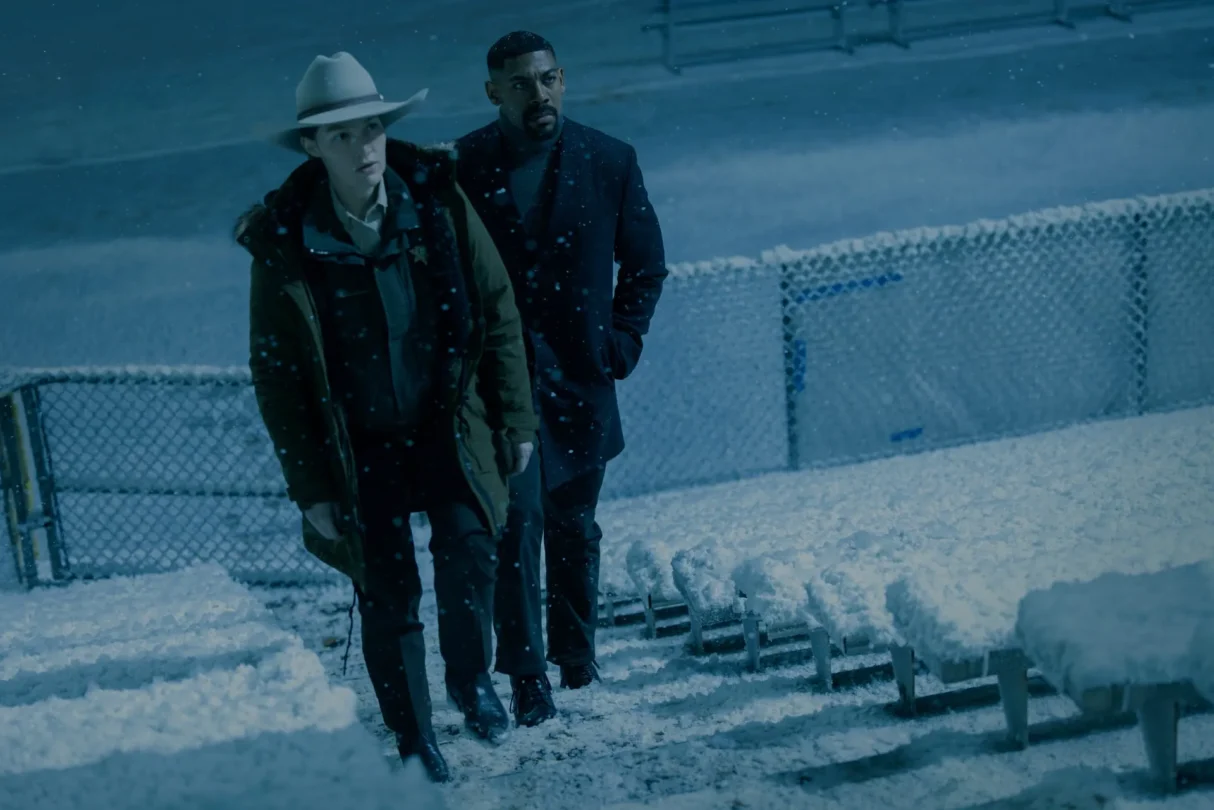
Throughout the conversation, both actors emphasized that Lanterns clearly differs from the large-scale, CGI-heavy superhero productions we’re accustomed to. They highlighted how the detective and mystery elements at the heart of the series take the story somewhere much more human and compelling. Macdonald said she read the script after receiving a message from director James Hawes, whom she knew from Slow Horses, and accepted the role of the town sheriff without hesitation when she saw it.
Ritter, meanwhile, said he was impressed by how realistic and grounded the story was for a superhero series. Macdonald, who said she had been a Wonder Woman fan as a child, would apparently play Wonder Woman in her garden wearing rain boots and a swimsuit in the cold weather of Scotland. Ritter said he first encountered the universe as a child through a few pages of a Green Lantern comic book he found at his grandfather’s house, and that he was fascinated by its power to visualize objects in his mind and its visual atmosphere.
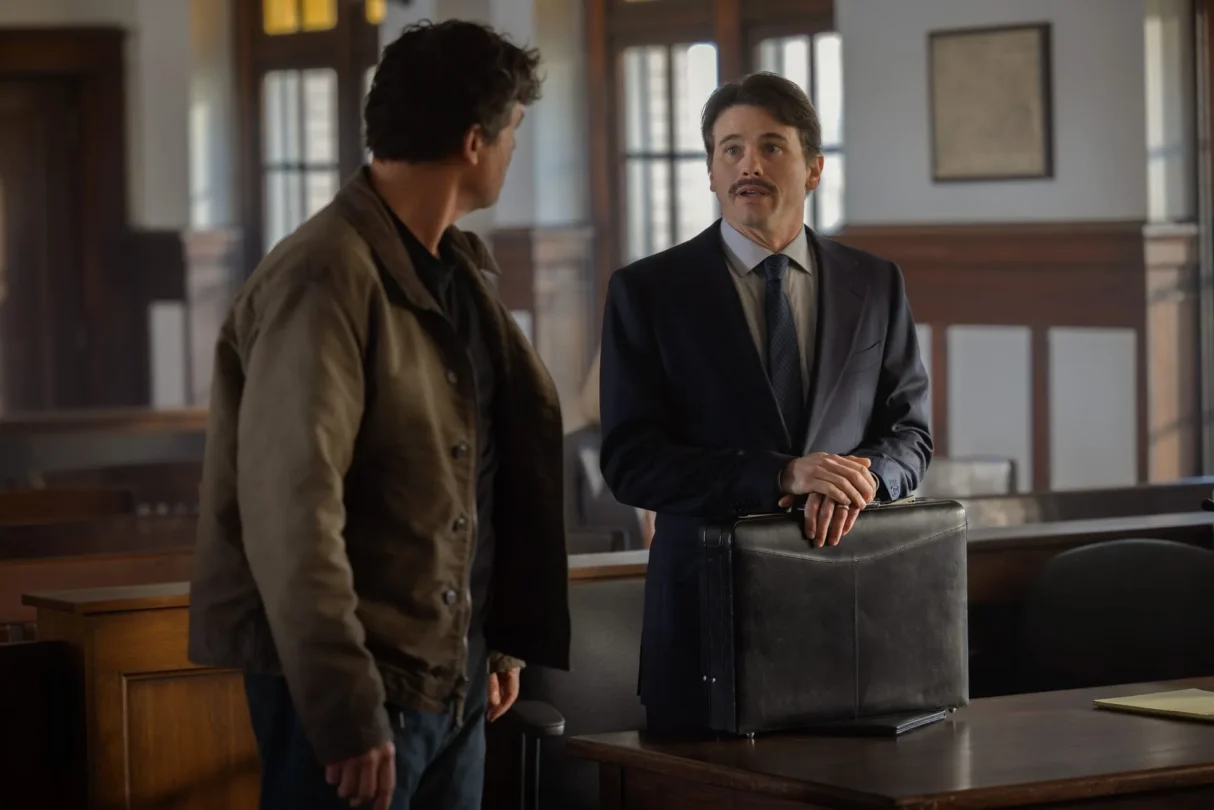
You both represent very different worlds in terms of power and power dynamics. Kerry represents law and order, while Billy comes from the town’s most powerful family. How did the tension or balance between your characters affect your chemistry as actors?
Kelly Macdonald: I’m not entirely sure how it translated for us as actors, but the great thing about the series is that, even though it’s a very serious piece of work, it contains a great deal of humor and comedy. It was especially great watching Jason’s character try to take control of a situation. Because Kerry is extremely grounded, sees the person standing in front of her for exactly who they are, and makes absolutely no effort to hide her displeasure. But you keep trying.
Jason Ritter: Yes, I keep trying! I think that dynamic was a lot of fun. Because when we enter the story, our characters have already been married for some time, and there are already some cracks and minor frictions in their relationship. You know someone very well, you love them, but they can also drive you crazy. Billy has gotten everything easily throughout his life and believes that things will always somehow work themselves out. So despite the friction between them, he believes everything will be fine, because that’s how things have always worked for him.
What I really love about Lanterns is that it’s not just a classic superhero story. It’s also a dark murder mystery set in Nebraska. What kind of atmosphere emerged on set when this deeply human and local world came together with the much larger Green Lantern universe?
Jason Ritter: What struck me most when I first read the script was its tone. Yes, there are huge, cosmic elements rooted in the Green Lantern universe, but the narrative is entirely shaped around a dark murder taking place in a small town in the heart of America. It offers a fantastic atmosphere for viewers who love True Detective or classic detective stories. Beyond superpowers, there’s a multilayered script in which secrets, family ties, and the power dynamics within the town are all questioned.
Kelly Macdonald: Most people think that when you join a DC project, you’ll spend all your time in front of enormous blue or green screens, pretending to float in the air. But that was completely different on Lanterns. Nebraska’s seemingly endless plains, dusty roads, and the texture of the small town that the characters find themselves trapped in were so realistic that you felt almost as though you were inside a modern Western film. The visual language is extremely dark, realistic, and atmospheric. This made it much easier for us to feel the bleak and realistic weight carried by the characters we were portraying.