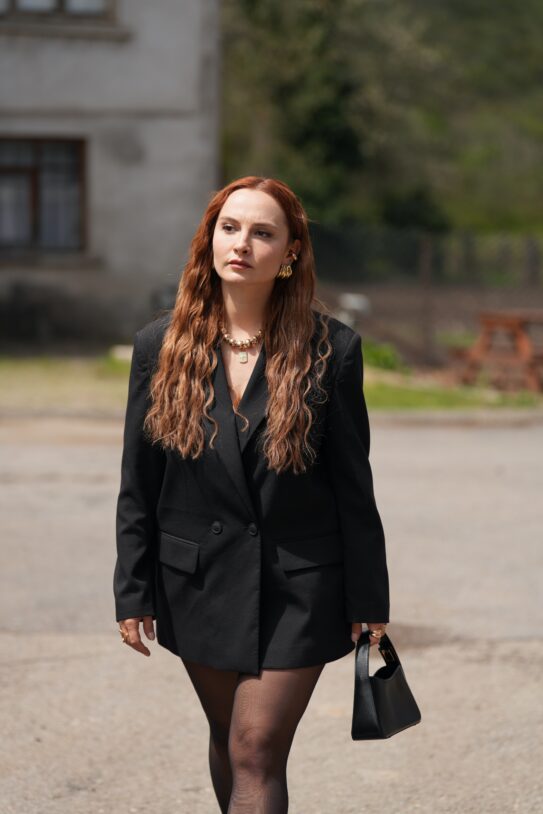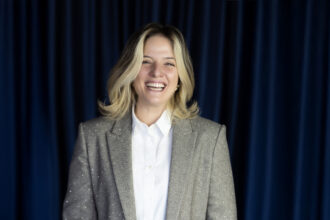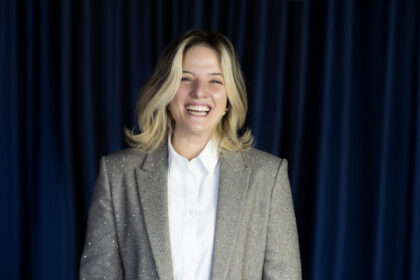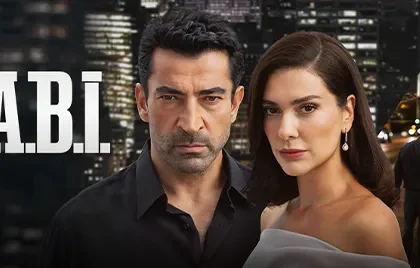




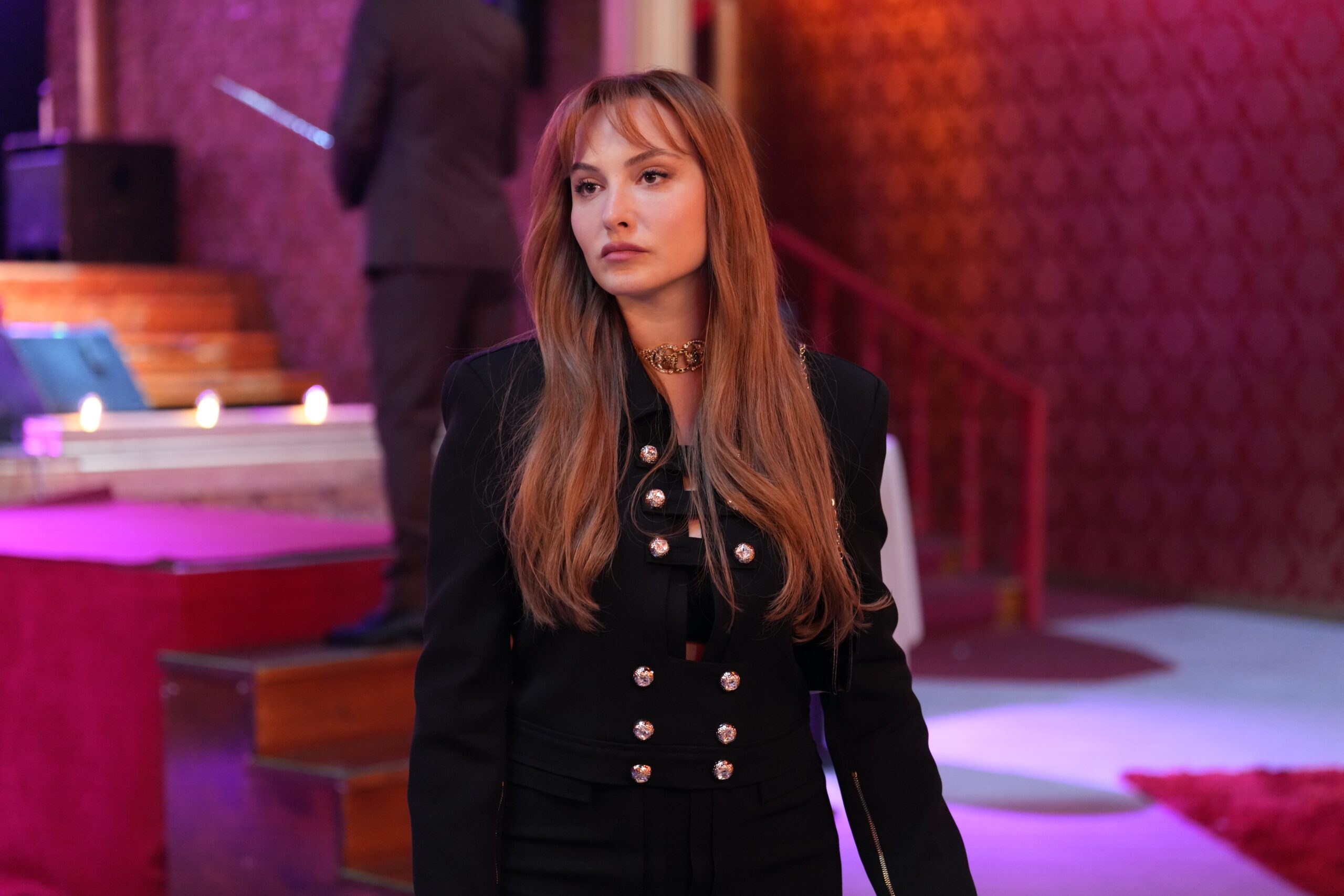
For our NEM Dubrovnik 2026 issue, we spoke with Başak Gümülcinelioğlu who plays Lale on the new Turkish drama Ugly.
Lale seems like a woman who exists more by the rules of Istanbul, belonging to a powerful and established world. When you first encountered this character, how did you define her?
When I first encountered Lale, looking from the outside, I saw her as a woman who was very strong, highly controlled, and knew exactly what she wanted. But as I went a bit deeper, I felt that beneath that need for control, there was actually a great vulnerability. She is like someone who grew up under Istanbul’s pressure to “look flawless”…
One of those women who feel obligated to do everything right, to look strong, and who feel they cannot afford to lose. I think this is precisely the most poignant side of Lale; while always appearing so strong, she is actually the person who needs to be loved and truly seen the most.
Lale holds a powerful position in Kadir’s life… How do you interpret this relationship; is it love, or is it an established routine?
I don’t think the relationship between Lale and Kadir can be explained as just “love” or just a “routine.” There are aspects where they genuinely feel they belong to each other, but at the same time, there is a world, a habit, and a way of life that both of them have built. That is why it feels very real to me. Because in real life, relationships are sometimes made of more than just great loves; they are also built on effort, habits, fears, and the inability to let go.
In the story, we have Meryem on one side and your character on the other. While one seems to represent the past and emotion, the other represents the present and the life that has been built… How do you interpret this contrast?
Although Meryem and Lale seem like polar opposites, I believe they are two women wounded in very similar places. It’s just that their survival methods are different. One lives more through her emotions and instincts, while the other lives by exercising control and trying to be flawless… Yet at their core, both want to be loved, valued, and to carve out a safe space for themselves in life. Therefore, I don’t view this story as a battle between two women, but rather as a clash of two different states of womanhood.
In a story built around the title Ugly, we see Meryem standing in a place that society labels as “ugly,” whereas Lale belongs to a world that is considered more “beautiful.” How do you think this situation reflects society’s perception of women?
I think the story shows exactly the contradiction in society’s perception of women. Women are expected to be “beautiful,” strong, calm, and self-sacrificing all at once. But when a woman steps outside of those molds, she can be labeled very quickly. I believe “ugly” here is not actually a physical thing… Sometimes, anything that society does not accept, cannot silence, or cannot control is called “ugly.” That is why I find this story so valuable.
You recently experienced motherhood. Has this new emotion changed your approach to a character or the way you connect with emotions?
Motherhood has changed a lot of things for me. I can say it softened my perspective on the world, people, and emotions. When playing a character, I started to think more deeply not just about what they do, but why they do it. Because you begin to feel a person’s inner world, fears, and love much more intensely. Emotionally, motherhood opened a completely different door for me.
What was the most challenging emotion for you while playing Lale?
The most challenging emotion for me while playing Lale was her state of hiding her vulnerability. Because some people experience their pain very loudly, while others never show it. Lale is on the second side. Understanding her internal shattering while she tries to look strong, and keeping that on a very fine line, was one of the most difficult but exciting aspects for me.
If Lale could look at herself from the outside, what do you think she would realize about her life?
I think she would realize, for the first time, just how exhausted she truly is. Because Lale is like someone who constantly lives in a state of war. Someone who is deeply tired of controlling everything, trying to look strong, and fighting not to lose… Perhaps if she could stop for a moment and look at herself from the outside, she would honestly ask the question “Am I truly happy?” for the very first time.
Ugly is one of the successful series of this season. Which emotion do you think resonated most with the audience, and why was it loved?
I think what resonated most with the audience was the real emotions. None of the characters in the story are entirely good or entirely bad. Everyone has their wounds, fears, and mistakes. I believe people found a piece of themselves in them. Also, the series has a very authentic feel to it. It portrays both pain and love without sugarcoating or glamorizing them. The audience senses this.
Ugly’s global journey is also beginning. How does it feel to know that the series will meet audiences in different countries?
To be honest, this makes me very excited. Because the language of emotions is truly universal. I’ve had the chance to build very beautiful connections with audiences in different countries before. For this reason, I designed a project featuring 10 songs in 10 languages, consisting of the languages spoken by those audiences. I have a lot of interest in and respect for different cultures. Now, knowing that Ugly will also reach people in other countries feels very special. I think Lale’s story will resonate across different geographies as well. Because belonging, love, vulnerability, the desire to be seen… these are the shared emotions of us all.