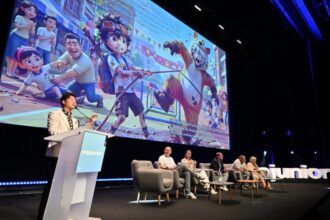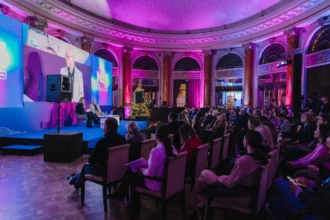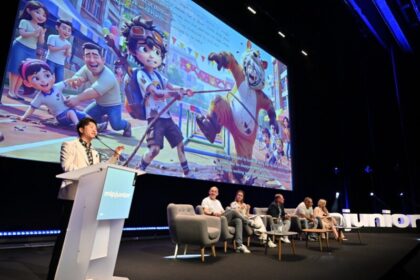



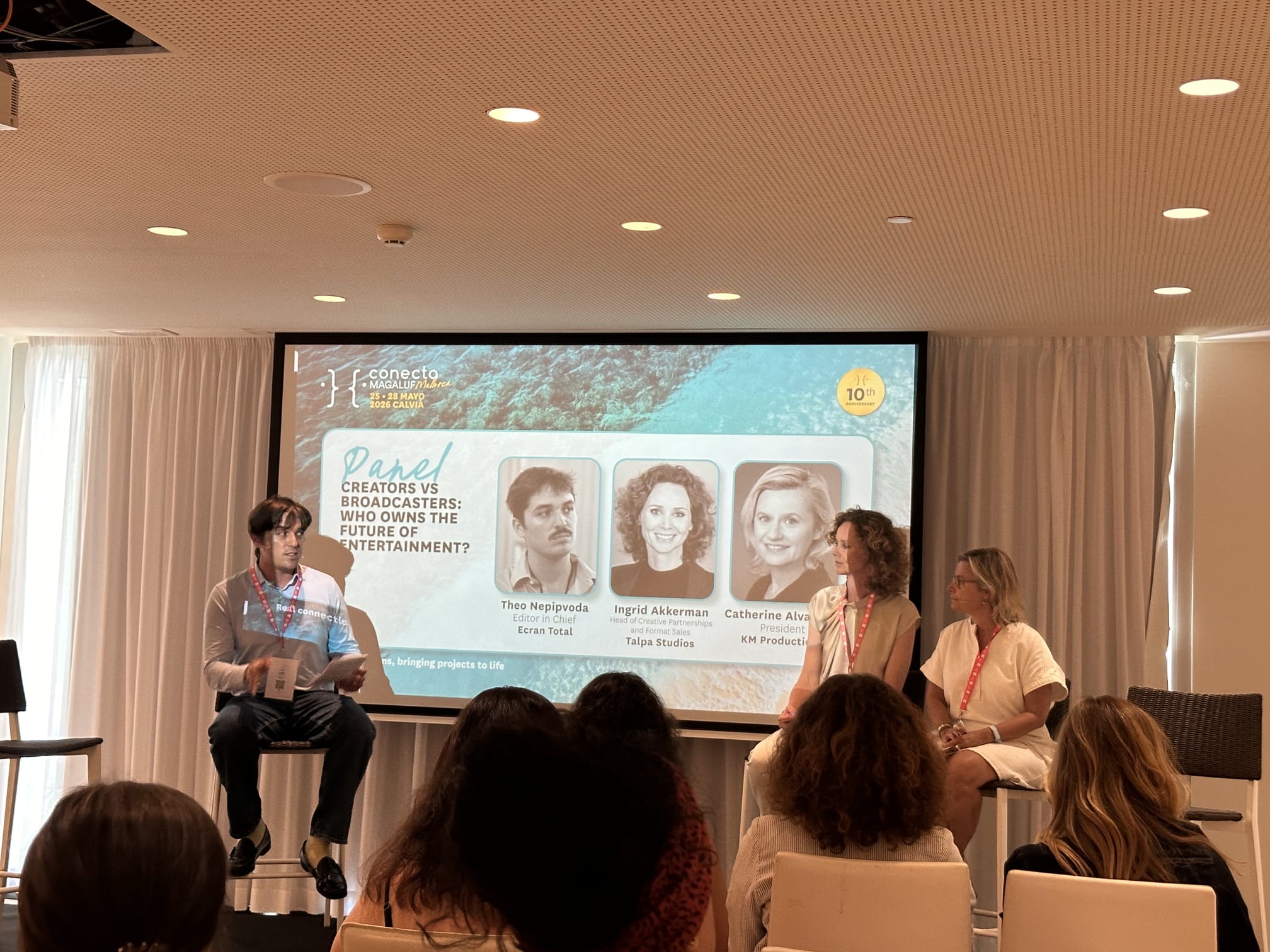
The sharp boundaries between television and the digital world are being completely erased. The industry is transforming into a massive ecosystem of partnership rather than a battlefield. Organized as part of Conecta Magaluf 2026, the panel titled “Creators vs Broadcasters: Who Holds the Future of Entertainment?” brought together giants of the entertainment industry to seek the answer to this very question.
Ingrid Akkerman, Director of Creative Partnerships and Global Format Sales at Talpa Studios, and Catherine Alvaresse, CEO of KM Productions (Banijay), put the inevitable union between traditional television production and next-generation digital content creators under the microscope.
For many years, the traditional broadcasting world viewed independent content creators, who reached billions of views on platforms like YouTube, Twitch, and social media, as a “threat” or merely a passing wave of popularity. However, at the point reached today, the two massive giants of the entertainment sector, Talpa and Banijay, are completely shattering this perception. The digital world is no longer an enemy; it is a colossal R&D laboratory where new ideas are tested, global brands are born, and traditional screens are enriched.
The Win-Win Formula: Traditional Scale, Digital Speed

Taking the floor in the panel moderated by Theo Nepipvoda, Editor-in-Chief of Ecran Total, Ingrid Akkerman from Talpa Studios defines this new era as a flawless “win-win” formula. According to Akkerman, traditional television producers and broadcasters bring scalability, format expertise, international distribution networks, and the power to build a global brand from scratch to the table. On the other hand, digital content creators possess an incredible mastery over storytelling by nature, can move much faster, and most importantly, establish a direct, genuine, and interactive bond with their target audience.
To materialize this vision, Akkerman shared a major success story they pulled off in the Netherlands: the Hunting Season (Jachtseizoen) series, which was produced by StukTV, one of the most famous YouTube channels in the Netherlands, and took the digital world by storm. Recognizing this digital success, Talpa said, “Let’s turn this into a television show,” and migrated the format to the traditional screen. The result? A ratings-shattering success on television spanning four seasons, which subsequently evolved into a live event format called Most Wanted, turning it into a global brand. In this model where powers combined, the YouTubers’ own “super-brands” became much richer and far more scalable through television’s budget and production power.
The New “Golden Age” of the Industry Reminds of the Early 2000s
Representing the Banijay group, KM Productions CEO Catherine Alvaresse approaches the matter from the perspective of a giant managing global format archives. For Banijay, which holds the rights to massive, globally traveling contents spanning hundreds of hours like MasterChef, content creators are no longer competitors either, but rather innovation partners.
Giving examples from the French market and her own area of expertise in documentary/factual content, Alvaresse compared the current state of the sector to a turning point in television history: “This process taking place with digital content creators today reminds me of the audiovisual revolution experienced in television during the early 2000s. Back then, we were setting the rules of the industry by presenting new formats and content; now, we are facing a brand-new digital wave that is rewriting the rules.”
According to Alvaresse, content creators are no longer just individuals filming videos; they have transformed into independent media companies with their own audiences, communities, and tested content ecosystems. For this reason, it is inevitable for traditional producers to view these names through a completely different lens and run joint R&D processes with them.
Whose Future Is It?
At the conclusion of the panel, one clear reality emerged: The future of entertainment lies neither solely in the hands of television channels nor exclusively with content creators filming videos in their rooms. The future will belong to those who can execute the right marriages between the organic storytelling and speed offered by the digital world, and the industrial production power and budgets possessed by traditional television. As confirmed by the giants at Conecta: The entertainment industry is no longer in a period of protecting boundaries, but in an era of expanding boundaries all together.