





For our MIPCOM 2026 issue, we spoke with the Videomite team.
Videomite arrives at MIPCOM this year with two stories that are closely connected. On the content side, its movie catalog has expanded significantly, bringing together commercial titles, internationally recognizable Turkish talent, auteur cinema, family entertainment and an unusually deep horror library. On the technology side, the company is preparing to take something it originally built for itself to a much wider market. Videomite Studio, its proprietary media operations platform, is designed around a simple idea: major rights owners increasingly want to keep control of digital monetization in-house, without having to recreate the large operational teams traditionally required to do it.
We spoke with Dilek Telkes about what international buyers may still be overlooking in Turkish cinema, and with Milena Đuričić about AI, automation and why Videomite may be preparing to disrupt the very outsourcing model that helped build its business.
DILEK TELKES
BEYOND TURKISH DRAMA

Turkish drama has conquered the world. Turkish cinema has not. Why?
I think Turkish drama benefited from something feature films never really had at the same scale: a very organised international sales machine. Buyers learned how to programme Turkish drama. Audiences became familiar with its storytelling. And, importantly, Turkish actors became stars in territories where they had never physically worked.
Cinema never received the same systematic international push. That creates an interesting gap. We already have talent with very strong international recognition, but the feature films they appear in are often still unknown outside Türkiye. In our catalog, for example, we have Kerem Bürsin in Eflatun, Burak Deniz in In-Between and Engin Akyürek in Destiny.
The interesting question is: if an audience already has an emotional relationship with an actor through television, why are we not using that relationship more intelligently to introduce them to films? I think there is still a lot of unrealised value there.
Are international buyers still looking at Turkish content too narrowly?
Yes, I think they often are. “Turkish content” still tends to trigger one immediate association: long-running drama series. But Türkiye is producing much more than that, and buyers are becoming much more fragmented themselves. A broadcaster, a FAST channel, a global AVOD platform, a niche horror service and a premium VOD platform are not looking for the same product.
That changes the conversation.
Our catalog includes commercial romance, comedy, thrillers, family titles, prestige cinema, biography and a very substantial horror offering. We also have recent commercial films such as 3391 Kilometres, alongside films by major Turkish auteurs and a library that stretches back decades. We also have new titles coming through from 2025 and 2026, across very different genres, from Bride Squad 2 and Early Winter to Brussels, Here We Come and new family and horror titles. Türkiye has been extraordinarily successful at exporting one type of storytelling. That does not mean it only produces one type of storytelling.
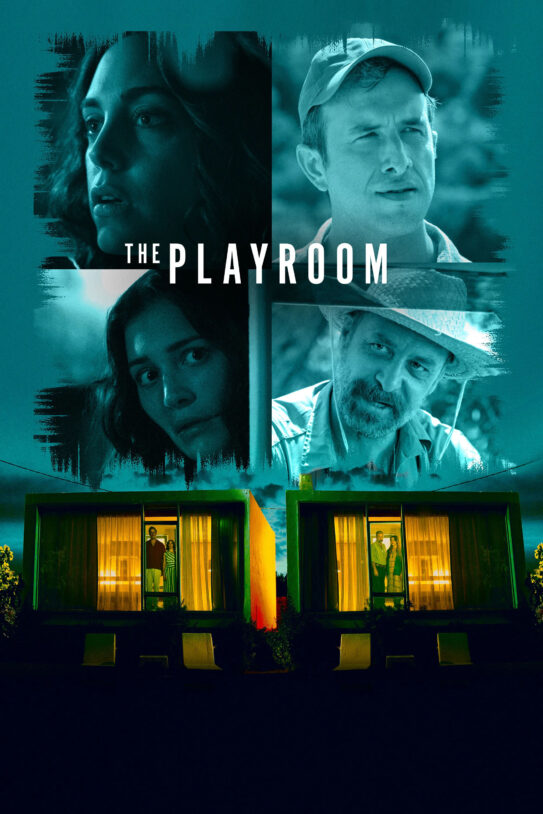
Horror is one of the most crowded genres in the world. Why should anyone buy Turkish horror?
Because the best Turkish horror is not trying to reproduce Hollywood horror. It comes from a different mythology. Djinn, possession, rituals, curses, religious folklore and very specific cultural fears give these films an identity that audiences recognise as horror, but that still feels unfamiliar internationally. And for us, this is not a case of having two or three horror films buried somewhere in a catalog. We have genuine depth.
There are recurring franchises and multiple installments across titles such as Hüddam, Zir-i Cin, Haile, Semur, Sir-Ayet and World of Jinn, as well as new horror titles continuing into 2025 and 2026. That is commercially important because a buyer does not have to acquire one isolated film. They can create a horror collection, a themed season or potentially an entire programming strand.
Genre travels very differently from prestige. A horror audience does not necessarily care whether the lead actor is famous in their territory. They care whether the film delivers a distinctive experience. And Turkish horror has something very useful internationally: it belongs to a familiar global genre, but its mythology does not feel generic.
What is the one assumption about Turkish films you would like buyers to leave behind after this MIPCOM?
That they should buy them because they are Turkish. That is actually the least interesting reason to buy them.
A buyer should acquire a film because the genre works for the platform, because the cast is recognizable, because the title has proved itself commercially, because the filmmaker has international credibility, or simply because the story is good for that audience.
Our catalog spans both commercial and prestige cinema. It includes filmmakers such as Zeki Demirkubuz and Semih Kaplanoğlu, alongside much more mainstream entertainment. That range is exactly what we want buyers to see.
My message at MIPCOM is quite simple: Don’t buy it because it is Turkish. Buy it because it works for your audience.
MILENA ĐURIČIĆ
“ARE WE KILLING THE MCN MODEL?”

Media companies spent years outsourcing digital distribution, YouTube monetization, social operations and localization. Now many major rights owners want more of that control back in-house. What changed?
I think the industry discovered that when you outsource too many individual pieces, eventually you outsource control as well. One company manages YouTube, another handles social, another localises, another edits and packages assets. Each may do its job well, but the overall workflow becomes fragmented.
And fragmentation kills speed. Digital media requires you to publish, localise, change versions, react to performance or move content between platforms very quickly. Long chains of emails, approvals and vendors do not fit that environment. So rights owners want more control back.
But bringing everything in-house traditionally means building large teams of editors, localisation specialists and platform experts, with people performing thousands of repetitive operational tasks. The industry wants the control of in-house without having to build another factory inside the company.
So is technology creating a third option between outsourcing everything and building a huge internal operation?
That is exactly how we see it.
Videomite built these systems because we were operating this business ourselves. Every bottleneck we automated came from something our own teams were dealing with every day.
Over time, that operational know-how became our proprietary media operations platform. We are now preparing to offer that infrastructure to other media companies through Videomite Studio.
What makes Videomite Studio different is that it is not just automation or AI agents. We built a proprietary intelligence layer into the platform that reflects years of Videomite know-how about how digital content works across markets, languages and platforms.
That knowledge no longer sits only in the heads of our teams. It is embedded into the system, so users can apply the same operational logic to localization, publishing, optimization and monetization.
In other words, we are turning Videomite’s know-how into infrastructure.
I use a simple analogy: You do not need to build a Ferrari factory in order to drive a Ferrari.
The media company should still have the driver. The people who understand the brand, catalog, editorial strategy and audience should remain in control.
Technology should remove the heavy operational layer behind them.
The result is speed, control and better economics, because the rights owner keeps more of the value the content creates.
Everyone is talking about AI generating content. Are we perhaps talking about the wrong AI revolution?
Possibly. Generative AI gets attention because it is visible. But some of the most consequential AI applications in media may be happening behind the screen.
The industry already owns millions of hours of content that cost billions to create. So I am interested in another question: How much more valuable can AI make the content we already own?
Localization is becoming faster. Dubbing and subtitling are becoming more scalable. Content can be versioned and prepared for different platforms and territories much more efficiently.
And then there are AI agents. Moving assets, preparing versions, repurposing long-form content into platform-ready clips, checking metadata, uploading and distributing those assets across AVOD platforms and channels, analyzing performance and carrying out routine optimization are all repetitive tasks. That is not where human creativity adds the most value.
I would rather have people thinking about editorial decisions, strategy, storytelling and audiences.
Let the agents do the boring work.
For me, the AI revolution in media is not only about creating more content. It is about extracting more value and more revenue from the content we already own.

Vertical content is one of the big conversations at MIPCOM this year. Are traditional media companies right to see it as the next extension of their digital business?
I think we need to separate two completely different things. The first is repurposing existing content for vertical and short-form consumption. A broadcaster or studio already owns the programme or library. The challenge is creating the right versions, localizing them, optimising them and distributing them quickly while the rights owner keeps control.
That is an operational problem, and it is exactly the kind of problem our platform, Videomite Studio, is solving.
Native vertical content is a different ball game.
I do not think it is naturally an extension of traditional television production. Its economics, storytelling and user behaviour come from somewhere else. The way I sometimes describe it is fintech and gaming wrapped in melodrama.
The business model is built around mobile behaviour, micro-payments, retention mechanics, cliffhangers and very specific user acquisition economics. You cannot simply take a television producer, turn the screen vertically and assume you are now in the native vertical business.
Traditional broadcasters and studios should absolutely understand and experiment with it, but repurposing existing IP and creating native vertical entertainment are two very different opportunities.
Technology can support both. It should not confuse them.
There is an irony here. Videomite grew partly because media companies outsourced these operations to you. Now you are building technology that could allow them to do much more themselves. Are you trying to kill your own business model?
In a way, yes. And that is the interesting part. Videomite benefited from the MCN and outsourcing model. Media companies had digital operations they did not want, or did not know how, to manage internally, so they gave that work to companies like us.
That model made sense. But I do not believe the future of media operations is hundreds of people manually cutting videos, moving files, uploading assets and performing repetitive optimization work. That should increasingly disappear into technology. Humans should do what humans are good at: judgement, creativity, strategy and understanding the audience and the brand. AI agents should handle the repetitive operational layer.
Does that potentially cannibalize part of the model that helped build Videomite?
Yes. I am fine with that. I would rather disrupt our own business model than wait for somebody else to do it.