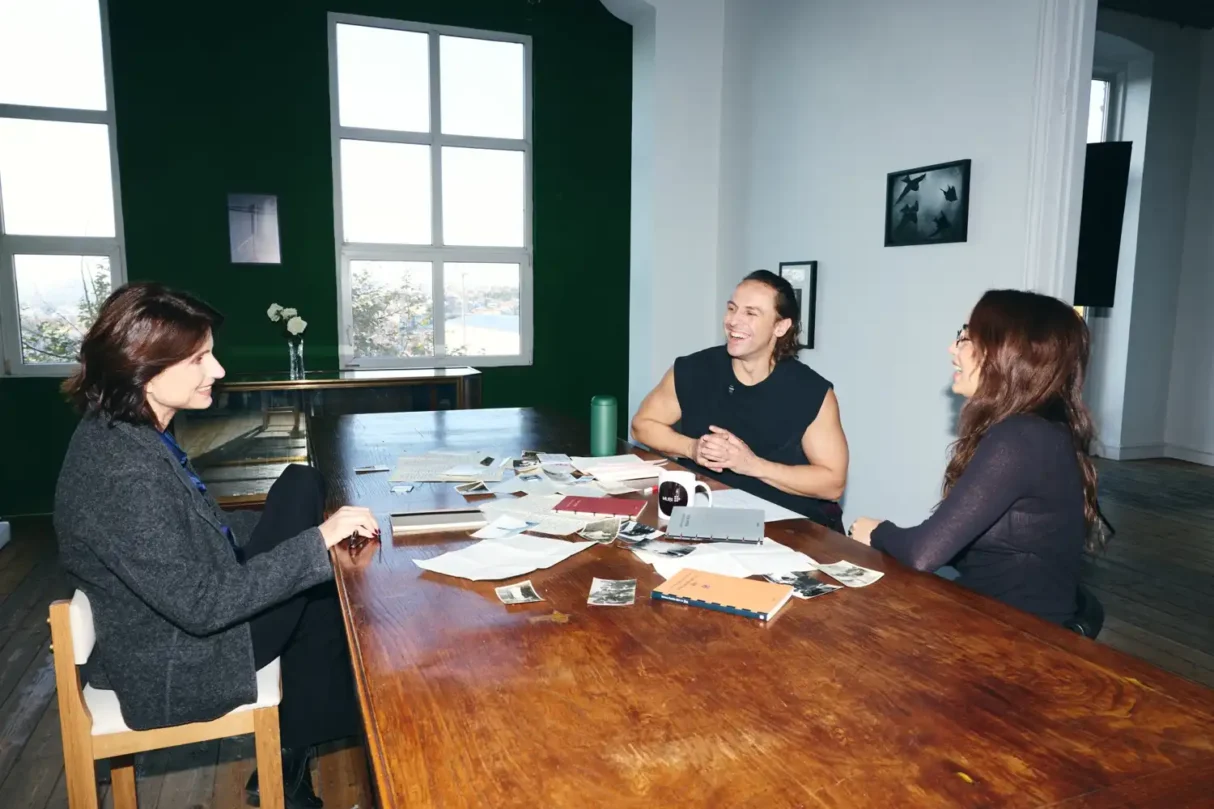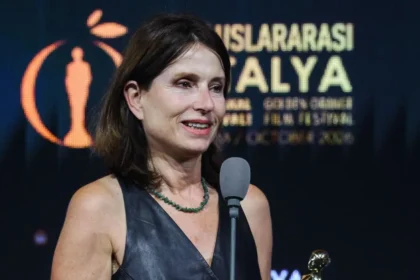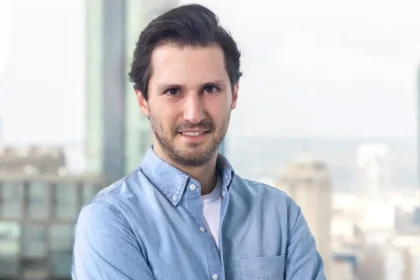





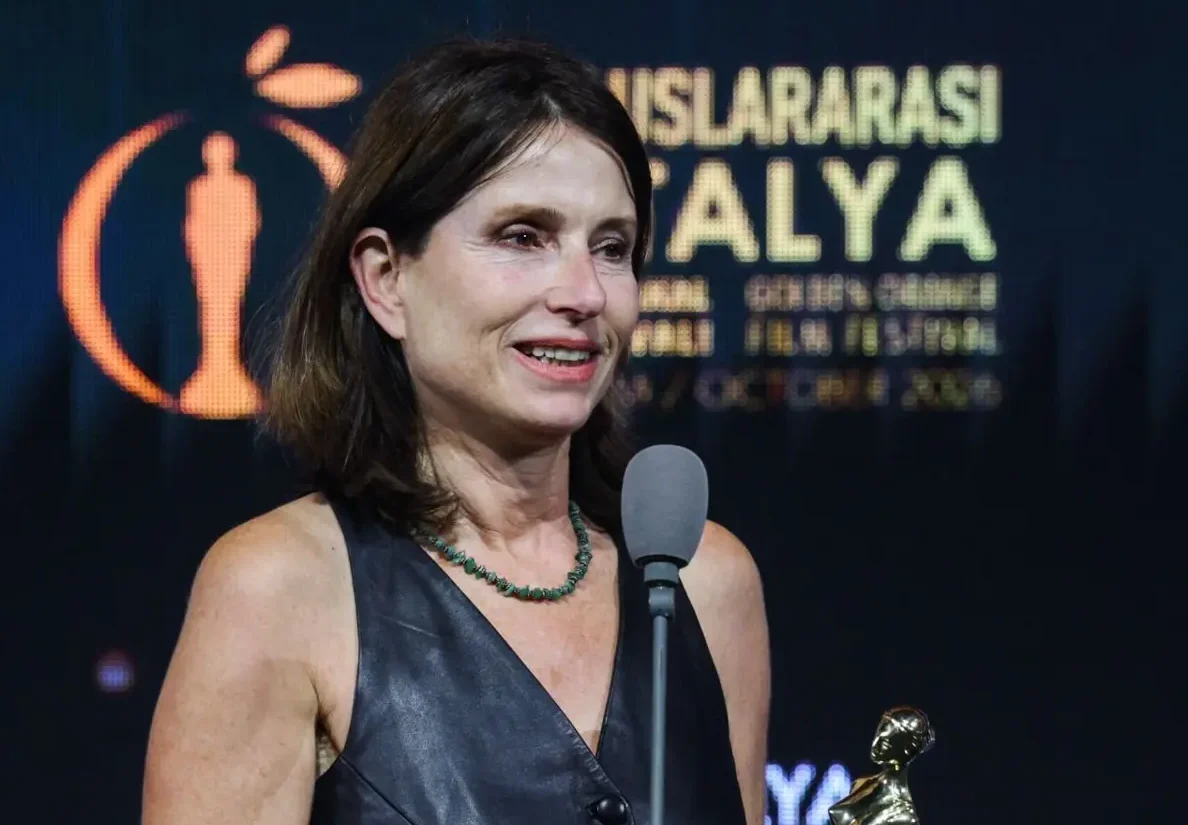
Orçun Onat Demiröz spoke with Yeşim Ustaoğlu, who won the Best Director award at the Golden Orange Film Festival for What Remains, about the film’s creative process for our November issue.
For me, it’s not just about writing or just about making films.
Yeşim Ustaoğlu’s new film What Remains had its Turkish premiere at the 63rd Antalya Golden Orange Film Festival. Competing in the “National Feature Film Competition,” the film was among the festival’s most anticipated productions. Ten years have passed since Ustaoğlu’s previous feature film, Clair Obscur, following the films that have left their mark, such as Journey to the Sun, Waiting for the Clouds, and Pandora’s Box. Consequently, there is great anticipation surrounding the theatrical release of What Remains as well.
Yeşim Ustaoğlu won the Best Director award at the Antalya Golden Orange Film Festival for What Remains. The film also received the awards for Best Art Direction and Best Cinematography. Öykü Karayel took home the Best Actress award for her performance.
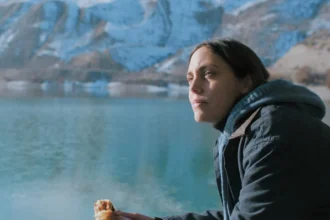
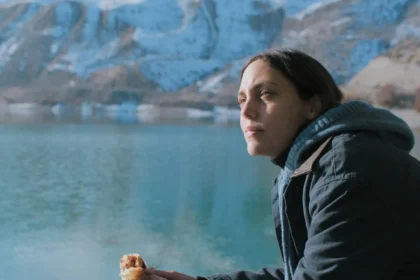
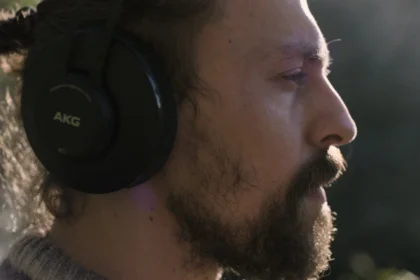
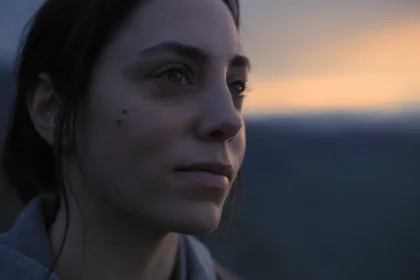
Starring Öykü Karayel and Metin Akdülger, the film revolves around the existential crisis and alienation of an artist couple living a bohemian lifestyle in Istanbul. In some ways reminiscent of Joachim Trier’s films, What Remains is also a road movie. Exploring the diverging paths of a couple who are exhausted, trapped, and searching for their own voices, the film portrays a state of mind that flows from the inside out. The courage to confront the past and the ability to take action complete this emotional landscape. I met with Yeşim Ustaoğlu during the Antalya Golden Orange Film Festival and conducted this interview. Enjoy reading!
How is the festival going?
I had been eagerly looking forward to appearing before the audience here and screening my film here. We are here for Turkish audiences, and I’m happy to be experiencing the festival.
What Remains had its Turkish premiere at the Antalya Golden Orange Film Festival, but its international premiere took place at the San Sebastián Film Festival. How was the response there? Having its international premiere in San Sebastián must have made the experience even more exciting for you.
It would be strange if I said no to that, wouldn’t it? It certainly amplified the excitement. San Sebastián is a very important film festival, so it was valuable to begin the film’s journey there. It’s a festival I’ve attended before and one I’m very fond of. It also has an audience-oriented atmosphere. The reactions there were very positive, which was another source of joy for me. We held our international premiere in San Sebastián, but our journey abroad will continue at different festivals.
I also attach great importance to the Antalya Golden Orange Film Festival. Just like San Sebastián, this is an audience-oriented festival, and viewers come and express their reactions directly. Being close to the audience and following their responses is important.
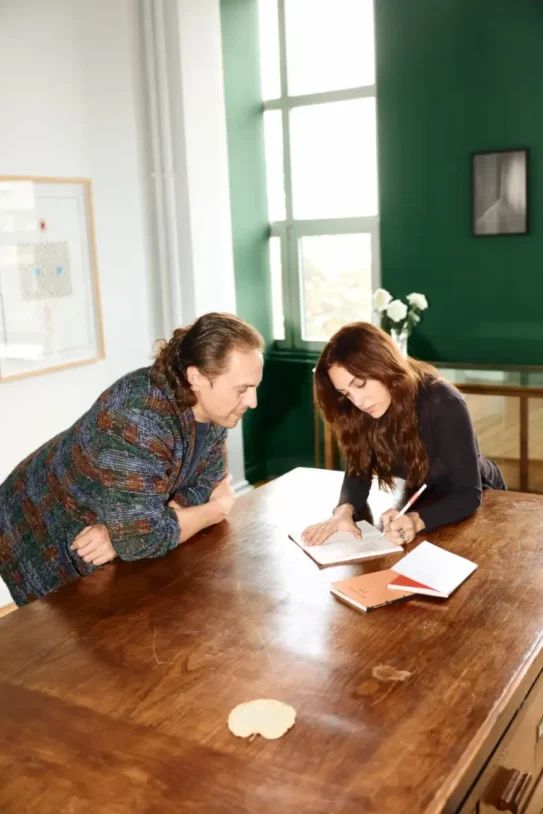
You are competing in the national competition here. I think What Remains is one of the strongest contenders in several categories. Your previous film, Clair Obscur, came out ten years ago, so there is quite a long gap between the two films. In a way, this is also a comeback film for you. How did you develop the story? When did it begin, and how did it evolve?
Actually, screenings of Clair Obscur continued very intensively throughout 2017. We were holding numerous screenings, both internationally and nationally, in many different places. So I was travelling extensively during that period, and discussions about the film were still ongoing.
What Remains had slowly begun to take shape in my mind around 2018. Perhaps because I was feeling and thinking about very similar things, I was wondering what I should write. But what should I write, and why should I write it? Once you start asking yourself that question of why, you find yourself in something very serious. Because for me, it’s not just about writing or just about making films. Neither of these things means anything on its own.
You begin to feel things when you start questioning what you want to tell, why you want to tell it, and whether you can tell it freely. All the social pressures you experience, all the weight, meaninglessness, sadness, injustice, and existential problems… When you genuinely begin to question and feel all of these things, the creative process also begins. That was how I started to feel Elif’s character very deeply.
I felt that Elif was a little like your “alter ego.” That was the perspective from which I watched the film. It almost seems to have strong autobiographical qualities. We have also been seeing this quite often in Pedro Almodóvar’s recent films, where he directly brings his own world and creative journey together with fiction.
Yes, that could be true. I think an artist should always question this. In fact, not just artists, but everyone should question things and begin by asking why. My motivation for starting the film, the reason behind it, was also an impulse. It was a feeling of suffocation.
When you feel that sense of suffocation in the face of all this injustice, as Elif says in her verse, “what difference would it make even if the sun walked?” It is an incredibly powerful feeling. But what I’m talking about is not simply leaving that feeling behind and walking away from it. When I began to think about where that feeling and impulse would take me, what they would make me encounter, and how I could liberate myself, I became Elif, and I also began travelling alongside Elif.
On the other hand, this is something I always do anyway. I, Yeşim, simply set off and go. I see how much the unknown teaches and disciplines me. Everyone I encounter and every issue I come across along that journey also has its own significance; they bring me back to my senses.
You begin to feel things when you start questioning what you want to tell, why you want to tell it, and whether you can tell it freely. All the social pressures you experience, all the weight, meaninglessness, sadness, injustice, and existential problems… When you genuinely begin to question and feel all of these things, the creative process also begins.”
Elif’s journey and the encounters she experiences are essentially about finding herself, but Mehmet, played by Metin Akdülger, is also on a journey to find his voice. What can you tell us about him?
Mehmet is the one who runs away from everything. He is the one who essentially avoids listening to Elif, understanding her, and confronting that wounded state of mind. He has a major confrontation waiting for him and a grief that never ends. On top of that, there is the question of becoming a father.
It is not just about confronting his father or his own story. Mehmet is also a man who has to confront his own fatherhood, his actions as a husband, and the way he loves. While creating this separation, I wanted to talk about a relationship that steps outside the familiar patterns. I did not approach it through the framework of a bad, oppressive man or a pragmatic woman under pressure. That is not the story I am telling. These roles have been portrayed far too often, and I’m tired of seeing these stories.
Mehmet is interested in atonal music. While watching the film, I wondered about the reason behind this choice. There is also a sense of chaos in the film, dominated by the sounds of the city. Why did you choose these soundscapes and use atonal music? The atonal music aspect, in particular, seems to come from a rather academic perspective.
Yes, I have been interested in and listening to atonal music for many years. I have also been following research and work in this field for a long time. It is a particular passion of mine. Starting with the Japanese composer Ryuichi Sakamoto, I have an intellectual interest in the transformation of music and its journey towards the environment and nature. I have a vocabulary when it comes to soundscapes and improvisation. It is an accumulation of knowledge passed down from my grandfather and my family, which manifests itself in different areas.
That is why the character of Mehmet emerged spontaneously as a result of my interest in sounds. It was also an immense pleasure to work with Şevket Akıncı, who composed the film’s music.
There is also the design aspect of it, of course. The film’s sound design is quite good, too. Generally, local productions always seem to have production problems when it comes to sound. To be honest, we don’t know how to record sound properly. In What Remains, however, sound accompanies the film as a truly distinctive feature. How do you interpret this?
To tell you the truth, sound is an obsession of mine. It is something that began with my short films and has continued for years. I believe that sound itself carries meaning and that sound constitutes half of an image. This sense of meaning is present in all my films. Sound design, creating the meaning of sound, giving it significance, and considering the message accordingly…
I devote a great deal of thought to all of these, both during production and in post-production. I also put my team together accordingly. The same was true for this film. From beginning to end, we attached special importance to designing the sound and tried to make the film stronger through these soundscapes and their design.
The cinematography is similar. What Remains also has a distinctive visual language and texture. What would you say about the cinematography and that visual texture?
The film’s cinematographer was Kiril Prodanov. Kiril was also very familiar with the script and the environment from the very beginning. I gather all these details during my travels. I constantly plan how I will look at interiors and exteriors, and which lens I will use to shoot them. For example, I had a very clear vision of that mirage effect on the road. I took so many photographs and videos of it… That is why I always know what I will shoot, in which region, at what time, and in what kind of daylight. I also share all these details. Of course, I would also like to thank Kiril for his knowledge and skill in this regard. He contributed a great deal to the film.
On another note, your film also includes footage from the documentary Kuru Taşın Başı. Did you specifically want to use that footage, or did the idea emerge later?
During our location scouting, when we went to Yusufeli, the documentary process had also begun. So we adapted ourselves to Yusufeli during that period. But while shooting the documentary footage, we were also beginning to see what would happen to Elif in What Remains. So I can say that these two projects progressed side by side.
Also, while I was reworking the screenplay draft for What Remains, it was already clear that Yusufeli would be submerged. When I thought about the impact those bridges, viaducts, and tunnels had on me, the story there began to take shape. Since we were shooting the documentary at the time, I was also starting to gather visual material that would feed into that story. This is how Kuru Taşın Başı and What Remains became connected, intertwined, and progressed in parallel.
When you think about this entire process, there was no real break. In fact, it was an incredibly intense period of work. The pandemic brought us to a halt. When the whole world shut down and life came to a standstill, we experienced a two-year delay. That is why I cannot think of What Remains as a comeback film. In fact, by the end of this process, two films had emerged: What Remains and Kuru Taşın Başı.
You also have a connection with poetry and literature. We see that connection in this film through Elif’s character. You also use poems by poet Birhan Keskin in the film. How did you come to that decision?
Yes, I am a very avid poetry reader. My relationship with literature has always been very strong, too. When I talk about an image in cinematic terms, I always refer to literature, particularly poetry. In this regard, one of the most important poets in my life is Birhan Keskin. I love her very much, both as a person and as a friend. She is someone I know with all my heart, someone I feel is part of me, with her entire being and every line she writes. I value her immensely. So when I began thinking about Elif, Birhan’s poems were already in my mind; they came along with Elif. It was part of a process of unity and creation. Birhan and I embarked on this journey together. That is why it should not be seen as though I simply took Birhan’s poems and used them in my film.
We experienced the entire process together and spent a great deal of time together. Everything that brought Elif into being, every line and every image, emerged together. We created all the poems together, and she also wrote the farewell poem. She wrote it for this purpose. The time we spent together was incredibly precious to me.
I am a very avid poetry reader. My relationship with literature has always been very strong, too. When I talk about an image in cinematic terms, I always refer to literature, particularly poetry. In this regard, one of the most important poets in my life is Birhan Keskin..
What will the film’s festival journey look like?
The Ankara Film Festival is next. I also love the Ankara audience. That festival, too, is audience-oriented, and viewers follow the films closely. I also love its universities and university students. That is why I am looking forward to the Ankara Film Festival with great excitement.
Of course, there will be other festivals we attend, too, and preparations are underway, particularly for the international side. Alongside that, we will also have our theatrical release and premiere. I really want young people to see this film. I hope they will take action and choose to watch What Remains in cinemas. What Remains is also a film that speaks to young people. I am eagerly waiting to see how the film’s journey unfolds and what happens to it.
You can read our interview with Öykü Karayel, one of the lead actors of What Remains, here.
You can read our interview with Metin Akdülger, one of the lead actors of What Remains, here.