




For our MIPCOM 2026 issue, Orçun Onat Demiröz takes a look at 2026’s standout book adaptations.
We have entered the final quarter of 2026, and it has to be said that the TV and cinema calendar continues at full speed. As we approach the end of the year, we will see another wave of activity, and we will close out the year alongside awards season.
On the cinema side, hits from a new generation of young directors have been among the most talked-about titles of the year. The horror genre, in particular, has been on the rise again in recent years and is changing the paradigm in Hollywood. With original productions, horror cinema continues to attract audiences under the age of 30 as well. Among the hits that have marked this year are Curry Barker’s Obsession and Kane Parsons’ Backrooms.
Of course, Christopher Nolan’s adaptation of Homer, The Odyssey, also broke box-office records and became the highest-grossing film of his career. Likewise, Spider-Man: Brand New Day, directed by Destin Daniel Cretton and released over the summer, managed to become the third highest-grossing film of all time. But the year is not over yet: toward the end of the year, we will see Dune: Part Three and Avengers: Doomsday.
Meanwhile, the 2026 TV calendar has also been highly satisfying. Among the most notable new series of 2026 were Widow’s Bay, Half Man, Spider-Noir, Lanterns, Furious, and A Knight of the Seven Kingdoms. Productions such as The Pitt, Beef, Sugar, Silo, Reacher, Dark Matter, Paradise, and The Gentlemen continued to attract attention with their subsequent seasons. Toward the end of the year, we will be talking about productions such as MobLand, Carrie, Harry Potter, and Blade Runner 2099.
So, which book adaptations stood out this year, and which major book adaptations are still ahead of us? Let’s take a look at the book adaptations of 2026 that are worth watching. I have also added some of the major book adaptations coming in 2027 to the end of the list. Enjoy the read!
FILMS
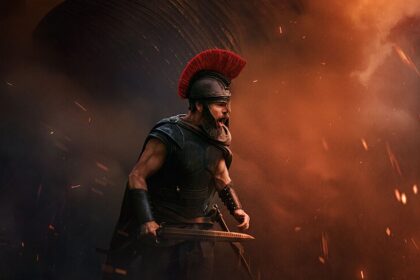
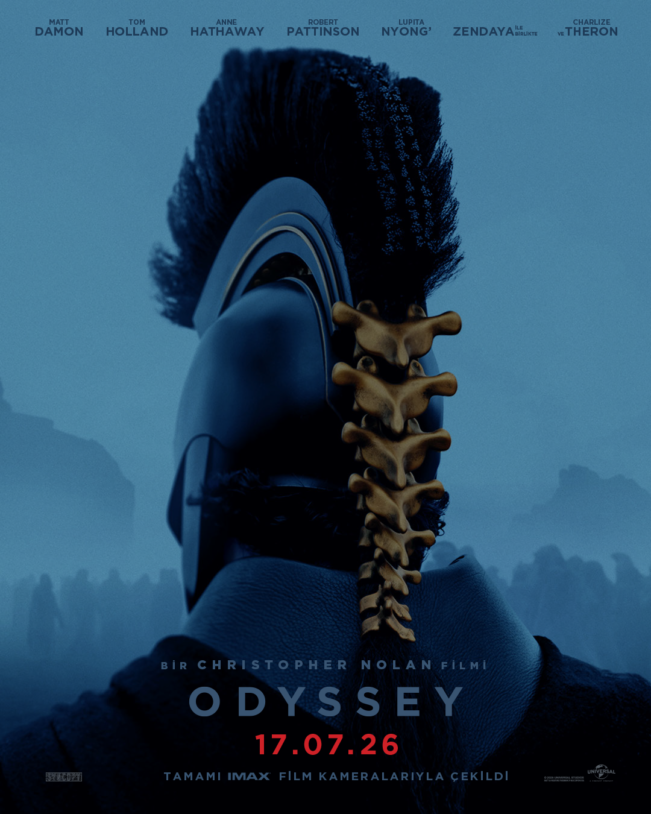
CHRISTOPHER NOLAN – THE ODYSSEY
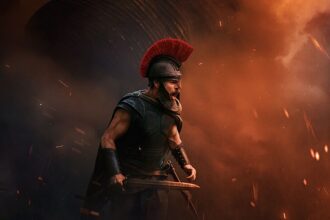
Christopher Nolan’s The Odyssey was one of the most anticipated productions of 2026. In fact, The Odyssey grossed $1.631 billion at the global box office, breaking Christopher Nolan’s career record and becoming his most-watched film. The production also achieved record-level attendance in IMAX theaters, marking a major success in terms of bringing audiences back to cinemas.
At the same time, The Odyssey is a masterpiece that brings Homer’s myth to the big screen with monumental qualities. Christopher Nolan’s maximalist cinematic approach and epic narrative conventions surround this narrative, one of the building blocks of Western civilization and Mycenaean and Hellenic culture, with remarkable skill. Christopher Nolan also dismantles the divine “white” motifs at the roots of Western civilization.
Frankly, as a text, The Odyssey is a heroic reflection of an Apollonian and rational worldview. Hellenic civilization is portrayed through nature, hierarchical social relations, and mythical elements, centered on the principles of “knowing oneself” and “being moderate.” In Odysseus’s journey home, disrupted by Poseidon’s curse, great values such as intelligence, willpower, loyalty, justice, and the sanctity of hospitality are put to the test.
Christopher Nolan expands his narrative section by section in The Odyssey, making brilliant use of cross-cutting, jumps, and one of the signatures of his cinema. Meanwhile, the sequences featuring encounters with Poseidon’s son, the Cyclops Polyphemus, the giant Laestrygonians, and the witch goddess Circe are also cinematic spectacles.
For example, the design of Polyphemus recalls the monsters of Guillermo del Toro. The Circe sequence, meanwhile, has the feel of a folkloric horror film and features wonderful directorial touches. Ultimately, Christopher Nolan does justice to The Odyssey as an epic. The Odyssey is a production worthy of taking its place alongside Interstellar, The Prestige, and the Batman trilogy in Christopher Nolan’s filmography.
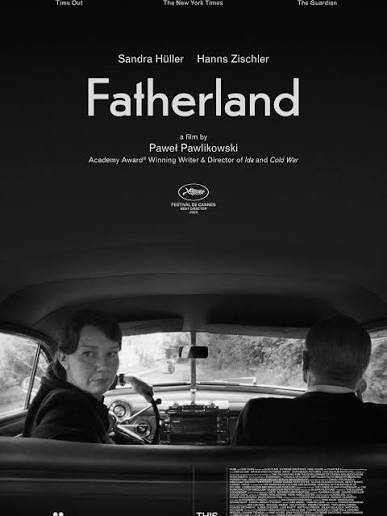
PAWEL PAWLIKOWSKI – FATHERLAND
Fatherland is a cinematic spectacle that explores the collapse of the “Deutscher Geist” (German spirit) after World War II through the journey of Thomas Mann, who became stateless. Pawel Pawlikowski co-wrote this film, which he loosely adapted from Irish writer Colm Tóibin’s novel The Magician, with Henk Handloegten, known for the series Babylon Berlin and the film Good Bye Lenin.
Shining through Pawel Pawlikowski’s sharp-contrast, striking black-and-white visual language and minimalist mise-en-scène that brings emotions to the surface, Fatherland merges the representation of German idealism with the spiritual state of Thomas Mann, who follows Goethe as his compass. Indeed, Thomas Mann’s journey in pursuit of Goethe, who is regarded as one of the greatest authorities of German culture in the 20th century, opens the door to a moral and political perspective.
In fact, during his youth, Thomas Mann considered himself a bourgeois and conservative figure outside politics. In his essay Betrachtungen eines Unpolitischen (The Reflections of a Nonpolitical Man), he even defended the German cultural spirit, militarism, and traditionalism.
However, he changed in the face of the terrible tragedy created by Nazi Germany. In particular, he began to sympathize with socialism in the 1930s and fled Germany as an opponent of Nazism. Living in exile for an extended period, Thomas Mann became differentiated as a “heimatlos,” a person without a homeland. In the early 1950s, he returned to Europe after becoming troubled by the repression of the McCarthy era in the United States.
Fatherland centers on a journey Thomas Mann undertakes with his daughter Erika Mann as they return to Europe, offering a remarkable exploration of historical memory. One of the most prominent themes in Pawel Pawlikowski’s cinema, the symbol of memory passes through the lens of exile and focuses on the social destruction caused by World War II and collective traumas that could not be overcome.
Pawel Pawlikowski also uses the 4:3 aspect ratio and tight framing in a highly aesthetic manner. He conveys the characters’ loneliness and the atmosphere of the period with tremendous poeticism. Fatherland stands out by building Thomas Mann’s cultural existence around a sense of responsibility and conscience, bringing literature and cinema together. Fatherland, which earned Pawel Pawlikowski the Best Director award at the Cannes Film Festival, is one of the best films of the year!
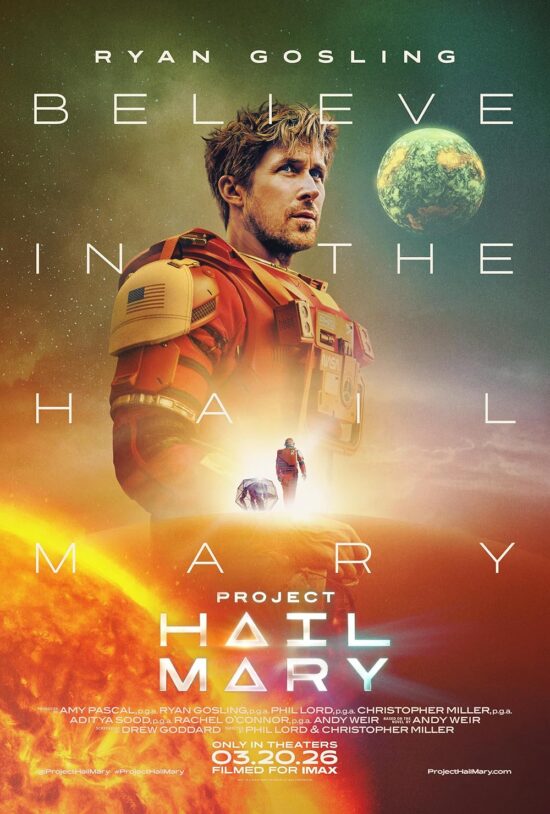
PHIL LORD & CHRISTOPHER MILLER – PROJECT HAIL MARY
Project Hail Mary is a heartwarming science-fiction story centered on a third-kind encounter with an extraterrestrial being and the foundations of friendship. Frankly, a hybrid of genre-defining and groundbreaking productions such as E.T., Interstellar, and Arrival, Project Hail Mary is a metamodernist work that also brings back the blockbuster entertainment that cinema audiences have been missing.
Moreover, the film Project Hail Mary is a worthy adaptation of the novel by Andy Weir, who made his name with The Martian. As a novel, Project Hail Mary has an extremely gripping narrative and stands out as hard sci-fi. Molecular biology, astrophysics, and chemistry play an important role in this work, in which science takes center stage.
Andy Weir makes extensive use of these fields throughout the novel and provides descriptions that do not overwhelm the story. Project Hail Mary is a very well-balanced science-fiction novel in this respect, and it never loses its flow. The descriptions of Eridian aliens, interstellar spacecraft, and distant galaxies are also highly compelling.
Indeed, the film directed by Phil Lord and Christopher Miller brings to the screen the elements that differentiate the novel as well as its various layers. At the same time, it captures the humor and emotional empathy of the novel from exactly the right angle. The film’s production design and visual texture are also eye-catching.
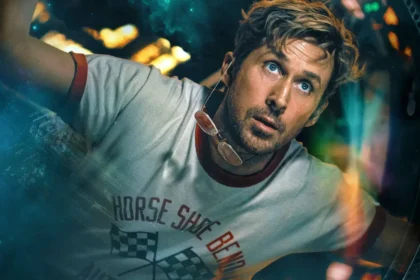
Greig Fraser, one of the leading cinematographers of recent years, makes a major contribution to the film. He delivers a macro-level visual achievement similar to his work on the Dune films. Ryan Gosling’s aura also carries the film. Project Hail Mary is a production that satisfies those who love the novel while also exciting cinema audiences.
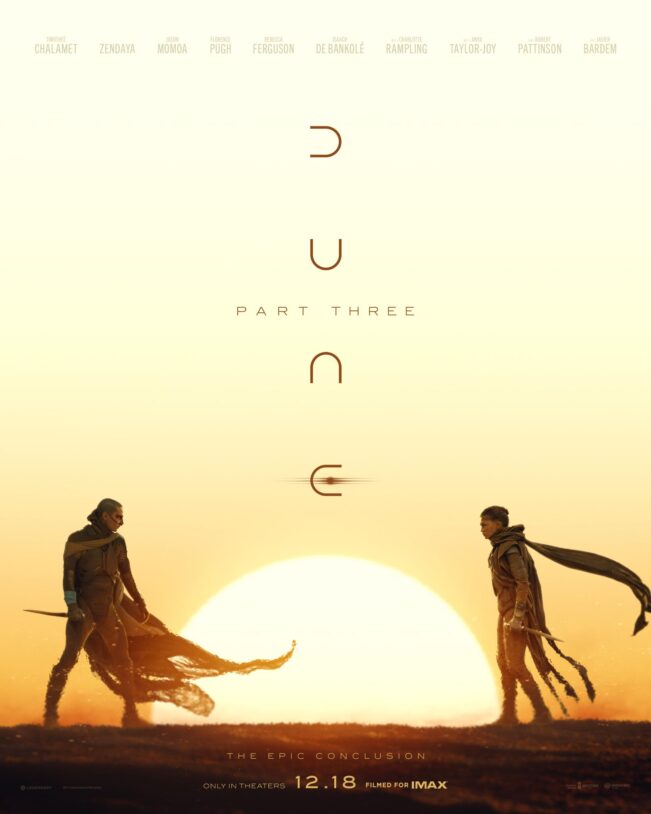
DENIS VILLENEUVE – DUNE: PART THREE
Denis Villeneuve’s Dune series concludes with Dune: Part Three (Dune 3). The first two films followed the events of Dune, the first novel in Frank Herbert’s groundbreaking science-fiction series. Dune: Part Three, meanwhile, follows the storyline of Dune Messiah, the second book in the series.
Indeed, Dune Messiah is one of the finest sequel novels to explore the triangle of religion, state, and individual. It tells the story of the struggle to re-humanize “Muad’Dib,” the glorious victor of the holy war and ruler of the universe, in the deserts of Dune. Dune: Part Three explores the period of Paul Atreides’s rule after he has been deified as “Muad’Dib” and now governs the galaxy. It also centers on Paul’s problems with Chani, Princess Irulan’s position at court, and conflicts directed against the galactic empire.
On the other hand, Dune Messiah ends with the birth of Paul Atreides’s twin children, “II. Leto” and “Ghanima.” However, it is anticipated that Dune: Part Three will extend into the characters’ adolescence and feature a different time jump. In addition, one of the key characters in the Dune series, Duncan Idaho, is preparing to return in Dune: Part Three. Jason Momoa will once again portray Duncan Idaho, this time under the name “Hayt.”
Written by Denis Villeneuve and Brian K. Vaughan, known for the comic-book series Saga, Dune: Part Three will be released in theaters on December 18. Dune: Part Three is one of the most anticipated productions of 2026.
TAIKA WAITITI – KLARA AND THE SUN
New Zealand director Taika Waititi is known for his absurdist humor and independent roots. Also an actor, Taika Waititi won the Academy Award for Best Adapted Screenplay in 2020 for his film Jojo Rabbit.
The adaptation of Klara and the Sun, which will be released this year, is also one of the eagerly anticipated productions. Adapted from the novel of the same name by Japanese-born Nobel Prize-winning novelist Kazuo Ishiguro, Klara and the Sun is a film about humanity, artificial intelligence, and loneliness. Published in 2021, the novel is told from the perspective of Klara, an “Artificial Friend” designed to keep children company.
Klara, who possesses an extraordinary ability to observe, is chosen by Josie, a sick young girl, and the friendship that develops between them forms the central concern of the novel. One of the notable philosophical questions raised in the novel is also what defines a person as human. Taika Waititi’s humor, the warmth in his cinema, and his ability to adapt source material have already put Klara and the Sun on many lists. The film’s cast includes rising Gen Z star Jenna Ortega, Amy Adams, Mia Tharia, and Aran Murphy.
Klara and the Sun will be released in theaters on October 23.

TV SERIES
GEORGE R.R. MARTIN & IRA PARKER – A KNIGHT OF THE SEVEN KINGDOMS
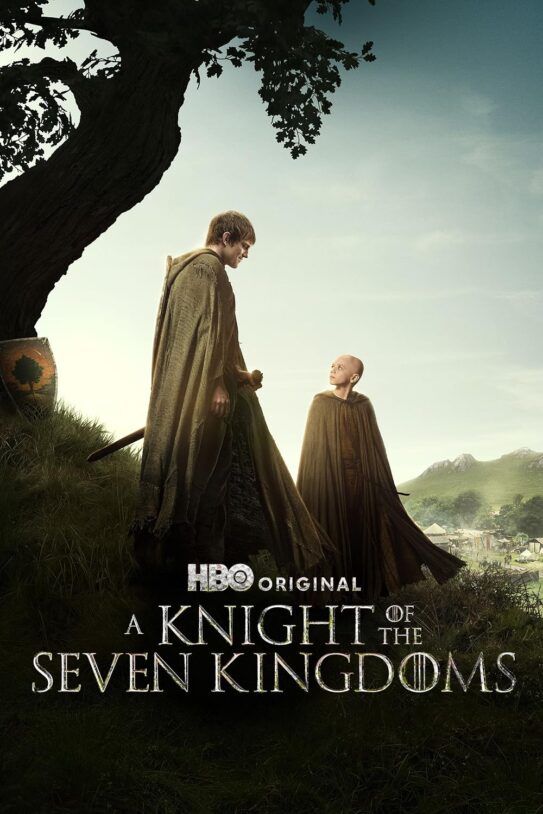
HBO’s A Knight of the Seven Kingdoms was among the most pleasant surprises on television in 2026. Adapted from George R.R. Martin’s novella series Tales of Dunk and Egg, A Knight of the Seven Kingdoms forms a bridge between Game of Thrones and House of the Dragon.
Set approximately 72 years after House of the Dragon, the series tells an independent story in Westeros in the aftermath of the great Targaryen civil war known as “The Dance of the Dragons.”
Unlike the epic texture of Game of Thrones and House of the Dragon, the production moves in a different tone, centering on the adventures of Ser Duncan the Tall and his squire Egg. Their story is removed from the political intrigues, wars, dragons, and conflicts between houses seen in Game of Thrones and House of the Dragon. For this reason, A Knight of the Seven Kingdoms scales down the Game of Thrones universe and presents it in a character-driven manner.
The risks Ser Duncan takes on his path toward knighthood and the bond of friendship he forms with Egg also transform the series into a warmer road story. In addition, the fifth episode, “Seven,” and the fourth episode, “In the Name of the Mother,” rank among the best episodes in the Game of Thrones universe. With HBO having renewed A Knight of the Seven Kingdoms for its second and third seasons, the adventures of Duncan and Egg will continue.
JO NESBØ – JO NESBØ’S DETECTIVE HOLE
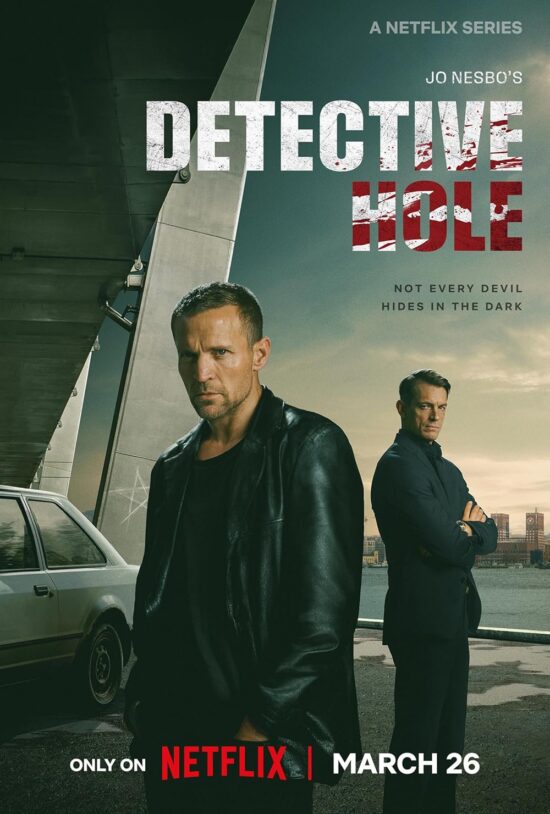
Jo Nesbø’s Detective Hole is a series that does justice to “Nordic noir.” Frankly, after the poor film adaptation of Jo Nesbø’s iconic Scandinavian crime series and the Harry Hole character starring Michael Fassbender, it is significant to see the character return in such a stylized form.
In fact, Harry Hole is a tribute to Michael Connelly’s character Harry Bosch, and Bosch had a major influence on his creation. In this respect, the Netflix series reflects Harry Hole’s characteristic qualities very well. Harry Hole is defined by his alcohol addiction, social detachment caused by his traumas, introversion, inability to fit into the system, and obsessions. Yet despite all his disorder, exhaustion, complicated emotional state, and burnout, Harry Hole hates corruption and inequality. He moves through life while solving cases, using that experience to reach conclusions.
Jo Nesbø’s Detective Hole follows the fifth book in the novel series, The Devil’s Star. The series does not directly introduce or showcase Harry Hole’s connection to the Rock ’n’ Roll world. Instead, it incorporates glimpses of Harry Hole’s past and background into the story. It does this by using critical events from the novels published before The Devil’s Star. His conflict with Tom Waaler also stems from this.
The fact that Jo Nesbø himself is the creator of the series produces the right result, and the series progresses with an atmosphere reminiscent of David Fincher’s Seven. In this respect, the characterization and tone work very well. The pacing, hooks, and soundtrack choices also create a desire to keep watching. Harry Hole’s exhaustion, his morning-after state, and his attempts to solve cases while wearing a Mayhem T-shirt satisfy those who have read the novels. Nordic noir fans will also find what they are looking for in Detective Hole.
MIKE FLANAGAN – CARRIE
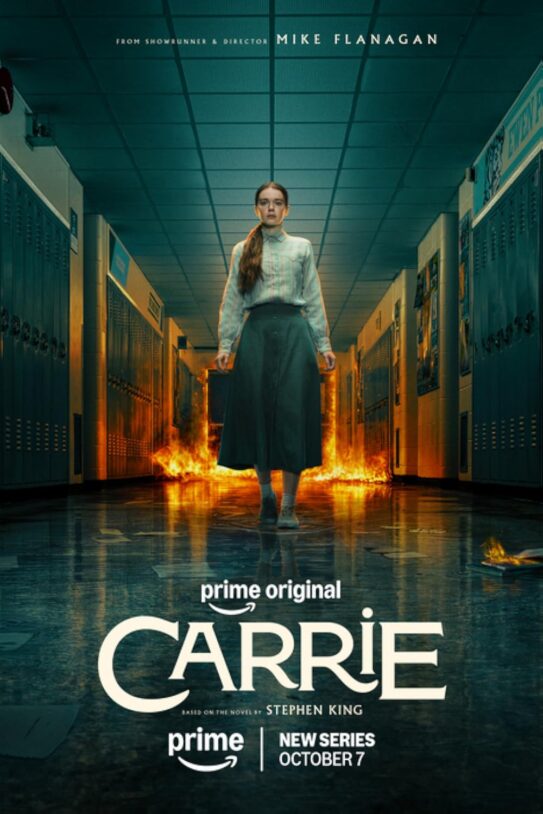
Carrie, adapted from contemporary horror literature master Stephen King’s first novel, published in 1974, is one of the exciting TV series of 2026. It is also Mike Flanagan’s first production for Prime Video, and the series brings social-media bullying and peer violence into contemporary high-school life.
On the other hand, Carrie, previously adapted by legendary director Brian De Palma and regarded as one of the classics of horror cinema, is being adapted for television as a miniseries for the first time. One of the leading names in contemporary horror cinema, Mike Flanagan had previously adapted Stephen King’s books Gerald’s Game and Doctor Sleep. Mike Flanagan also delivered a different kind of emotionally intense Stephen King adaptation with The Life of Chuck, starring British star Tom Hiddleston.
Meanwhile, Mike Flanagan’s series The Haunting of Hill House, Midnight Mass, and The Fall of the House of Usher, created for Netflix, had brought a fresh perspective to the horror genre. Having left Netflix and moved to Prime Video, Mike Flanagan is pursuing a new narrative with the Carrie series. Carrie will be added to the Prime Video catalog on October 7.
FRANCESCA GARDINER – HARRY POTTER
The new Harry Potter series, adapted from the popular and bestselling fantasy novel series by British author J.K. Rowling, is one of the most talked-about productions of 2026. However, HBO’s Harry Potter series has already divided fans and audiences into two camps.
The main reason for this division is J.K. Rowling’s transphobic statements and social-media posts. In fact, star actor Pedro Pascal supported a boycott of Harry Potter because of J.K. Rowling’s anti-trans statements. It is also known that J.K. Rowling is estranged from Harry Potter film stars Daniel Radcliffe, Emma Watson, and Rupert Grint because of her stance.
At the same time, the Harry Potter series turns J.K. Rowling’s seven-book series into a long-form TV narrative, with each season adapting a single novel. The first season is based on Harry Potter and the Sorcerer’s Stone, which was previously adapted for the big screen by Chris Columbus in 2001. The creator and showrunner of the TV series is Francesca Gardiner, one of the writers of the major drama hit Succession in recent years.
One of the most notable and exciting aspects of the Harry Potter series is that details previously shortened or completely removed from the films will be added to the story. This will allow fans to watch the seven-book series as a long-running TV adaptation. In particular, the roots of Hogwarts, the past of Voldemort and Dumbledore, the Deathly Hallows, Severus Snape’s attitude toward Harry, and supporting characters will be explored in greater detail.
The Harry Potter series is expected to become HBO’s biggest digital streaming event and break new records for the platform. The series will premiere with its first episode on December 25!
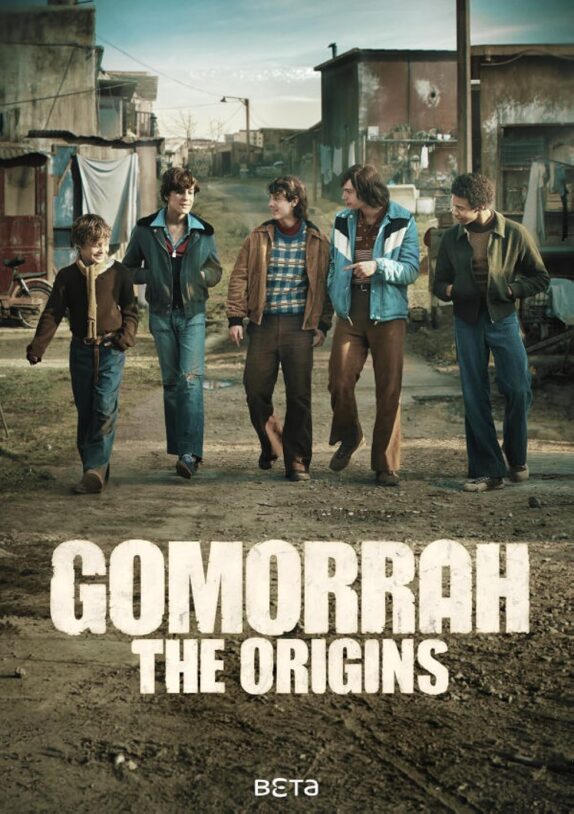
LEONARDO FASOLI & MADDALENA RAVAGLI & ROBERTO SAVIANO – GOMORRA: LE ORIGINI
Based on Roberto Saviano’s bestselling book about the Neapolitan mafia, Gomorrah is one of the hits to emerge from Italy and shake the world. Once compared to The Sopranos, the series also draws on contemporary Italian cinema. Growing through its treatment of Italy’s cultural codes, its approach to despair, and its portrayal of brutality, the series realistically explores the conflicts between Camorra clans. It offers an authentic journey into the underground criminal world of Naples.
Gomorra: Le origini (Gomorrah: The Origins) is a prequel to Gomorrah, one of the best epic crime dramas produced on an international scale. Set in 1977 Naples, the series centers on the youth of Pietro Savastano, whom we know from Gomorrah. As part of the compelling universe of Gomorrah, the series focuses on Pietro’s transformation after entering the criminal world. At the same time, Gomorra: Le origini brings 1970s Naples and the workings of its underworld to the screen.
Pietro Savastano’s life before he became a feared and ruthless mafia leader is presented in detail in Gomorra: Le origini.