




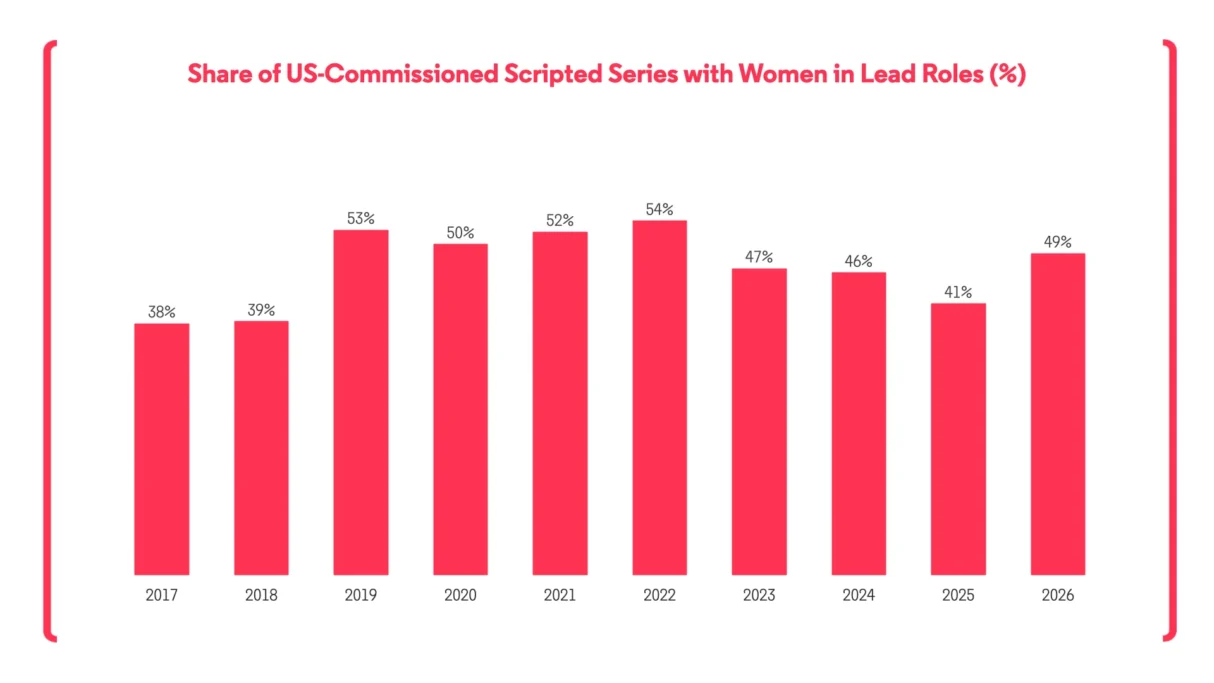
Women are regaining ground in US scripted television commissioning after a period of decline following the end of the Peak TV era. According to 3Vision’s Show Tracker data, series featuring women in leading roles represented 49% of new US scripted commissions in 2026, up eight percentage points from 2025, when the share reached its lowest level since 2018.
Between 2019 and 2022, women led at least half of all newly commissioned US scripted series, with their share peaking at 54% in 2022 amid the streaming commissioning boom. However, the market contraction that followed saw the figure fall to 47% in 2023 and then to 41% in 2025. The latest data signals a recovery, but representation has yet to return to its 2022 level.
How Are Streaming Platforms Commissioning Women-Led Series?
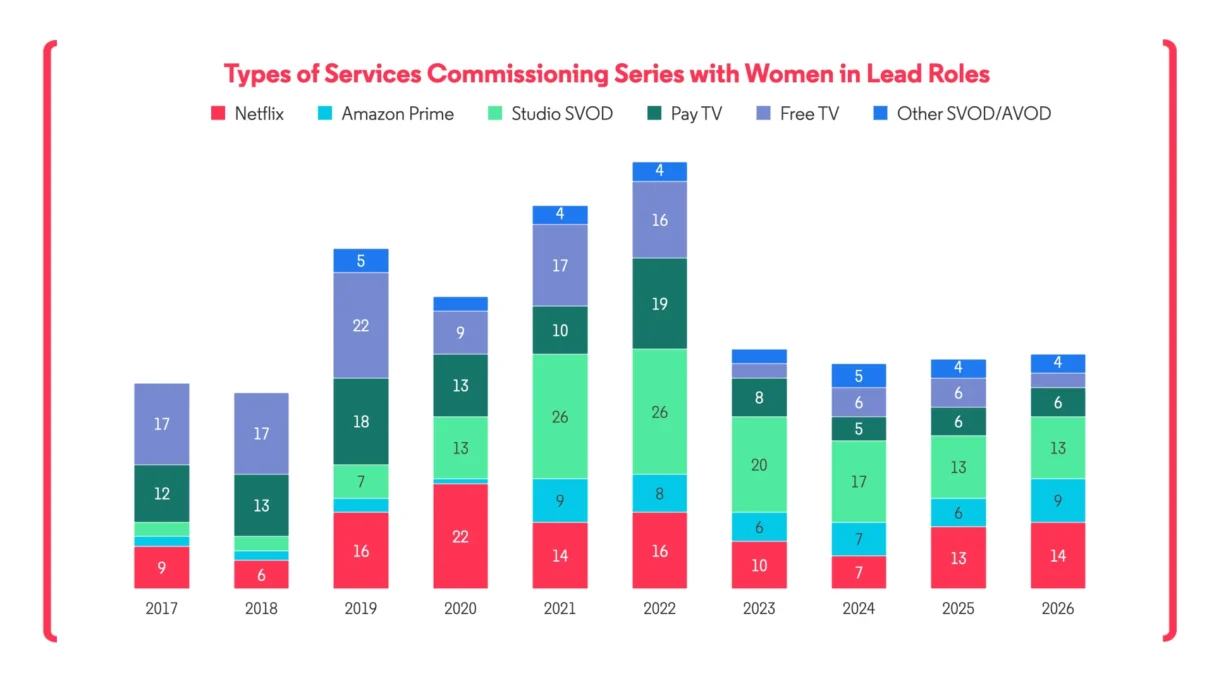
Streaming services continue to play a central role in commissioning series featuring women in leading roles. Studio-owned subscription video-on-demand (SVOD) platforms commissioned 26 such series in both 2021 and 2022. That number declined to 13 in 2025 and remained at the same level in 2026.
Despite the lower number of commissions, women-led productions accounted for approximately 54% of new series commissioned by studio-owned SVOD services in 2026.
Netflix and Amazon Prime Video also performed above the overall US market average. Women in leading roles featured in approximately 56% of Netflix’s new series commissions and 60% of Amazon Prime Video’s.
How Does Free TV Compare With Streaming Platforms?
The recovery has not been evenly distributed across the US television market. While streaming platforms recorded higher shares of women-led commissions, Free TV showed a considerably lower figure.
Only 23% of Free TV’s newly commissioned series in 2026 featured women in leading roles. The contrast highlights the differences between streaming services and traditional broadcasters in their commissioning patterns.
Overall, 3Vision’s figures point to an uneven recovery in gender representation across US scripted television. While streaming platforms are contributing significantly to the renewed presence of women in leading roles, traditional broadcasters have yet to record comparable progress.