



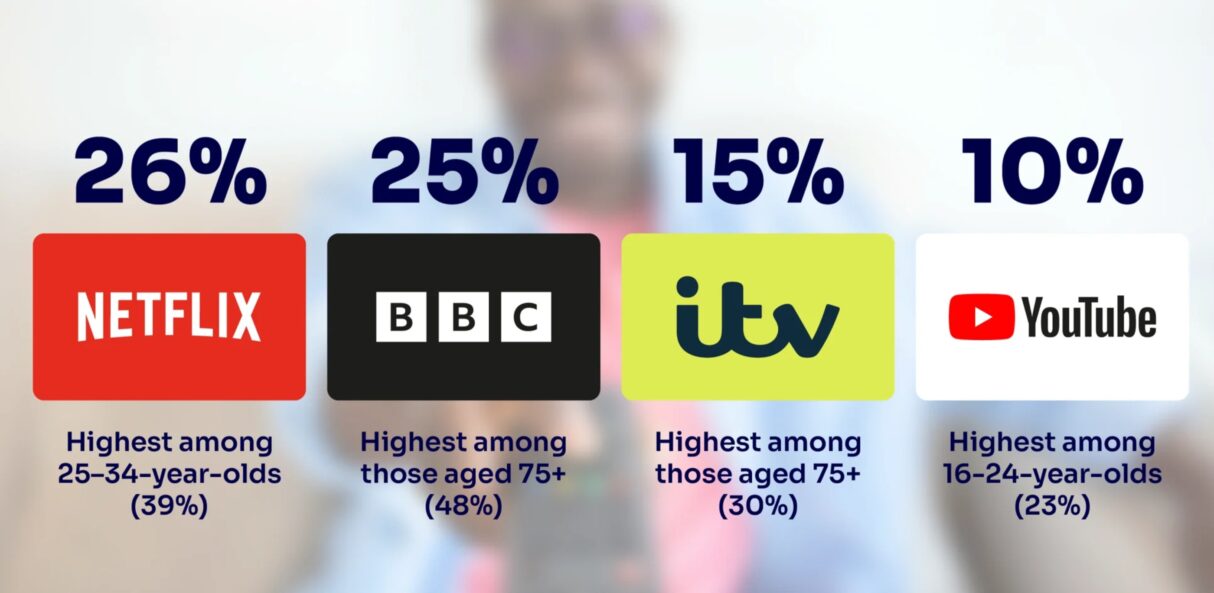
The latest Media Nations report from Ofcom suggests that the battle for viewers in the UK has entered a new phase, with Netflix now matching the BBC as one of the country’s leading destinations when audiences decide what to watch.
While Netflix was named the first choice by 26% of respondents and the BBC by 25%, Ofcom notes that the difference is not statistically significant, effectively placing the two services level in audience preference. ITV ranked third, selected first by 15% of viewers.
Despite increasing pressure from global streaming services, traditional broadcasters continue to strengthen their digital offerings. Viewing of broadcaster-owned streaming platforms, including BBC iPlayer, ITVX, Channel 4 Streaming, and 5 streaming, rose by 9% year over year, making them the fastest-growing television category in the UK. At the same time, subscription streaming services appear to have reached a plateau, with penetration remaining steady in around 70% of UK households after years of pandemic-driven growth.
Linear television, however, continues to lose ground. Although seven in ten people in the UK still watched content from traditional broadcasters each week in 2025, that figure has gradually declined over recent years. Even so, public service broadcasters remain a major force in original UK programming and continue to deliver tens of thousands of hours of locally produced content across both broadcast and on-demand platforms.
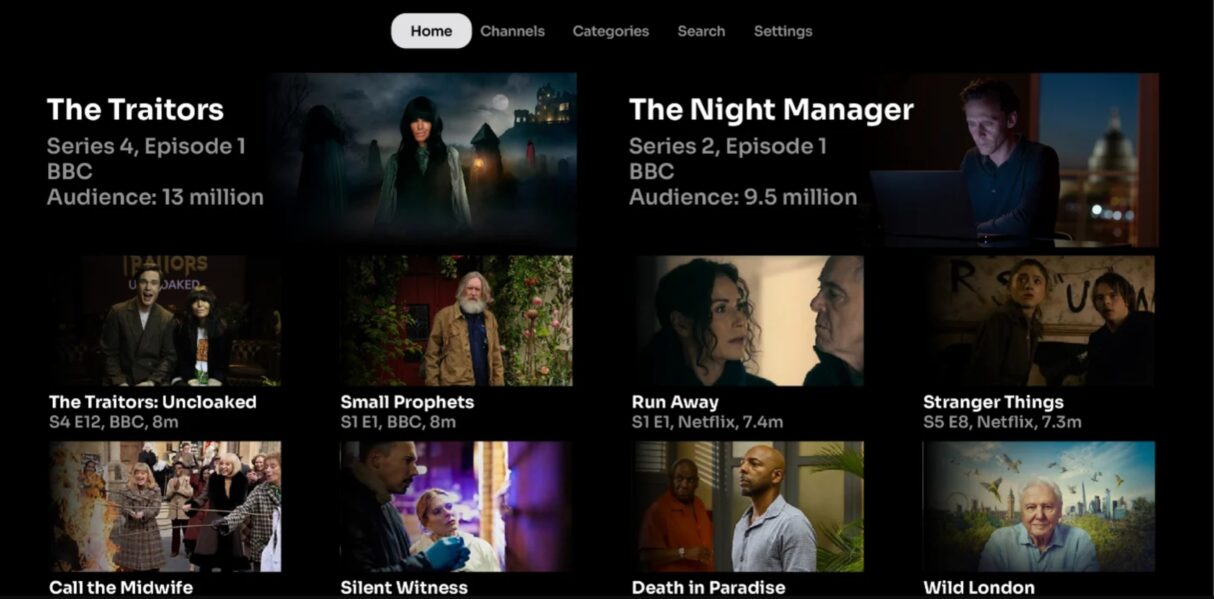
The report also highlights the enduring appeal of major live events. The BBC claimed eight of the ten most-watched programmes of 2026 so far, while England’s FIFA World Cup semi-final against Argentina attracted a peak audience of 24 million viewers across BBC platforms. The Celebrity Traitors finale also proved to be one of the broadcaster’s biggest successes, averaging 14.8 million viewers.
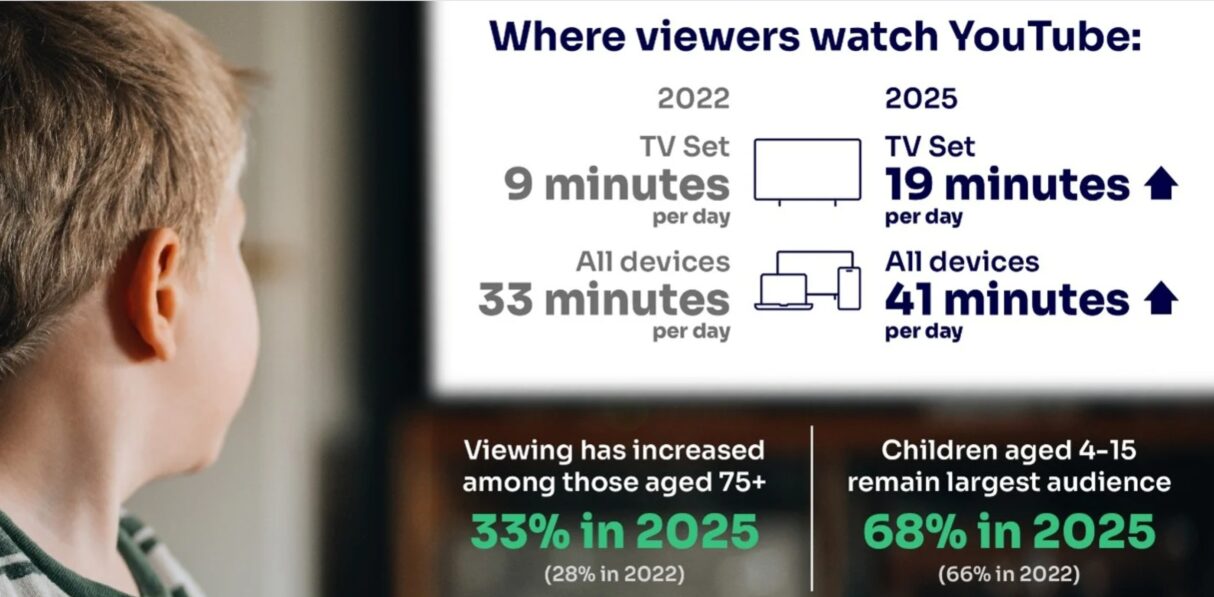
YouTube’s role in the living room continues to expand as well. Average daily viewing on television sets has doubled since 2022, rising from nine to nineteen minutes per person, while total daily viewing across all devices has reached 41 minutes. Growth has not been limited to younger audiences, with weekly reach among people aged 75 and over increasing from 28% to 33% over the same period. In response, broadcasters including the BBC, ITV, and Channel 4 are expanding their YouTube strategies by making full-length programmes and digital-first content available on the platform.
Beyond video, audio remains the UK’s most widely used media format. According to Ofcom, 93% of adults consume some form of audio content each week, while 87% still listen to live radio. Podcast listening also continues to grow, with more than one in four UK adults tuning in weekly, making podcasts an increasingly important part of the country’s media habits.