




As Episode Magazine, in our February 2026 issue, we feature an essay by artist, architect and creative director Cengizhan Özcan, who reflects on how love no longer feels the need to prove itself.
Love has grown quieter lately. It speaks less, claims less. It no longer seeks to make grand statements, to be seen by everyone, to justify its own existence. Instead, it chooses to stay, to accompany, to flow together. Away from noise, more inward-looking yet deeply authentic. Perhaps that is why it is less noticeable and precisely why it feels more real.
In a world where everything accelerates, love slowing down is no coincidence. Relationships are no longer performance spaces. What matters is not what is shown, but what is lived; not what is declared, but what is felt. Love is now less concerned with “how it looks” and more with “how it lasts.”
As February 14 approaches, romance is still often reduced to a single moment; one evening, one table, one gesture. Yet some of the recent love stories told in series and films challenge this idea. They stretch love across time rather than confining it to a single day. Instead of compressing it into one moment, they center the process itself.
THE LANGUAGE OF NEW LOVE STORIES
Today’s love narratives adopt a softer tone. Dramatic conflicts, loud farewells and sharp ruptures give way to small moments: encounters, shared walks, silences, waiting. Love is no longer portrayed as a result, but as a state of being.
In these stories, speed is not a necessity. On the contrary, slowing down becomes the strongest element of the narrative. A rhythm is established that allows the audience to breathe. Love is not consumed in haste; it deepens over time, becoming more livable in the process.
These new love stories do not try to persuade the audience. They make no grand claims. They simply offer witnessing. And perhaps that is why they leave a more lasting impression.
CHASING THE WIND: FINDING THE SAME RHYTHM
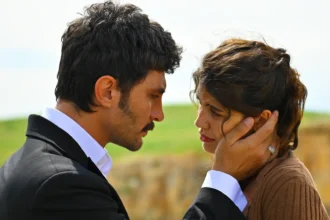
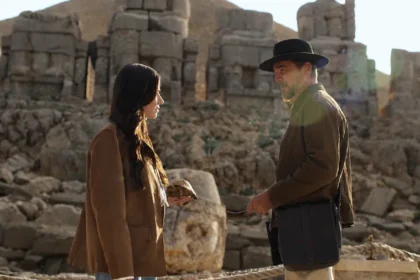
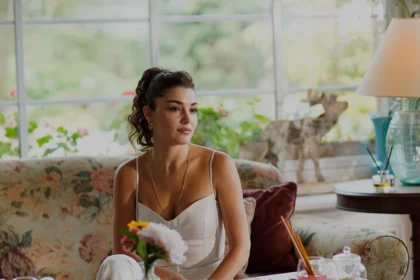
The love we witness in Chasing the Wind, starring Hande Erçel and Barış Arduç, emerges from this new narrative language. Throughout the film, everything feels slightly lighter, slightly calmer. As the characters grow closer, they do not make dramatic moves. No one rushes; walking at the same pace is enough.
The locations reinforce this rhythm. Open spaces, wind-swept scenes, the presence of the sea… Setting here is not merely a backdrop but an active element shaping the tempo of the relationship. The sense of spaciousness is felt not only visually, but emotionally. No one feels trapped. No one is in a hurry.
This love does not turn togetherness into a struggle. There are no grand decisions or dramatic confrontations. Standing side by side, sharing the same view, inhabiting the same silence is enough.

INTIMACY BUILT THROUGH SPACE
One of the film’s most striking elements is how intimacy coexists with distance. The characters do not need constant physical contact. The spaces between them do not weaken the relationship; they strengthen it.
The film does not compress love to intensify it. It allows room. That space enables emotion to breathe. Perhaps that is why watching it feels liberating. Love here is not exhausting; it is calming.
This approach suggests something important about contemporary relationships: intimacy is not built solely on constant proximity, but also on the ability to grant one another space.
A TOGETHERNESS THAT UNFOLDS OVER TIME
In the film, love is not crowned with a rapid conclusion. It does not happen all at once. It settles slowly, over time, which makes the story more believable. After all, in real life, love often unfolds this way — deepening not through grand revelations but through small adjustments and quiet acceptances.
This narrative offers a different response to the expectations surrounding February 14. Love does not have to be lived in a single night. Perhaps it gains meaning precisely when it cannot be contained within one.
LAST CALL FOR ISTANBUL: LOVE FLOWING WITH THE CITY’S RHYTHM
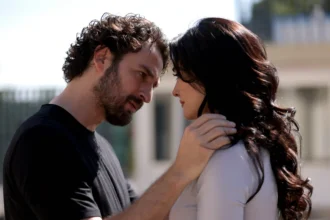
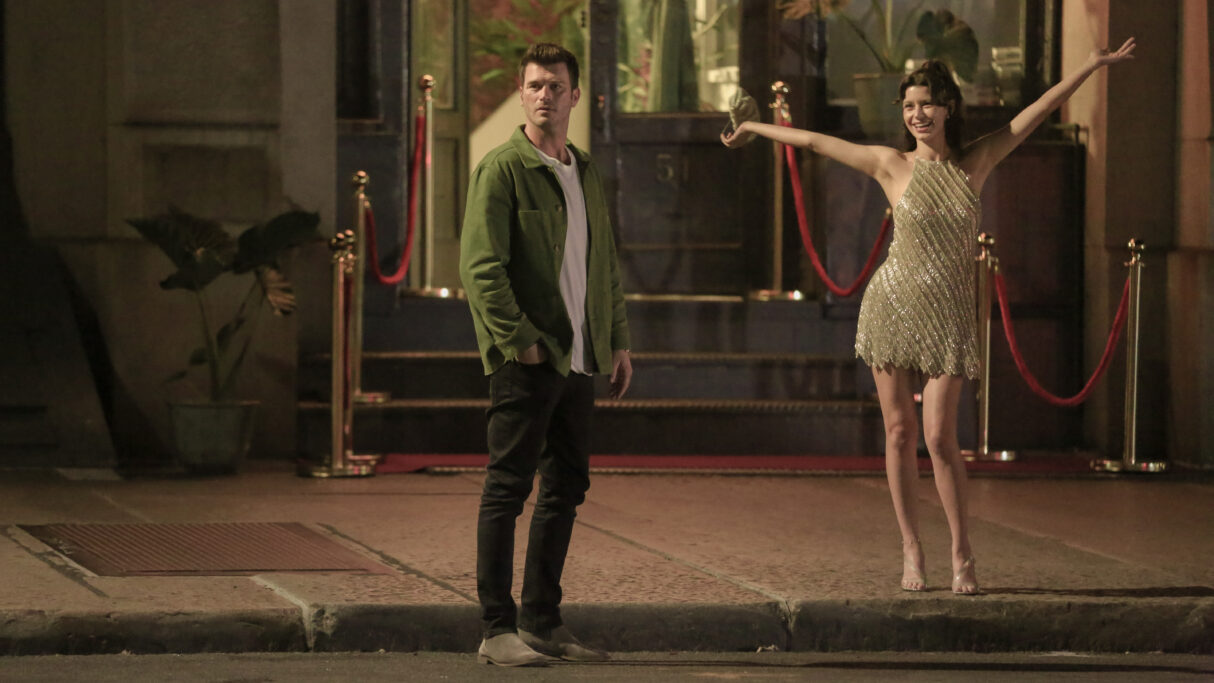
Last Call for Istanbul, on the other hand, approaches love from a far more dynamic perspective. Here, the tempo is high, time is limited and moments are fleeting. Yet the emotions are strikingly clear.
The film does not separate love from the city. Hotels, streets, elevators, temporary stops; everything is in motion. So are the characters. But this movement is not superficial. The city’s rhythm makes the attraction between two people more visible.
Istanbul is not merely a backdrop; it functions almost as a force that determines the speed and intensity of love.
REAL FEELINGS IN TEMPORARY SPACES
One of the film’s strongest aspects is the connection formed within transient spaces. Hotel rooms may not offer the permanence of a “home,” but they create a sincere closeness. Love here is not a safe zone; it is an encounter that requires courage.
In an environment where everything feels temporary, emotion intensifies. The possibility of loss makes the moment more precious.
LOVE THAT FITS INTO A MOMENT
Last Call for Istanbul reminds us that love is not always experienced through long-term plans. Sometimes a single moment is enough; a glance, a conversation, a brief yet intense closeness.
That does not make it superficial. Love here is fast but genuine. Risky but honest. It may not need to last forever to be real.
TWO DIFFERENT STORIES, THE SAME HOPE
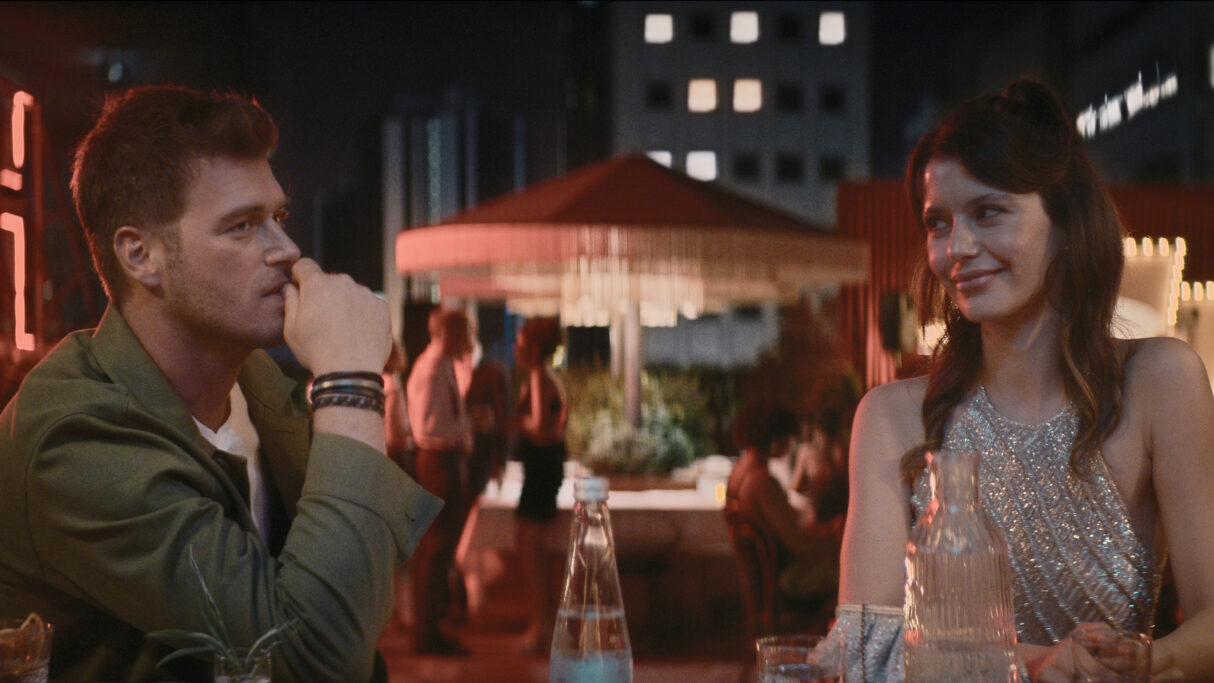
Chasing the Wind and Last Call for Istanbul tell two very different love stories. One portrays a calm, time-spanning togetherness; the other, an intense encounter compressed into a moment.
Yet they meet at a shared point: love is still possible.
One advances through trust, the other through courage. But both affirm that love can still be lived.
CITY, TIME, AND THE STATE OF TOGETHERNESS
In these stories, locations are not mere decoration. They determine the speed, intensity and duration of emotions. Wide spaces soothe; temporary stops intensify. Yet at no point does setting overshadow feeling.
The true question is the ability to be together; to meet at the same time, in the same city, within the same emotion.
A DIFFERENT THOUGHT FOR FEBRUARY 14
These films do not decorate February 14; they redefine it. They propose thinking of love as something that unfolds over time, rather than compressing it into a single day, a single dinner table or a single gift.
Sometimes walking at the same rhythm is enough. Sometimes sharing a brief moment in the same city is enough.
Romance here is born not from spectacle, but from a closeness that grows quietly.
THE STATE OF LOVE TODAY
Love still exists; in a quiet walk, in a night lost within the city, in a bond built without haste.
Perhaps it no longer proves itself. But precisely for that reason, it feels more real.
And perhaps today, simply feeling that love still exists is the most romantic thing of all.