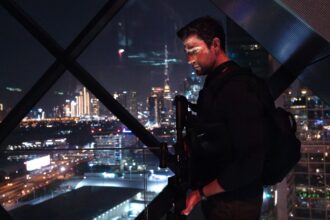





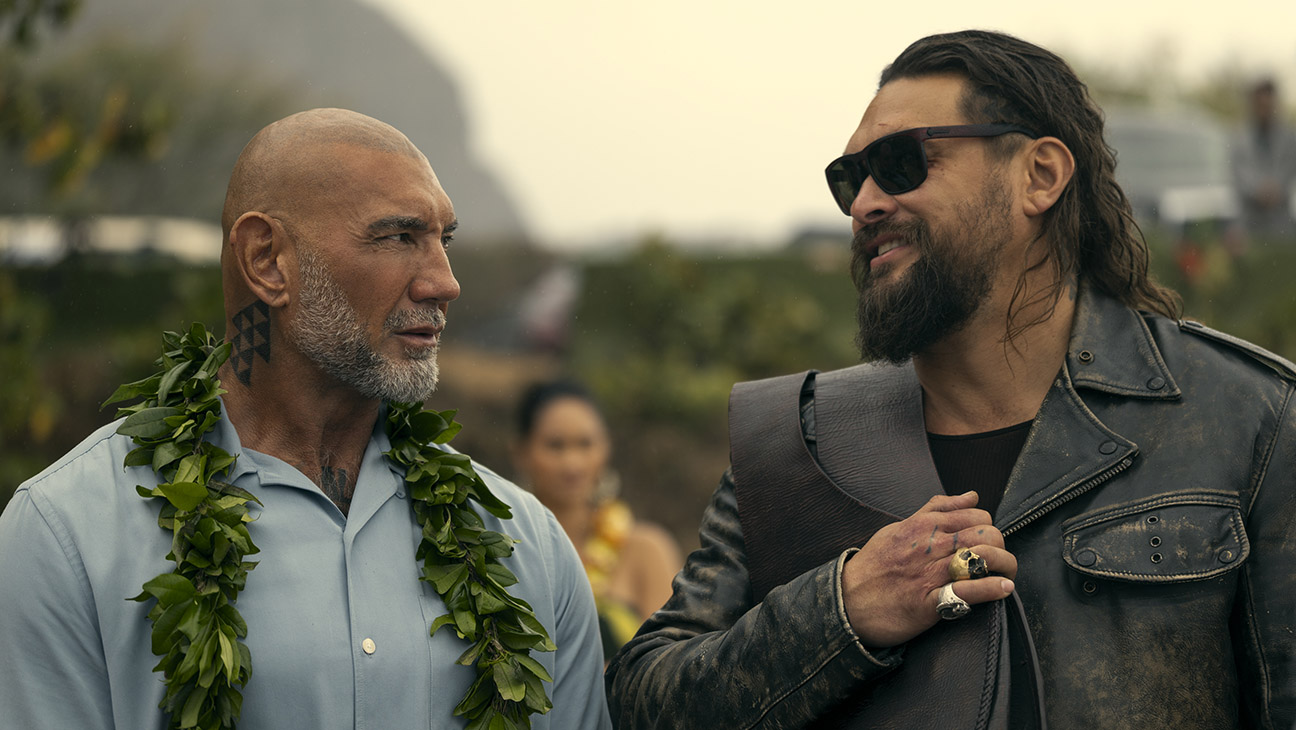
In an exclusive interview, we spoke with Jason Momoa about The Wrecking Crew, a project he has been carrying with him for nearly two decades. Taking on the dual role of producer and lead actor, Momoa reflects on creative ownership, why producing allows him to fully commit to a story, and how improvisation, inspired in part by his son, shaped Johnny’s character. The conversation reveals how deeply personal the film is for Momoa, both on and off screen.
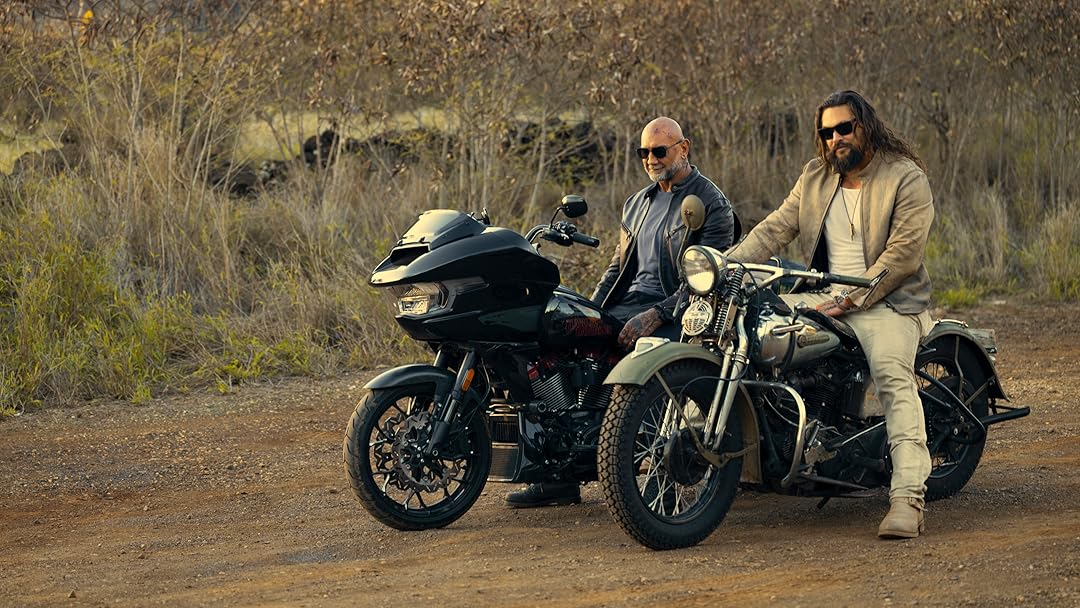
You’re involved in The Wrecking Crew both as a producer and as the lead actor. What was it about this project that made you want to commit to it on both levels from the very beginning?
Jason Momoa: This was my idea that I had for two decades, so I’m pretty much involved because I was the first one to come up with it. I pitched it to Dave (Bautista), he tweeted it out to the world and caused a stir, and then it turned into something else with Jonathan Tropper, our writer, building an amazing script out of this idea.
As far as producing partners go, these are people I’ve worked with for many decades now, so it’s very exciting to be with them again; it’s a bit of a family affair. A lot of the things I’m involved with now, I tend to produce, because I’ve been producing and directing for quite a while. When you’re producing, you’re really into it; you’re not just an actor for hire coming in to do a job. Your whole soul is involved, and you can really care.
As a producer, was there a moment where you pushed for something specific about Johnny, a scene, a tone, or a character trait, that might not have happened if you were only acting?
Jason Momoa: Yeah, a lot of that happens every day. There are battles about different views, sometimes people don’t necessarily like the way I play something. Then we talk it out and find a solution. It’s basically problem-solving all the time.
Doors close every day, you go this way, you go that way around it, but you’ve got to keep moving forward. The best thing you can do is hire great people around you. They make you better, and ultimately everyone wants the same thing: the best product, the best experience for the audience. We’re all in service of the story.
Johnny often reacts to danger in a very childlike way. Was that written into the character from the start, or was it something you consciously brought into the performance? Did you improvise any of it?
Jason Momoa: I improvise a lot. On the page, it wasn’t quite as dramatic as what I ended up doing. I definitely channeled my son, he’s around 13–14 years old, so Wolfie definitely makes an appearance in this.
I never had siblings, but watching my son and daughter bicker all the time helped me find that annoying younger-brother quality. That’s really what I went off, and I’ve got to give credit to my boy for all those little fun bits. He’s very funny, very charismatic, and he definitely knows how to push buttons.
Johnny has really fun dynamics with both his girlfriend and Pika. If you had to choose, which relationship would you have liked to explore more on screen: the romantic side with his girlfriend, or the more chaotic, playful energy with Pika?
Jason Momoa: Jacob (Batalon) is always fresh, always improvising, and feeding off that energy was amazing. He’s also a local guy, so we really fed off each other. He did a bunch of things that weren’t scripted, and I’d just fall right into character with him.
Morena (Baccarin) was perfect too, she’s basically the boss of the whole film. Johnny definitely has people he can lean on. Men generally mess up, and Johnny is no exception. There are probably some therapy sessions I’ve had that made their way into this movie. That’s what’s fun about it; everyone’s trying to be better, and Johnny is working on it… Just maybe a little slower than others.
In Johnny’s first fight with the Yakuza, his mother’s ashes spill, he finds his girlfriend’s breakup note, and then the fight explodes. When you shot that scene, what was the one emotion you wanted to keep at the center of Johnny’s performance?
Jason Momoa: I don’t think he is coming to terms with a lot it. I mean he is very much the victim; his girlfriend just left him, he’s drinking his problems away, then another problem comes in through a phone call that he doesn’t want to deal with. His father is dead, and then the bad guys show up.
I think I don’t want to try to stick with one emotion I think there’s a certain way he looks at things and can be felt different ways.
Starring Jason Momoa and Dave Bautista, The Wrecking Crew is now streaming on Prime Video.
Click here to read our interview with The Wrecking Crew‘s director Ángel Manuel Soto.