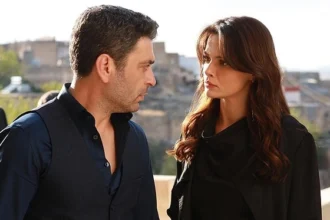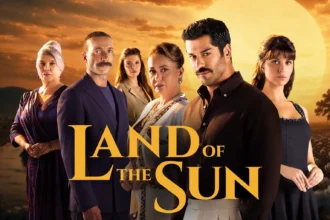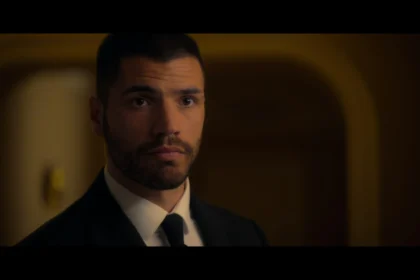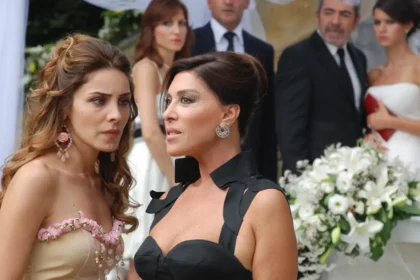



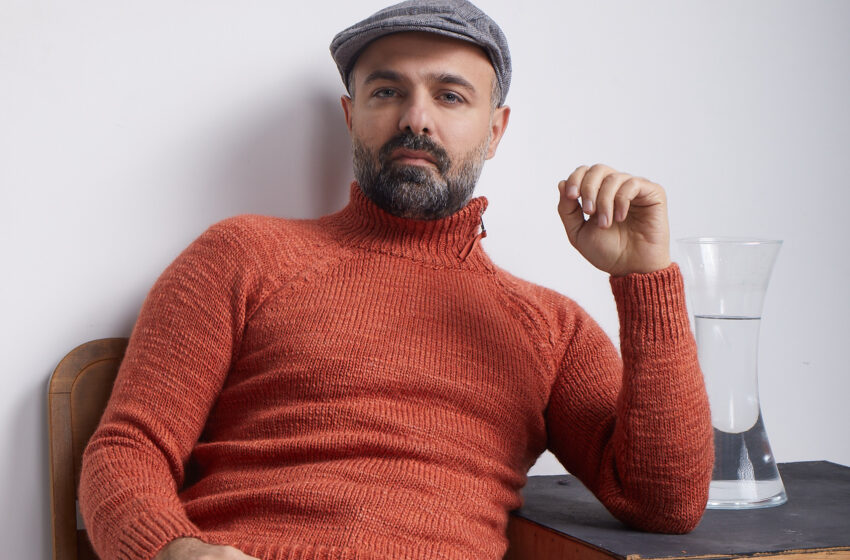
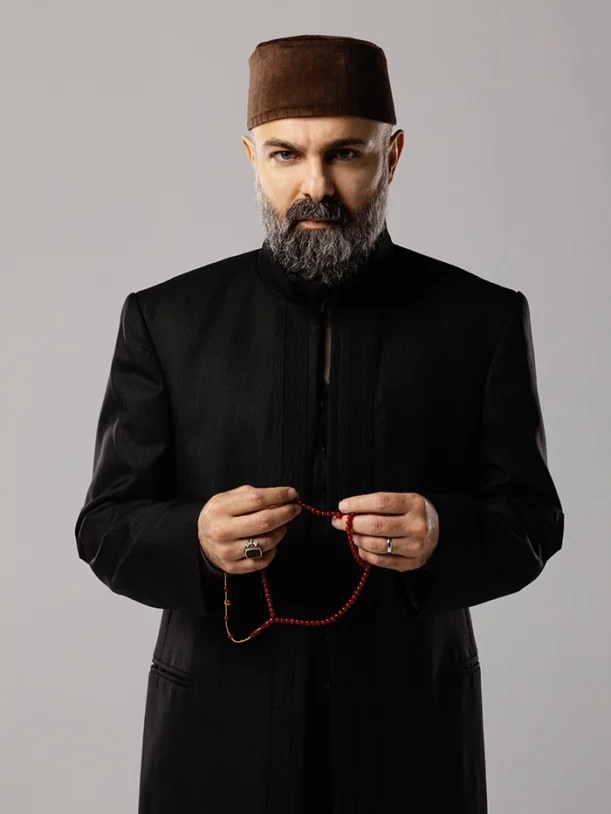
For months, Red Roses has been the talk of Türkiye. It’s the most-watched show in the country, with scenes shared all over social media, sparking conversations after every episode. Sadi Hüdayi stands as one of the most complex and authentic characters at the core of this much-debated story. In an exclusive interview with Episode, Erkan Avcı discussed his role as Sadi Hüdayi, the series, and what Red Roses represents for him.
- Red Roses has been Türkiye’s most-watched and talked-about series since the last season, and it made a strong start to its second season. You portray a very different character, Sadi Hüdayi. What did you feel when you first read the script?
- Sadi Hüdayi is someone torn between his personal ambitions, beliefs, and family, making choices along these lines. Whether the audience sees him as good or bad depends on their own perspective in life. How would you define Sadi Hüdayi?
- In the first season, we watched the conflict between the secular and conservative worlds. Can we say that in the new season, we’ll be watching a conflict between the “good” and “bad” within the religious order? Sadi Hüdayi is also at the center of this conflict. What can you tell us about the new season?
- Where do you think Red Roses stands in today’s Türkiye and the world? What has been its contribution to society, or what do you hope it will be?
- What do you think Red Roses will mean for international audiences?
Red Roses has been Türkiye’s most-watched and talked-about series since the last season, and it made a strong start to its second season. You portray a very different character, Sadi Hüdayi. What did you feel when you first read the script?
Erkan Avcı: The word that describes what I felt when I first read it is “struck.” It completely broke my expectations. From the moment I turned the first few pages, I realized I was reading something far more than just a TV series. Red Roses is not just the story of a family or a religious sect; it’s also a portrayal that reflects Türkiye’s sociological evolution and fractures. While it may seem like a clash between secularism and conservatism on the surface, for me, the story represents a bridge Even if we don’t stay on the other side, it creates a brief space where we can go back and forth and take a moment to understand “the other” through its drama.
Sadi Hüdayi is someone torn between his personal ambitions, beliefs, and family, making choices along these lines. Whether the audience sees him as good or bad depends on their own perspective in life. How would you define Sadi Hüdayi?
Erkan Avcı: I think trying to fit Sadi Hüdayi into any ethical mold would over-simplify his complexity. Whether he’s perceived as “good” or “bad” can vary depending on the viewer’s sociological background. To me, Sadi Hüdayi is a character who is torn between preserving the religious values he believes in and has inherited, and at the same time, trying to forge his own values. I see him as the balance between Vahid, who, in my opinion, represents radicalism, and Cüneyd, who represents modernism. But above all, he is human. He has desires, dreams, and ambitions. Amid all these “balances,” he sometimes makes mistakes, and other times, he becomes a savior. Just like all of us, he’s sometimes good, sometimes bad. It’s this very dynamic that makes him such a deep character.
In the first season, we watched the conflict between the secular and conservative worlds. Can we say that in the new season, we’ll be watching a conflict between the “good” and “bad” within the religious order? Sadi Hüdayi is also at the center of this conflict. What can you tell us about the new season?
Erkan Avcı: In Red Roses, no one’s position is fixed. They’re changing and evolving. Every character passes through or gets close to both good and evil, being tested along the way. This is thanks to the skill of our writers, and it’s something truly valuable.
The series raises profound questions, such as how deeply beliefs and ideologies are internalized, and what a person becomes when those beliefs clash with personal interests. Sadi Hüdayi is right in the middle of this conflict and these questions. He faces a new moral dilemma in almost every scene. Perhaps the most interesting aspect is that viewers can find something relatable on both sides of this conflict. I believe these lines will become even sharper as the new season progresses.
Where do you think Red Roses stands in today’s Türkiye and the world? What has been its contribution to society, or what do you hope it will be?
Erkan Avcı: Of course, there is an element of entertainment, but that’s just one layer. Another layer to it is that it reflects social conflicts, the search for identity, and how beliefs evolve over time. The divide between secularism and conservatism in today’s Türkiye isn’t just political; it’s also a cultural matter. Red Roses aims not only to entertain the audience but also to encourage them to think, understand, and empathize. Personally, I believe we all carry inherited prejudices and hatreds. If we can break those patterns, even just a little, and help viewers gain a more healthy and empathetic perspective, that would be a great success for us.
What do you think Red Roses will mean for international audiences?
Erkan Avcı: Faith, independent of any specific religious perspective, is already a universal topic. The search for identity, along with rights and freedoms, is the same way. The conflict between secularism and conservatism we see in Türkiye is something that appears in different forms around the world.
Erkan Avcı: For example, the debates over secularism in France or the culture wars between conservatives and liberals in the U.S. Red Roses isn’t just a local story; it’s a universal reflection of humanity’s struggle with beliefs, freedoms, and authority. That’s why international audiences will also find traces of their own societies in the characters. In fact, there are many dramas abroad that deal with similar themes, like The Handmaid’s Tale or Unorthodox. Red Roses is our story within that context.
This interview with Erkan Avcı was featured in Episode Magazine’s MIPCOM 2024 issue.