




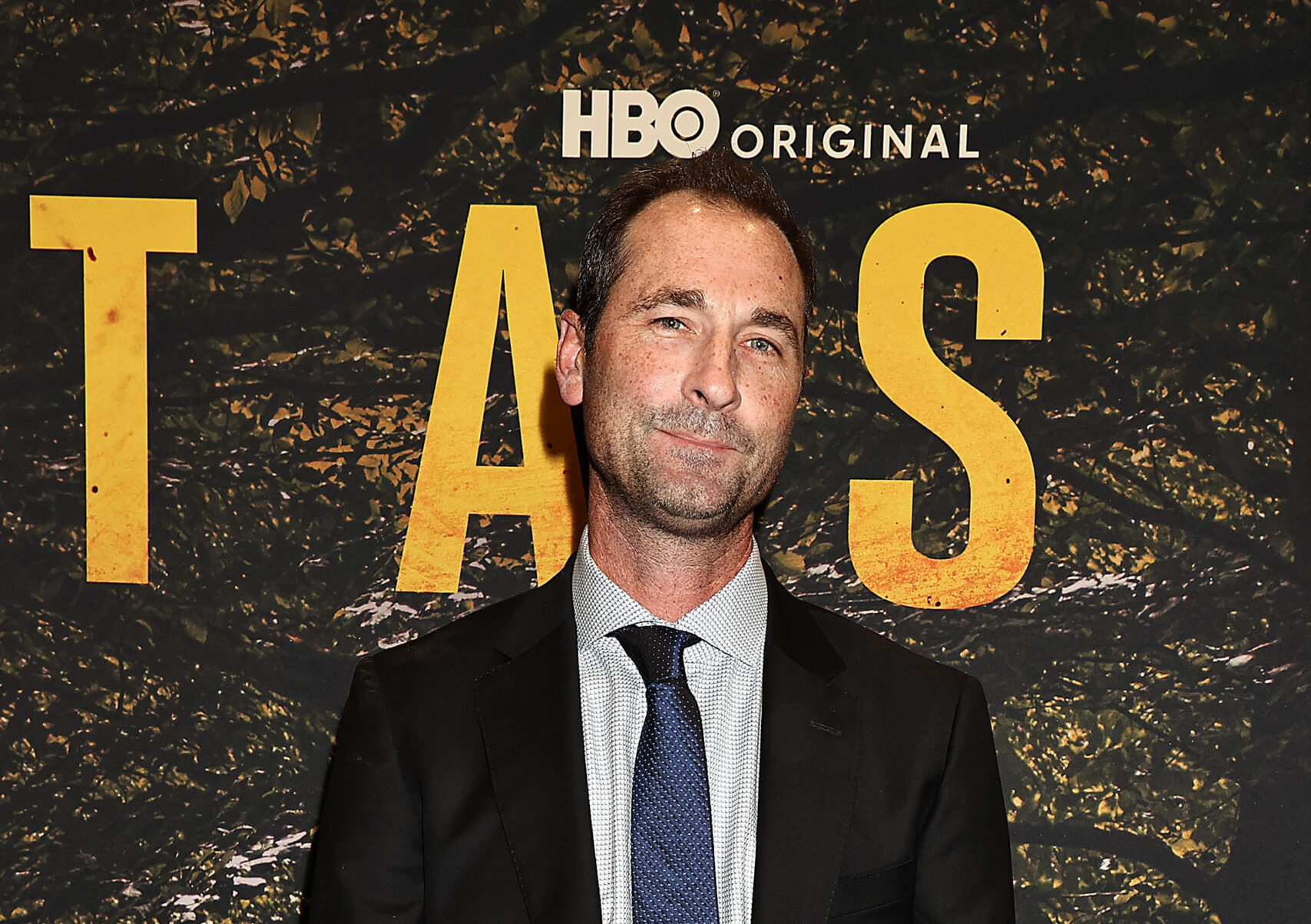
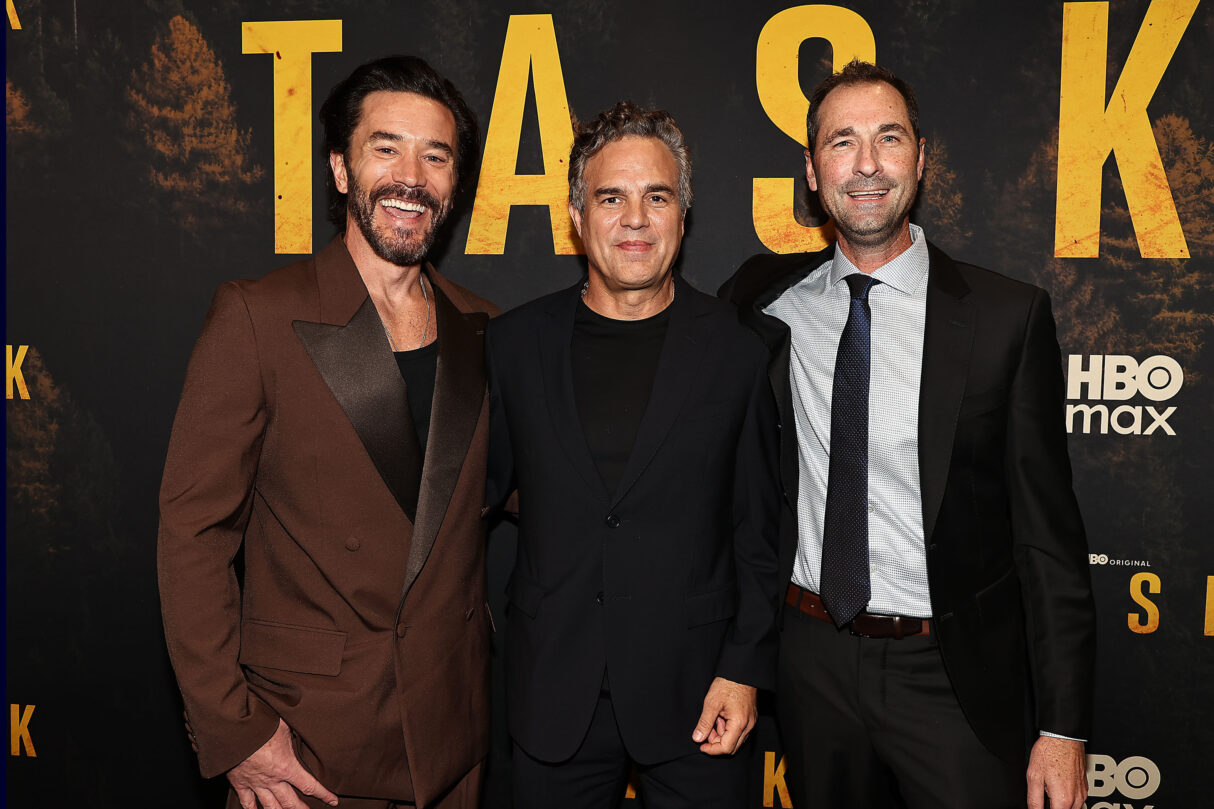
We met with Brad Ingelsby, the creator and writer of the series Task, to talk about the show and its creative process. Enjoy the read!
How did the story of Task begin? What kind of writing/creation process did you go through?
It actually all started with the idea of a former priest whose faith is somehow tested. In this case, it took shape through a family crisis. What attracted me to the idea was a person whose entire belief system, everything he thought was right and true, suddenly collapses. As he passes through the firestorm of that collapse, that investigation, he needs to arrive at a new point of faith. That’s why this character interested me.
On the other hand, I had spoken with a police chief. While chatting about a different story, he mentioned mail carriers and garbage collectors. He said, “They’re actually people who are constantly in your life. They pass through your neighborhood, your street. They see your mail, your trash. They actually know a lot about you and your family, but they’re invisible to you.” That line really struck me.
Those two characters intrigued me. After that, I needed to build a plot around them. I thought, “What could be the thing that connects these characters?” That’s when I started the journey and deepened the lives and families of Tom Brandis and Robbie. That’s how the story truly came into being.
Writers usually try not to imagine a specific actor when writing characters. Did you have Mark Ruffalo in mind while writing Tom?
I actually never write with a specific actor in mind. But after finishing the first episode and reading the character back to myself, I thought: “Who would be believable as someone from this part of America? Who could play a theologian, someone who went to seminary, a father, and at the same time an FBI agent?” When I started listing those qualities one by one, the list became very short. Mark was right at the top. He’s such a versatile actor, he was truly a perfect choice. I’m so glad he accepted the role.
The other actors are also excellent, but since Tom and Robbie are the leads, their casting really stands out. Can you talk about the casting process and the preparation you did with the actors?
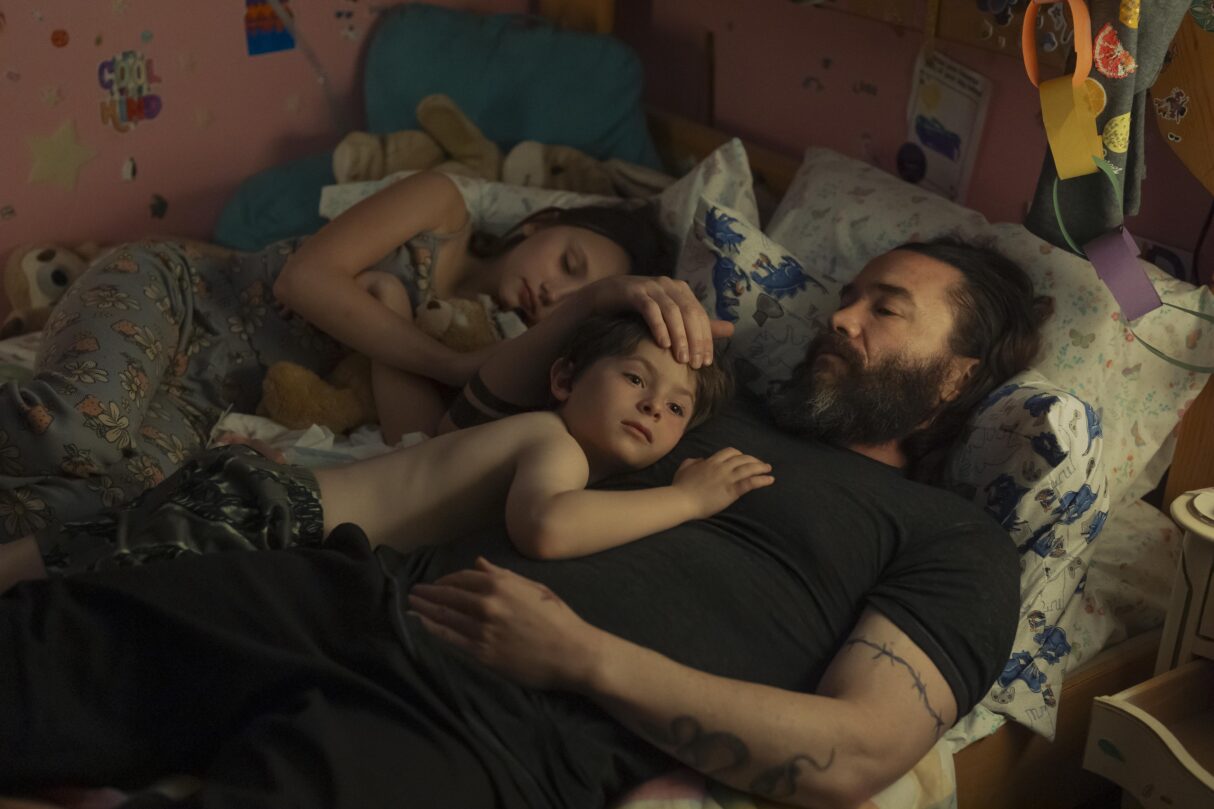
Thank you. It was a very extensive casting process. Tom Pelphrey auditioned, and the moment I saw him on tape, I heard his laugh. He has a very iconic laugh. There was a wonderful joy in Tom that I felt was very close to Robbie. I always saw Robbie as a somewhat misguided dreamer, and Tom has this beautiful, childlike quality. He’s always cheerful, and I loved that about him. At the same time, he’s also physically very believable. You can believe that he could break into houses, hit someone with the butt of a gun, or rob drug dealers. I needed an actor who could convincingly be both a father and a thief.
For the other roles, we had an incredible cast made up of very talented young actors. Martha Plimpton also delivers an amazing performance in the series. We were very lucky. It was a long casting process, but I think everyone did their absolute best. The performances are, in my opinion, the strongest aspect of the show. Everyone truly shines.
I can tell you what interests me less as a writer: very good detectives don’t really interest me. Writing detectives who walk into a room and see clues no one else notices, who are great with guns or who kick down doors, it doesn’t particularly excite me.”
I think you’re a very distinctive and layered writer/creator when it comes to crime narratives. While watching Task, I often found myself thinking of Mare of Easttown. In recent years, we’ve seen so many crime stories, and over time they’ve gone through many phases, from whodunits to golden-age detective stories, noir to neo-noir, political crime dramas to historical ones. But in your crime stories, detectives are layered, complex, and ordinary people with traumas like all of us. How do you create them?
That’s a really good question. A difficult but great question. I can tell you what interests me less as a writer: very good detectives don’t really interest me. Writing detectives who walk into a room and see clues no one else notices, who are great with guns or who kick down doors, it doesn’t particularly excite me.
What interested me about Mare was that she was a mother. We usually see fathers who feel like failures because they work too much and aren’t home enough. But with Mare, what struck me was the idea of a mother who feels like a failure. She was a good detective, but there wasn’t one single thing that made her special as a detective.
The same applies to Tom Brandis in Task. He’s not a great FBI agent. In fact, at one point he tells Robbie, “I’m just a local agent, I’m not that good.” What makes Tom interesting as a character, I think, is that he’s a former priest. He used to counsel people when they needed it, listen to their confessions. He was compassionate. That’s what makes him interesting to me. That’s his real superpower as a detective, not his marksmanship or his ability to spot clues, but the empathy he brings to people and situations in a way we don’t often see. That was far more appealing to me than writing a “super detective.”
I wanted to ask: what would a character like this be like? What does it mean for a priest to become an FBI agent? Ultimately, it’s a different kind of service. Also, my uncle was a priest. He later left the priesthood. So a significant part of Tom’s character actually comes from my uncle. He’s married now and hasn’t been a priest for many years, but I asked him what it was like to be a priest, what his relationship with God is like now. Part of Tom Brandis comes from my uncle, who served for many years as a priest in the Augustinian order.
Billions of people around the world are constantly working to build a better life for themselves and their children, yet they receive very little in return. You’re essentially telling the stories of these people, working-class individuals facing problems that may seem small but are vital. In Mare of Easttown, for example, we watch a woman trying to earn money to pay for her baby’s ear surgery. In Task, we watch Robbie turn to illegal means to give his children a better future. I think you care deeply about portraying real people from the real world. Would you agree?
That’s the nicest thing anyone has said to me today. And that’s exactly why I tell these stories; because it’s about these people. I don’t think we see them on screen very often, and when we do, they’re not portrayed with the care, depth, and honesty they deserve. I feel a real responsibility to write about working-class people who are often overlooked. I want to give them as much complexity, honesty, heart, sorrow, victory, and failure as any other character.
I’m really glad you said that, because that’s exactly what I try to do when I start a project. How can I approach these people I care deeply about, who we rarely see on screen? How can I give them an inner world and help the audience connect with them? So hearing you articulate that means a lot to me.
I feel a real responsibility to write about working-class people who are often overlooked. I want to give them as much complexity, honesty, heart, sorrow, victory, and failure as any other character.”
Thank you. While watching the stories of Tom, Robbie, and the people in their lives in Task, we’re also following a thief-and-cop story. We want Tom to survive and succeed, but at the same time we begin to understand why Robbie commits crimes and even start to empathize with him, we don’t want him to get caught either. I think both Mare and Task raise ethical questions and debates. Would you agree?
Yes, I think what I always try to do is approach every character without judgment and encourage the audience to do the same. I don’t condone what Robbie or any other character does, but I understand them. And I think that’s how you form a deeper connection with people: by not judging them.
No one is just one thing. Robbie can be both a great father and a thief. He can be a burden to Maeve, and at the same time, Maeve can love him. My experience with people is that they can be many things at once. It’s not always, “He’s a thief, therefore he’s a bad person.” It can also be, “He’s a thief, but he’s also a great father, he misses his wife, and he feels like he’ll never really make it in life.”
My experience is that people are many different things. Some of those traits drive us crazy; others we love deeply. As a writer, I always try to see both sides. There are unpleasant aspects and lovable ones. Again, my observation is that people are incredibly complex, and I try to capture that complexity when writing every character in the show.
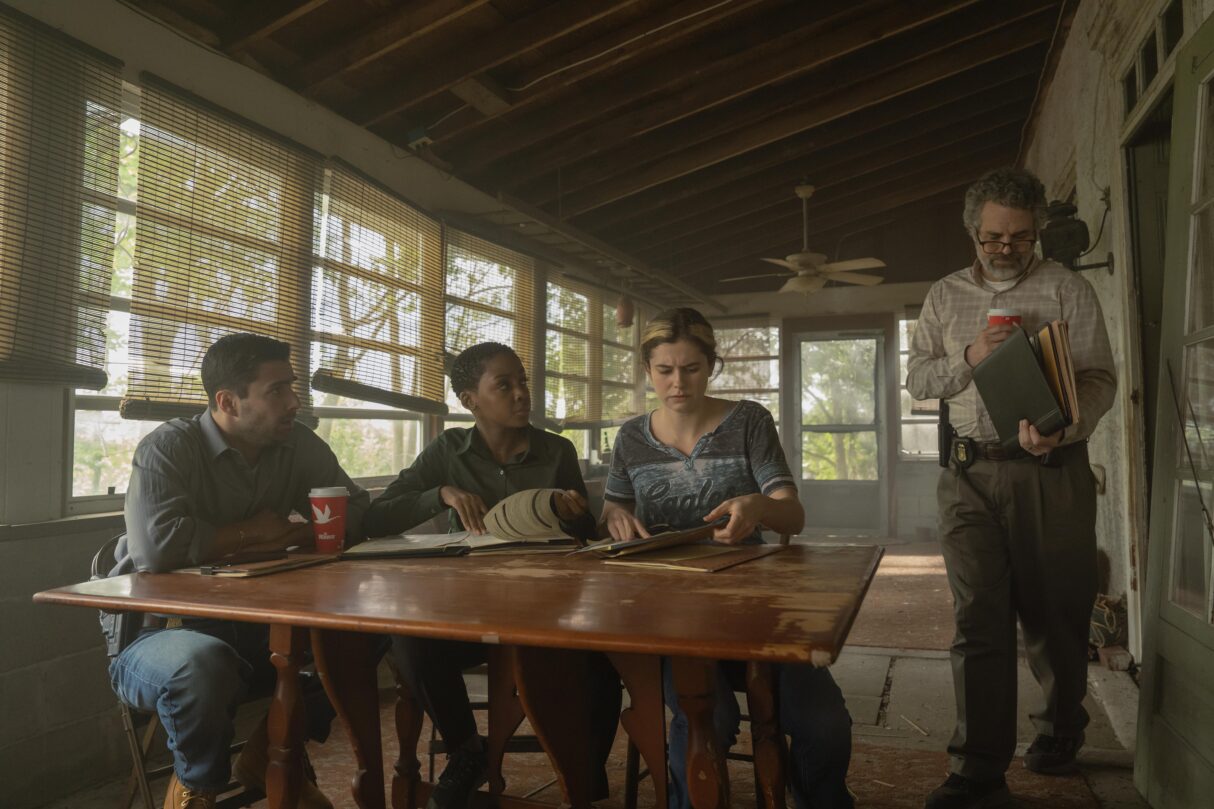
Usually, with crime series, we binge episodes quickly to get to the resolution. But with your work, I can’t do that and neither can my friends. You create very intense and emotional shows that make me want to stop and think after every episode. It feels like your stories aren’t written to be consumed quickly, but to leave the audience with something to reflect on. Is that true?
I think it’s a really intense series. After an episode ends, saying, “I need to digest this, emotionally and in terms of the plot, a lot just happened,” isn’t a bad thing at all. In fact, I like that. Sometimes when I watch TV, everything feels a bit superficial. You finish a 60-minute episode and think, “Only one thing happened.” I like dense shows, shows that make you say, “Yes, that was worth an hour of my time.” When you look back, you realize there was this scene, that scene, that clue, it feels full. We really tried to load the episodes.
So I’m not surprised that you say, “That was a lot, I need time to process it.” I think that’s a good thing. I hope people take a moment after each episode to think, because a lot really does happen.
There’s huge global anticipation for a second season of Mare of Easttown. Could that happen? And since both Task and Mare take place in the same region, could these two stories ever intersect?
Everything is on the table. I think timing is important for Mare, because it’s about a very specific community, whereas Task is a broader story that spans counties and families. What made Mare so compelling was a detective investigating a case that involved people she had deep ties with in the town she grew up in. Having another crime happen in the same town shortly after feels like a bit much. But five years later? Yes, then I could believe that another crime occurs and Mare is called back.
I love writing that character. Mare is so much fun, and Kate is incredible. What makes Mare so fun to write is that she can do anything. What a luxury for a writer! She can plant drugs on her daughter-in-law and the audience still loves her. She can cause Zabel’s death by pulling him into the case, and the audience still loves her. She’s a vibrant, incredibly enjoyable character to write.
So if we find the right story and Kate’s schedule allows it, of course I’d do Mare again. I’d also do Task again. I love Task. I love this world. I love Tom Brandis. So we’ll see what the audience thinks; if there’s demand, I’ll be here to meet it.
I know your upcoming projects 29U and Hold on to Me are also in the crime genre. How did your interest in crime stories begin? Do you read crime novels?
I don’t really read them, actually. I think I watched a lot of crime shows as a kid: Broadchurch, The Wire… What crime offers, I think, is very high stakes. You can focus on characters, but there’s also something truly at risk. That’s what I love about the genre: it allows you to write characters, but you’re also playing big.
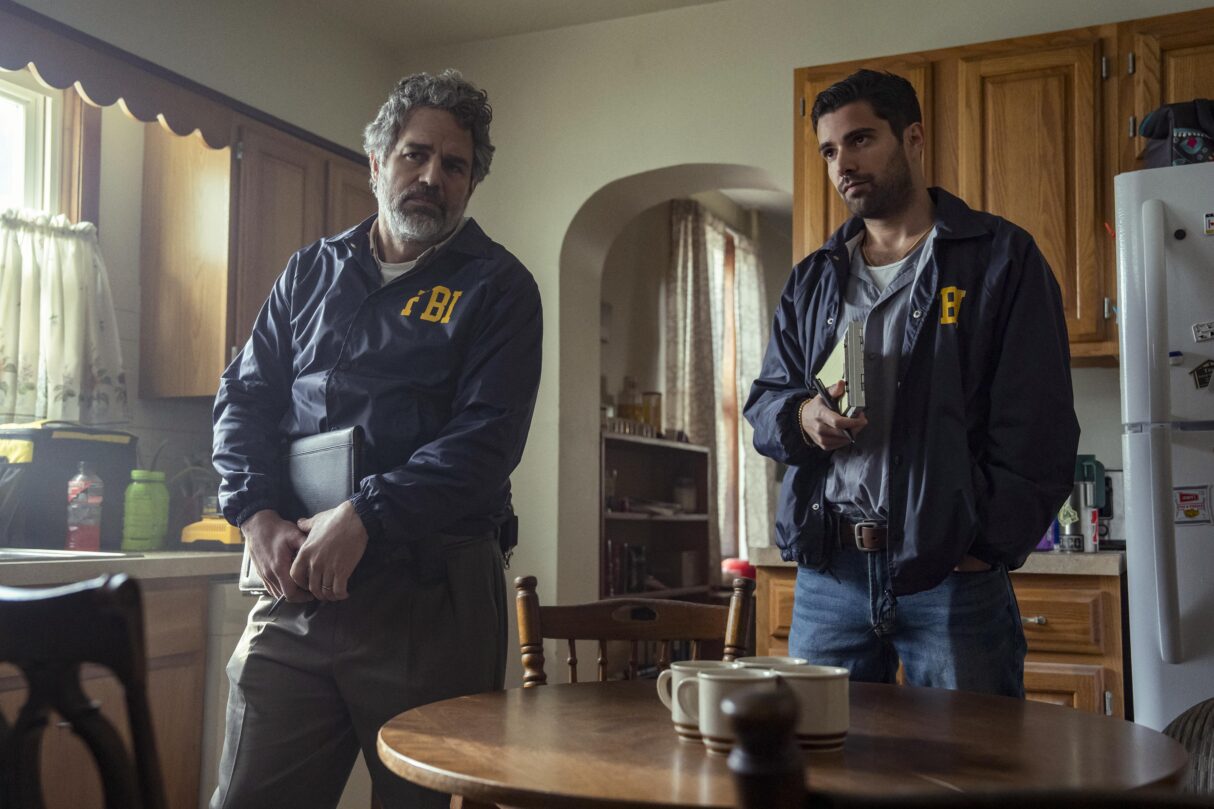
I think the visual style and overall atmosphere of Task are as strong as the story itself. How did you work with the director on the show’s visual aesthetic?
I met Jeremiah very early in the process. I loved Hustle and We the Animals, and I felt he could truly understand the human side of the story, and he did. He built the visual world of the show, using a lot of nature and water.
Then our other director, Sally, joined the team and was a great complement. We had many meetings discussing how the show should look and feel. Most importantly, we kept the emotional core of the story front and center. Of course, we needed a tension engine that would keep viewers curious and guessing. But we couldn’t lose the heart of the story, the human side and the relationships: Tom and his family, Robbie and his family, Maeve and the kids. That was the key. In a way, we wanted it to feel broader than Mare, but without ever losing the emotional core.
I hope people can find something from their own lives in the characters, whether it’s a father, a sister, or a brother. There’s something universal within the personal. I hope Task works that way too, that people can find a piece of their own lives in it. As I said, it could be a bond with a father or a meaningful relationship with a child. I think it has an emotional dimension for many people. At least, that’s my hope.”
Final question: Why do you think your work resonates with people from so many different countries, regions, and cultures?
I think it’s because of the emotional aspect. I hope people can find something from their own lives in the characters, whether it’s a father, a sister, or a brother. There’s something universal within the personal. I hope Task works that way too, that people can find a piece of their own lives in it. As I said, it could be a bond with a father or a meaningful relationship with a child. I think it has an emotional dimension for many people. At least, that’s my hope.