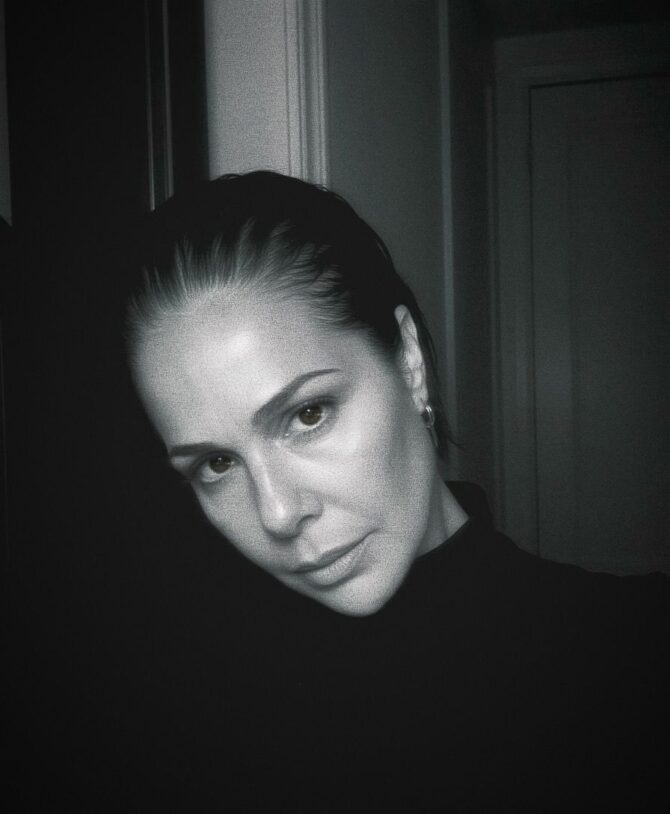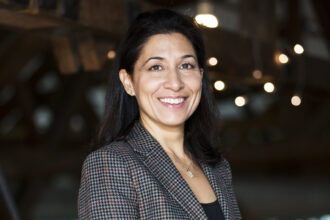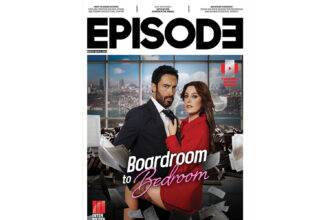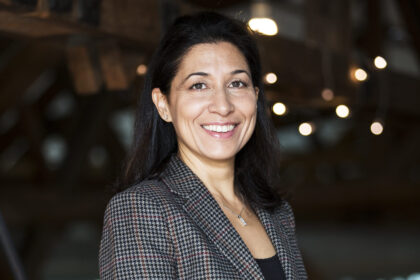






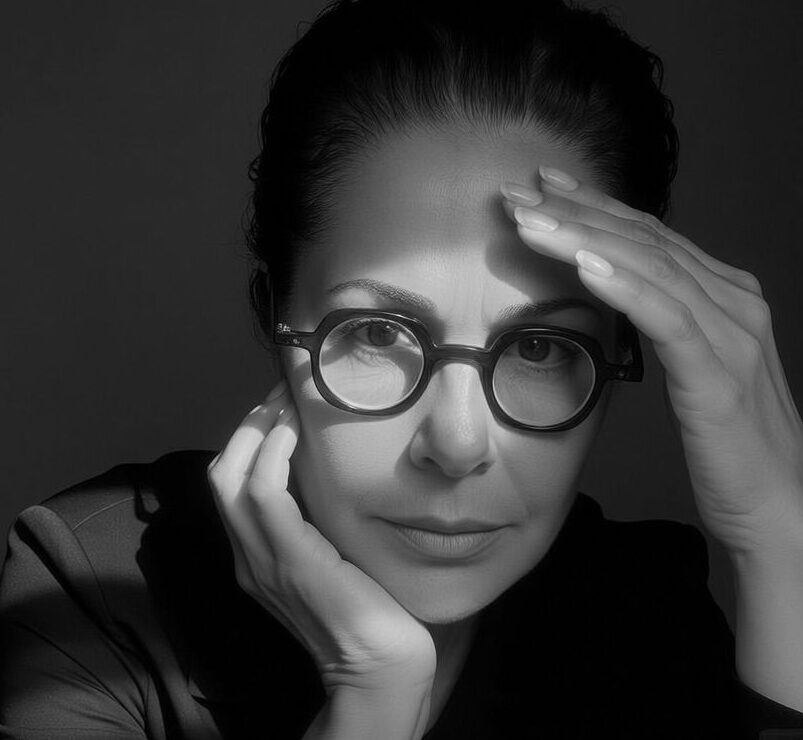
For our Series Mania 2026 issue, Zeynep Atakan shared her insights about being a woman in the film industry.
Being a woman in the film industry gave me a completely different kind of strength. I valued empathy, intuition, and building trust within a team. I learned early on that strength does not always mean speaking loudly. Sometimes the greatest strength is a determined silence. Sometimes it is a clear sentence at the right moment. While others were speaking, I quietly continued on my path and always reached my goals.”
Filmmaking and being a woman… When these two words come together, I still feel both pride and a gentle sense of resistance. I am talking about a journey that now approaches nearly forty years. I remember the dust of film sets, the happiness of completing a project, the difficult yet equally enjoyable processes of post-production, the excitement of festival halls, the distant atmosphere of meeting rooms, the chilling feeling that comes with hearing the word “no,” the good news, the pride I feel in myself after watching the final check copy of a film, the world premieres of my films, and many other things.
But most of all, I see that I have carried out my profession with patience, determination, and most often with a smile, always with love.
When I started studying in the Cinema-TV department, the question I heard most often was this: “Are you going to be an actress?” Or, “Will you be able to find a job as a woman?” Except for my family, I had an explanation ready in my mind for everyone… In today’s terms, I had my answers prepared on “autopilot.”
Being a woman in the sector was an invisible headline; perhaps no one openly said “you can’t do it,” but that small look of “are you sure?” was more than enough. Being both formally educated and a woman seemed to be two separate reasons for doubt. After a while, I realized that the sector was trying to turn me into someone who was “less noticeable”: simpler, quieter, more invisible. Yet I was not there to be invisible, I was there to produce.
Especially after I chose the field of producing, it became a different challenge for me. When talking about finance, I had to be tougher; when defending a creative decision, I had to be twice as prepared. The confidence that was naturally accepted in my male colleagues was something I built step by step. It was exhausting, yes. But it was also incredibly instructive. With every project I became a little stronger, a little clearer. I learned not only how to make films but also how to struggle, how not to give up, and how to walk on my own path rather than the one shown or described by others.
Nearly forty years of experience taught me this: in this sector, making good work alone is not enough to be lasting; one must also be resilient. Sometimes it takes years for a film to come to life. Funding may not arrive, partnerships may fall apart, schedules may change. But if you truly believe in a story, it somehow finds its way. I never romanticized the struggle; it is difficult, exhausting, and sometimes lonely. Yet the meaning that comes from creating surpasses all that fatigue.
Acceptance in the sector came over time. In the early years I was referred to as “a young woman producer,” but at a certain point my name began to precede the projects. This transformation was not a coincidence. From my twenties onward, it came from doing every job on set, entering areas that were said to be “not women’s work,” learning every budget item, reading every contract, and taking part in every creative discussion. At the table I learned to talk not only about aesthetics but also about strategy. And I saw this: knowledge and experience are the greatest sources of confidence. Therefore I saw everything as knowledge and experience.
Being a woman in the film industry gave me a completely different kind of strength. I valued empathy, intuition, and building trust within a team. I learned early on that strength does not always mean speaking loudly. Sometimes the greatest strength is a determined silence. Sometimes it is a clear sentence at the right moment. While others were speaking, I quietly continued on my path and always reached my goals.
Today, when I look back, I see not only the films I have made but also the paths that have opened. I imagine a field where the young women who come after me have to explain themselves less and try less to prove themselves. If this long journey has contributed even a little to that, it is the greatest reward for me.
For me, filmmaking is not only a profession; it is a stance, a passion, and sometimes a sweet stubbornness. And being a woman has not been the fragile side of this story, on the contrary, it has been its strongest vein.
And I know that this journey will never end with a feeling of “completion”; with every new story and every new set, it will continue again and again through creation. Because for me, the true state of existence is to keep telling stories and keep producing.