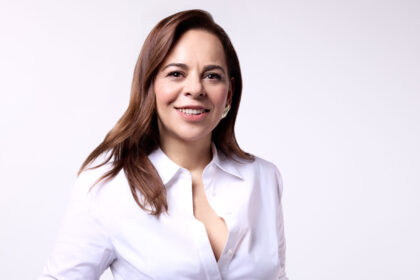





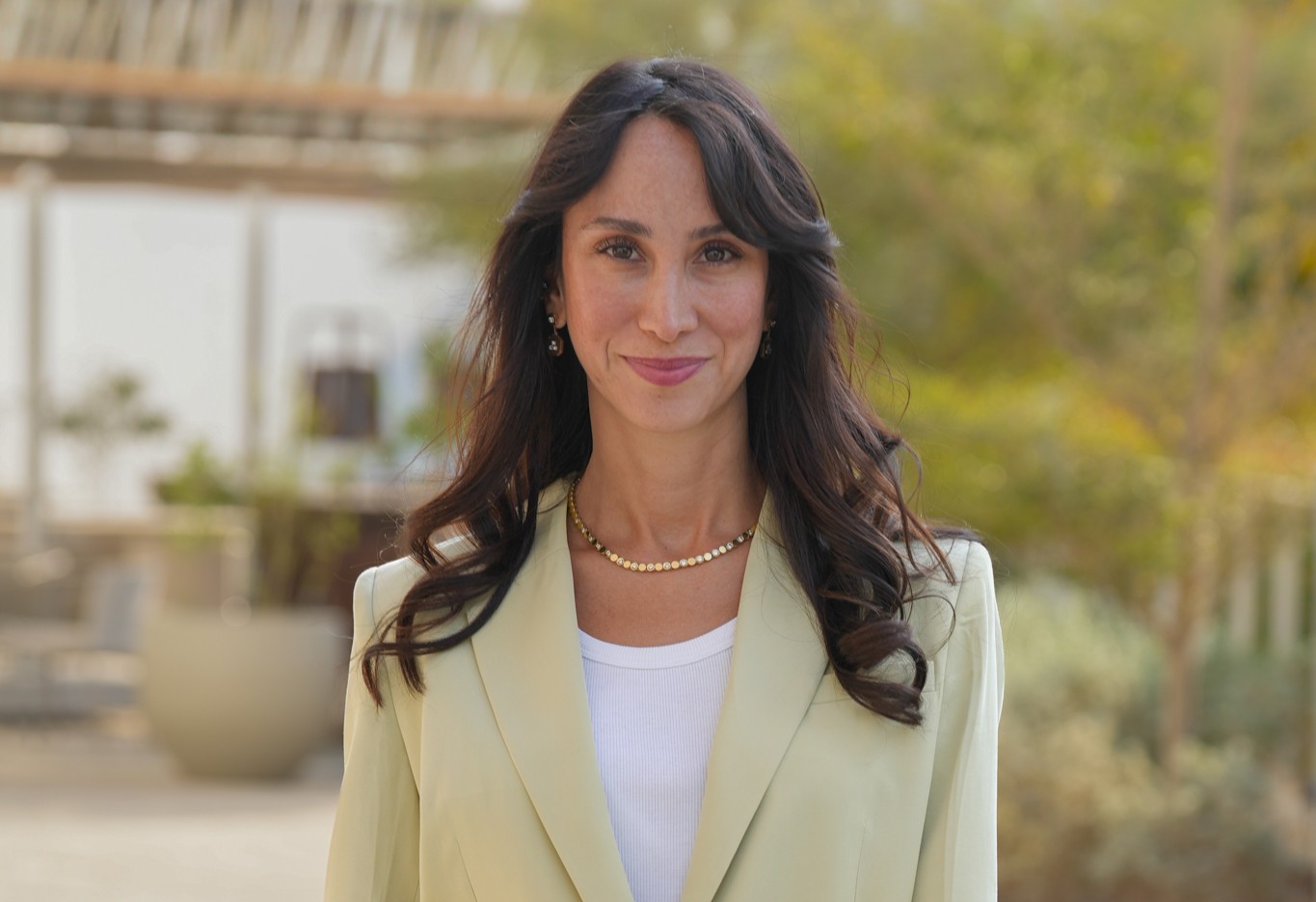
O3 KSA’s driving force behind the adaptation of Turkish dramas, O3 KSA Managing Director & Executive Producer Irmak Yazım, talks about the advancement of her career, details about the sector and the secrets of adaptation processes.
O3 KSA was established around three years ago by one of the leading media groups in the MENA region, MBC Group, to boost premium TV show production in Saudi Arabia. As viewing habits changed, demand for local content with high production values increased rapidly, and Türkiye became an important reference point in this transformation.
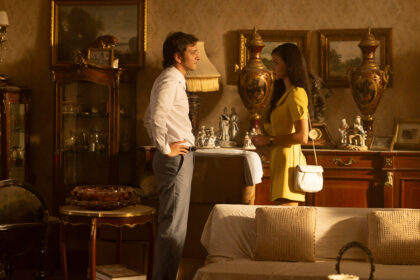
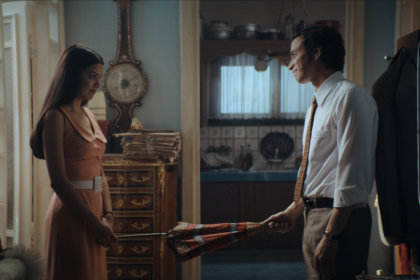
Iconic Turkish productions like Evermore (İstanbullu Gelin) and Time Goes By (Öyle Bir Geçer Zaman Ki) were adapted to the culture of the region and met audiences in Saudi Arabia and across the MENA region.
We sat down with the key figure behind these projects O3 KSA Managing Director & Executive Producer Irmak Yazım and discussed the production process of premium adaptations, creative teams of Turkish and local professionals and changing expectations of viewers in the region.
First, could you tell us a bit about yourself? How did you start in the industry, and how has your career evolved over the years?
I started out while I was studying Film and Television at Istanbul Bilgi University, working as an editorial assistant on Siyaset Meydanı at Show TV.
After my graduation, I started working at Kanal D’s programming department. At that time, Kanal D and Star TV were part of the same group, so I worked both on Doktorum at Kanal D and on several in-house productions at Star TV. About six months later, I moved to Kanal D’s drama department, where I had the chance to work with incredibly valuable people such as İrfan Şahin, Pelin Diştaş, and Lale Eren. It was one of Kanal D’s strongest periods, and I was really lucky to work there. I worked on many major titles such as Time Goes By, Forbidden Love, Leaf Cast, Bandits, and Back Streets. Kanal D was truly like a second school for me.
After working for five years in the drama department, I felt the need for a change and wanted to move closer to cinema and the set side of the business, which was what I had studied. Most people start out on sets and later move to a TV channel, but in my case, it was the other way around. After that, I worked freelance for about five years, taking on roles such as executive producer assistant and production coordinator across a wide range of projects. During this period, I worked on Magnificent Century Kosem, several feature films, including Deli Ormanlı, Git Başımdan, and Damat Takımı, and spent four seasons working with O3 Medya on The Protector, Netflix Türkiye’s first original series.
Later on, when beIN CONNECT began producing local originals, I joined the company as a drama coordinator. After my journey in beIN CONNECT, I joined O3 Medya. For the past five years, I’ve been working at O3 Medya as a general manager and producer. This chapter began with projects such as House of Lies, Last Summer, and Runaway, after which I took on responsibility for O3 Medya’s Arabic drama productions in Türkiye. When our work in Saudi Arabia began, we established O3 KSA, O3 Medya’s Saudi subsidiary. I took on the role of general manager there, overseeing all series and film productions, a position I continue to hold with great enthusiasm.
You are producing premium dramas in Saudi Arabia. How did the O3 Productions KSA journey begin? When and why was it established, and what needs or goals led to its launch?
The O3 KSA journey began around four years ago, when our partner, MBC Group, asked us to start producing premium Saudi dramas in Saudi Arabia. MBC Group has been a partner of O3 Medya for over a decade and was long based in Dubai. At the time, we were producing what we referred to as pan-Arab series in Türkiye, Syrian, Lebanese, and Iraqi dramas, working closely with regional talent, while also adapting a number of Turkish series for the Arab market. Projects such as İstanbullu Gelin (Arous Beirut), İyi Günde Kötü Günde (Ala Al Helwa Wa El Morra), Binbir Gece (Al Thaman), Beni Affet (Heera), and Kiralık Aşk (Lobbat Hob) were all part of this collaboration.
When MBC moved its operational headquarters to Riyadh, a strategic decision was made to produce Saudi content locally, in Saudi Arabia, and this is when the first request came to us. This led to the establishment of O3 KSA in Riyadh, under the vision and leadership of our CEO, Saner Ayar. I have been living in Riyadh for more than three years now, and together with our team, we continue to produce feature films as well as local series and adaptation projects. This process has allowed us to engage more closely with the region’s stories, while further strengthening our approach to premium drama production within the fast-evolving Saudi market.
How would you describe your leadership role at O3 Medya KSA?
I would describe this role as one that goes beyond producing, functioning as both a creative and an operational bridge. My focus is not only on delivering projects, but also on contributing to a proper understanding and representation of Saudi culture, accurately reading the dynamics of the market together with the team, bringing local talent and international teams together, and supporting to build a strong, long-term structure.
One of my most important responsibilities is to create a free and secure working environment where team members coming from Türkiye and different parts of the world can carry out their work in the way they intend, while also establishing a shared ground where local teams feel a true sense of belonging. We try to share our own experience and know-how with local teams as much as possible, while making a conscious effort to adapt to their established ways of working. This is a very delicate balance that needs to be maintained through mutual respect. One of our most critical responsibilities is to build a common language, where everyone brings something from their own culture, without harming or overlooking the values of the other side.
In order to guide our teams in the right direction, provide the right resources and working environment, it was crucial for us to first gain a clear understanding of the country itself, its cities, culture, habits, as well as content and production expectations. This position is a multi-layered one, extending from the smallest on-the-ground details to strategic decision-making at the table. At every stage, we work to establish a shared vision and, together with a team coming from different geographies and cultures, produce content that can reach wide audiences.
In the long term, I want to contribute as much as I can to our company’s goal of positioning Saudi Arabia not only as a regional production center, but also as one of the new focal points of international storytelling. It is very important to me that the work we are doing today becomes part of the foundation of a growing industry in the region, and that it contributes to a sustainable production culture that future local generations can build on.
For me, leadership at O3 KSA means both carrying the trust and responsibility of the institution I represent, and bringing the region’s stories to life in the most accurate way, at international standards and with full respect for local sensitivities.
How do production processes work at O3 KSA? Could you tell us a bit about the journey from story development to broadcast?
In terms of how things operate, the process is quite similar to the relationship between production companies and broadcasters in Türkiye. However, the project development phase is more layered. First, we try to select the right content, stories that are both culturally appropriate for the region and able to meet the expectations of Saudi audiences. We then restructure the story so that it aligns with today’s storytelling and Saudi culture. At this stage, we also reduce the longer episode durations typical of Turkish dramas to a 42-minute format.
This development phase is a long and very meticulous creative process, involving our director, teams, channel executives, Turkish and Saudi scriptwriters, and especially our culture consultants. Once we are fully confident in the script’s flow, dramatic strength, and cultural compatibility, the project goes into the preparation, production, post-production, and broadcast stages.
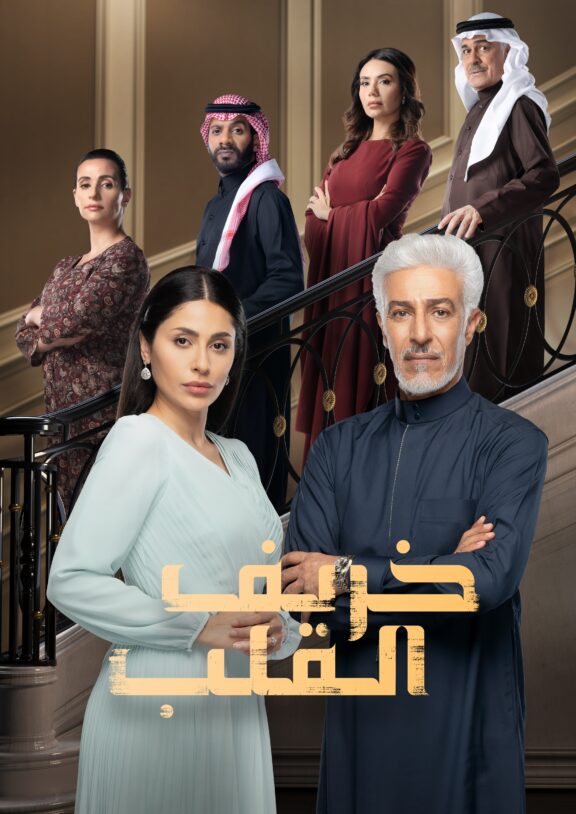
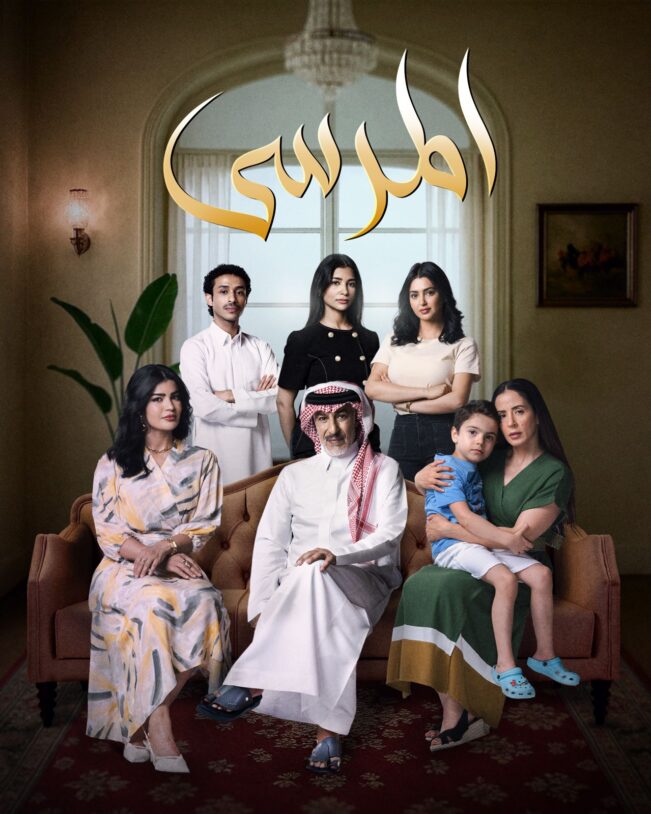
For some of our projects, we complete the entire season before the launch. Our first series, the Korean adaptation Autumn in My Heart (Khareef Al Qalb), is a good example of this. In some other projects, production and broadcast run simultaneously; Time Goes By (Al Marsa), which is currently both in production and on air, is an example of this model.
Another important thing is that our teams consist of professionals coming from both Türkiye and different countries across the Arab region. For this reason, the creative process also includes script translations between Turkish and Arabic. As a result, each project becomes a multi-layered process where cultural adaptation, creative work, and operational coordination are carried out together.
In recent years, there has been a serious level of investment and transformation in premium drama production across the MENA region. As someone who has experienced this shift from very close range, how would you define this change?
The transformation we have been experiencing in the MENA region in recent years is not simply an increase in premium drama production; it is a restructuring of the entire industry in cultural, economic, and creative terms. As one of the people witnessing this change most closely, I can say that the region is no longer just a geography that consumes content, but is becoming a new center that produces stories for the world.
The main reason of this transformation is that local stories have begun to find a global language, and international standards have been integrated into production processes. While infrastructure, technical teams, and studios are developing on one side, the growth of local talent and the formation of a culture of working together with global teams have created a significant shift on the other. And investments in premium drama have acted as a catalyst in strengthening this ecosystem.
I see this process as a creative golden age in which the MENA region is rebuilding its own identity. This is because it is no longer only about producing large-scale projects; a long-term industry is being constructed. A level of collaboration among countries, platforms, and producers that previously did not exist has emerged. Story development disciplines, production processes, and audience analysis are now operating on a much more professional foundation.
In my opinion, the most valuable aspect of this transformation is that hundreds of powerful stories waiting to be told in the region are now beginning to be produced at a quality that meets global standards and can reach audiences around the world. This represents not only economic growth, but also the rise of cultural self-confidence.
What were the main creative and operational decisions behind the strong response to Al Marsa?
I believe that Time Goes By is, at its core, a story with very strong and universal foundations. Even though there are cultural differences, emotions are always in common: family bonds, parental love or the lack of it, the world of children, jealousy, betrayal, and disappointment. These themes connect with audiences in every geography.
At the heart of Al Marsa’s strong reception is the way we retold this powerful story without harming Saudi culture, and instead by touching its emotions. As a team, we aimed to reflect the emotional depth of the story in its most sincere form, both in costume and art design, as well as in the overall directing approach. Through our director’s detailed and sensitive work with the actors, the characters’ emotions were built very carefully.
By removing narrative elements from the original story that were not compatible with Saudi culture and placing a stronger emphasis on family drama, I believe we created a genuine structure that closely aligns with family values in Saudi Arabia. For me, the most important factor behind Al Marsa’s success was precisely this emotional honesty combined with cultural sensitivity.
What does To My Son’s journey at the Red Sea Film Festival mean to you?
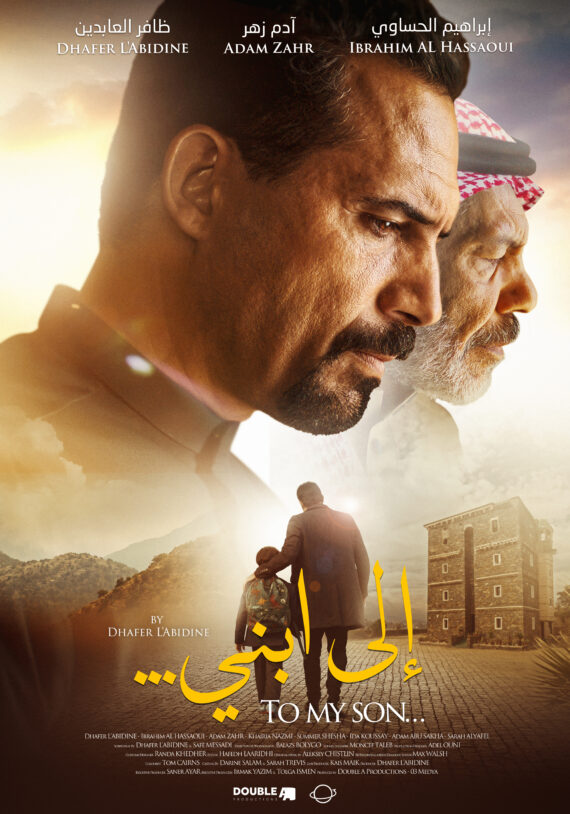
Of course, it carries a very special meaning, because this film was our first feature film experience in Saudi Arabia. We worked with a very valuable team, together with the Tunisian director and actor Dhafer L’Abidine. Having a Tunisian actor portray a Saudi character was not something that audiences could easily accept at first from a cultural point of view. In the region, and especially in Saudi Arabia, audiences still place great importance on an actor’s nationality and dialect. No matter how accurately an actor works on the dialect, they may still see the actor’s real-life identity as a barrier within the story. We encounter similar situations even today in our series; for example, when we are telling a story set in Riyadh and want to cast an actor from Jeddah in a role, this can still create debate.
Therefore, trying to overcome these cultural perceptions in our very first film was a process that was both challenging and instructive for us. Our team was based in Riyadh, but we shot the film in Abha. This was the first production we carried out in Saudi Arabia; it was the first film we made while preparing for our series projects. Because it was both our first feature film and our first production in the country, it carried a very distinct emotional meaning for us.
In addition, To My Son had a narrative inspired by Babam ve Oğlum, a film that we personally value very much. Alongside a mostly Tunisian crew, we worked with professionals coming from Türkiye and from different parts of the Arab world. This intercultural collaboration also made the film more meaningful for us.
The fact that To My Son met audiences in theaters and had its world premiere at the second edition of the Red Sea Film Festival was a very proud moment for us. It was both a professional turning point and, emotionally, a project that felt like our “first-born child.” For this reason, To My Son’s Red Sea journey was an unforgettable and very valuable experience for us.
What can you tell us about O3 KSA’s upcoming international collaborations?
We are currently developing a large-scale feature film that tells the life story of Khalid ibn al Walid, one of the most influential figures in Saudi Arabian and Islamic history. Alongside this project, we are also working on an original digital series co-produced between Egypt and Saudi Arabia. Both projects involve collaboration with highly experienced professionals from all around the world and established directors from Hollywood. Through these partnerships, we aim to bring the region’s strong and deeply rooted stories to global audiences, while at the same time creating a genuine two-way creative exchange by bringing internationally seasoned professionals into the region.
What is most exciting for us is the opportunity to expand our scale within the industry while producing work that meets global standards and remains culturally grounded, authentic, and respectful of its roots. Being part of this process and contributing to such a significant creative experience is a source of great pride for us. Our ultimate goal for the end of this project is to develop award-winning projects that originate in Saudi Arabia and travel internationally, in close collaboration with Saudi crews and local content creators.
When you compare Saudi Arabia’s rise in drama production with Türkiye, what are the most significant differences?
The most evident differences are rooted in the two countries’ histories of storytelling, the level of maturity of their creative ecosystems, and the pace at which their industries are developing.
Türkiye has been an established global drama producer for nearly 20 years. It has a developed creative ecosystem, a well-defined production model, and an extensive international distribution network. For this reason, the industry in Türkiye is more settled and has a structured framework, with established workflows and accumulated know-how.
On the other hand, Saudi Arabia has a much younger ecosystem that is expanding very rapidly. One of the clearest differences is the speed of growth and the scale of investment. While the sector is still transitioning from an early development phase toward a fully professional industry, substantial investments are being made simultaneously in content production, talent development, and physical and technical infrastructure. Compared to Türkiye, this results in a more flexible environment that is open to new approaches and capable of moving large-scale projects forward in a relatively short time.
Another important difference is that content diversification and cultural transformation are progressing simultaneously. The entire country is working toward “Vision 2030” with a strong sense of commitment and belief. The core objective of this transformation is to position the country as a modern center for tourism and commerce across multiple sectors by 2030. Naturally, this process is accompanied by significant socio-cultural changes in everyday life. Traditional practices and dress norms are gradually evolving, and it is our responsibility to reflect these changes accurately in our work. From a content perspective, Türkiye’s melodrama tradition and established narrative formats have already been refined over a long period of time. In Saudi Arabia, however, dramatic storytelling is evolving alongside social transformation, creating space for new genres, new character types, and stories that previously had limited or no screen presence. This results in a creative environment that is very new and brave.
Finally, the opportunity Saudi Arabia presents today lies in the clear and deliberate adoption of a policy aimed at aligning local stories with international production standards. As a result, the sector is developing through collaborations with Hollywood-based creative teams, regional partnerships, and targeted investments in technology and infrastructure. While Türkiye’s industry can now be described as mature, Saudi Arabia represents an emerging market that is rapidly moving toward integration with the global industry.
Could you talk a bit about how the audience profile in the region has changed? What types of projects are now in higher demand?
Audience preferences across the region have changed noticeably over the past few years, and that shift is still continuing. With Saudi Arabia’s broader opening, the high media consumption of a young population, and the growing influence of streaming platforms, viewers have become more selective, consume content more quickly, and increasingly evaluate local titles in comparison to global productions.
Where traditional melodramas and longer-form storytelling used to dominate demand, there is now a stronger interest in projects that feel more contemporary in tone, more cinematic, tighter in pace, and more diverse in genre. Premium dramas, historical epics, real-life inspired stories, youth dramas, comedy, psychological thrillers, and higher-budget action titles are among the formats attracting attention.
Another major shift is the expectation of authenticity and local specificity. Audiences are not only looking for strong narratives, but they also want to see content that reflects their society, identity, and present-day Saudi Arabia accurately. As a result, demand is increasing for projects with deeper character work, accurate cultural details, and production standards aligned with international benchmarks.
At the same time, international-level production quality has become a baseline expectation. This encourages a focus on premium drama, larger-scale projects, and collaboration with internationally experienced teams. In short, the audience is younger, more demanding, and more globally aware, and content strategies are being adjusted accordingly.
As a Turkish female leader working in a fast-growing market like the Middle East, what challenges and turning points have you encountered?
Naturally, this experience comes with certain barriers. For me, however, the most defining turning points were the moments when I realized that many of these barriers could be addressed over time through understanding the culture, adopting the right approach, building trust, and showing genuine respect for cultural sensitivities.
In the early stages, particularly when we first began producing content in Saudi Arabia, it was not easy to establish ourselves within both a new market and an industry shaped by predominantly male dynamics. However, as we increasingly prioritized listening, understanding local perspectives, and building mutual trust, a gradual transformation began to take place. The most significant turning point for me was when I started to be seen not as an outsider, but as a partner committed to telling these stories accurately and with care.
Today, I can say very clearly that the region is becoming increasingly open and supportive of female leadership. Over time, initial barriers tend to give way to strong professional relationships, mutual respect, and a shared motivation to create together.
For me, the most meaningful outcome has been having the opportunity to take an active role in this transformation and to be part of a process that brings Türkiye’s creative experience together with Saudi Arabia’s emerging potential at the same table.
What kind of future do you see for female producers in the region?
I believe the future looks more promising and stronger than ever. In recent years, the content production ecosystem in Saudi Arabia and across the Middle East has been undergoing a rapid transformation. This shift is naturally supporting greater visibility for women in the industry, along with increased influence and access to decision-making roles.
In Saudi Arabia in particular, cultural policies, the momentum of a young population, and substantial investment in the sector have led to a growing number of projects in which women are taking leadership roles within the creative process. The perspective women producers bring to storytelling, such as empathy, attention to detail, character development, and cultural awareness, aligns very closely with the requirements of contemporary premium drama. As a result, the industry is beginning to view female leadership not as an option, but as a necessity.
In addition, the expansion of international partnerships is creating broader opportunities for women producers to participate in global decision-making platforms. This increases visibility and further strengthens the ability of female leaders to deliver projects that meet international standards.