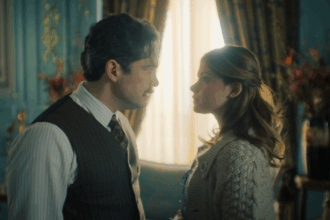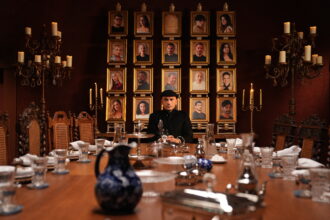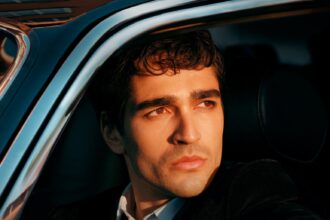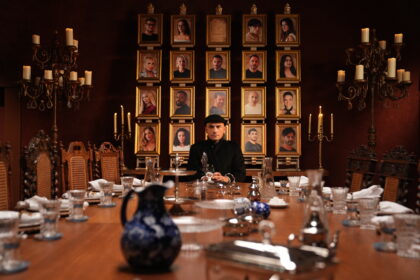







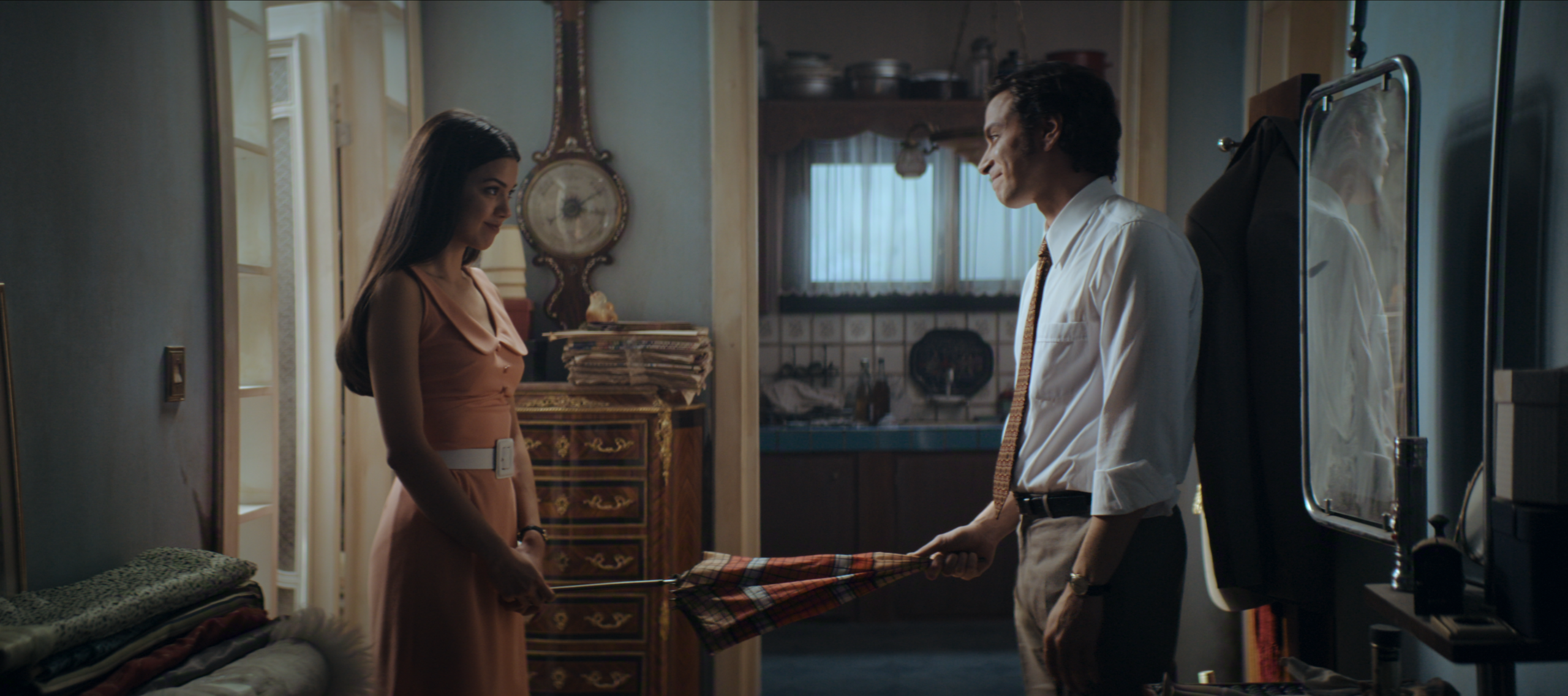
As Episode Magazine we spoke with the stars of The Museum of Innocence, Selahattin Paşalı and Eylül Lize Kandemir, about the series for our February 2026 issue.
You can prepare and brainstorm all you want, these aren’t enough. You have to put your heart into it. That’s why our biggest luck was having Zeynep Günay. If we are able to succeed that’s because of how she guides the actors as a director, if we aren’t then that is because of us. That’s how I see it. Kemal is the most complex and layered character I’ve ever played. Zeynep Günay helped uncover the personas within him, things I couldn’t see on my own.”
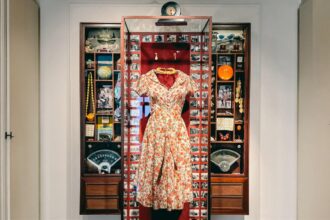
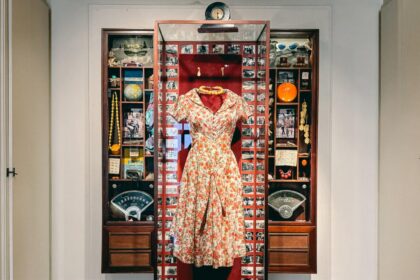
The Museum of Innocence is one of the most widely debated novels by our Nobel Prize–winning author Orhan Pamuk. First published in 2008, The Museum of Innocence is at once a love story and a period piece deeply rooted in Istanbul. Centering on the Westernization journey of Istanbul’s bourgeoisie in 1970s Turkey, patriarchal norms, and the tensions between modernity and tradition, the novel stands out through its metafictional structure, offering a postmodern reading experience. Built around a museum and the objects collected by its protagonist Kemal Basmacı, the novel’s obsessive love narrative has long divided readers.
For years, there was an ongoing debate about whether any of Orhan Pamuk’s novels could be adapted for the screen. The author was known to be sensitive toward adaptations. One of his novels has finally been adapted into a Netflix series. It is clear that The Museum of Innocence will be one of the most talked-about Turkish productions of 2026. I had the pleasure of conducting an in-depth interview with Selahattin Paşalı and Eylül Lize Kandemir, who share the leading roles in the series. Enjoy the read!
It’s a busy day today, with interviews and photo shoots. There must be a different kind of excitement as well…
Selahattin Paşalı: This is my third project with Netflix, and still, just being here is exciting. Projects like this feel like our children. There’s also a certain fear that comes with presenting it to the public for the first time. It’s like an emotional cocktail, everything mixed together.
The Museum of Innocence stands out among recent Turkish dramas I’ve watched. As an adaptation, it’s extremely well-written and respectful to the source material. Being part of the first Orhan Pamuk novel he allowed to be adapted, what does that feel like? How did the process unfold for you?
Eylül Lize Kandemir: It’s an immense joy and a great source of pride, but also an enormous responsibility. I think all of us felt that responsibility to our core throughout the process. We did countless screen tests and worked incredibly hard. I believe I did around fourteen auditions for this role. Selahattin and I also did many test shoots together long before stepping onto the set.
From the very beginning, it was a project prepared with great care and attention to detail. The shoot itself carried the weight of the story. The characters are heavy, the story is heavy… So I can’t say it was an easy set; it was quite challenging, but it had to be. It was a set where we had to fully inhabit our characters.
From the moment I picked up the novel, I desperately wanted to be Füsun. I imagined it constantly. I went through very intense emotions. Normally, I try to restrain myself to avoid disappointment, but with this project, I simply couldn’t. Thankfully, here we are today.
Selahattin Paşalı: I made a promise to myself from the start. If I managed to carry this role successfully, I’d like to congratulate myself one day. I tried not to sanctify the project or put it on a pedestal, because I was afraid of being crushed under its weight. Instead, I aligned my mind and soul accordingly. Of course, deep down, I felt the responsibility of being part of something this significant, and that brings its own sense of pride and joy. But my main goal was not to be overwhelmed by it. I tried to approach it like any other project and needed to remain calm.
I actually read The Museum of Innocence after the audition, I hadn’t read it before, so I didn’t know. One of my dreams was to work with Zeynep Günay, and our paths crossing excited me greatly. I believe she helps all of us grow as actors. We have some expert actors on this series. I am sure even they must have discovered new perspectives through her. As an actor, going on this journey with Zeynep Günay was a reason to be excited by itself.
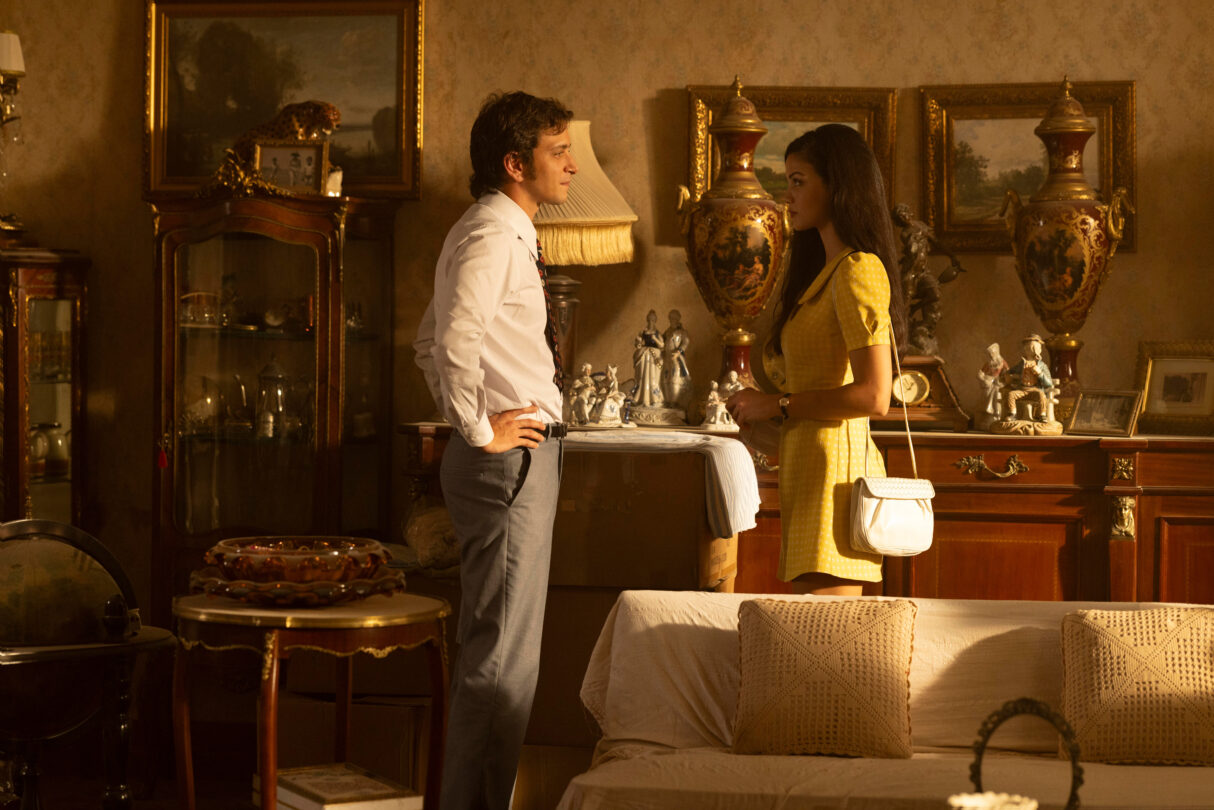
While watching the series, I strongly felt that Orhan Pamuk was closely involved. Did you meet him? Was he part of rehearsals or filming?
Eylül Lize Kandemir: Yes, we met him on set. He was in the US during the rehearsal and preparation period. But on set, his guidance was invaluable. He was in constant communication with our director Zeynep Günay, so I can say we always felt his presence.
Selahattin Paşalı: We truly collected wonderful memories. Even when he wasn’t physically present, when he did visit the set, he had lovely conversations with us.
The Museum of Innocence‘s intertextual structure and its portrayal of an obsessive love make it very adaptable. While reading, you inevitably visualize Kemal, Füsun, and the others. I can easily say that both of you carried your characters brilliantly. How did you prepare for your roles?
Selahattin Paşalı: I’m asked this a lot, but I honestly don’t know how to answer it, because once you step onto the set, you have to put your heart and soul into it. It’s not something easily explained. Also Zeynep Günay has a very particular system; she doesn’t like it when you act too intellectually. She expects you to open your heart rather than rely on your mind.
In a way, the performance needs to be both unplanned and completely real. Of course, this doesn’t always happen. That’s why I think you find the role by playing it a bit. Preparation at the table is important, of course, but walking in those costumes, standing in those sets, touching those objects, that’s where it truly comes alive.
You can prepare and brainstorm all you want, these aren’t enough. You have to put your heart into it. That’s why our biggest luck was having Zeynep Günay. If we are able to succeed that’s because of how she guides the actors as a director, if we aren’t then that is because of us. That’s how I see it.
Kemal is the most complex and layered character I’ve ever played. Zeynep Günay helped uncover the personas within him, things I couldn’t see on my own.
Eylül Lize Kandemir: I completely agree with Selahattin. First of all, Zeynep Günay’s contribution to us was immense. What she brought to The Museum of Innocence as a director is on an entirely different level, and I really need to emphasize that.
On the other hand, this is the first time I’m playing a character who is this deep, this complex, and not immediately understandable. That requires a completely different approach. I discovered things along the way, and gradually, it settled.
Before stepping onto the set, Zeynep Günay advised me to keep a memory notebook, a diary, from the character’s perspective. I sat down and started writing, using my imagination, going all the way back to Füsun’s childhood. I paid close attention to constructing all the traits that make Füsun who she is. In a way, I tried to understand the character through this process.
During actor rehearsals, the exercises we did without speaking, just through eye contact, were incredibly useful on set. Throughout the entire process, I also had an acting coach who never left my side: Bala Atabek. The work we did together was extremely beneficial. We worked from the inside out, trying to locate where Füsun’s emotions reside. That was our path.
Additionally, there were moments that required me to draw courageously from my own emotions and life experiences, especially for Füsun. It was a very comprehensive, very challenging, but also incredibly instructive and long process.
I love Füsun with all her pros and cons. I’ve accepted her as she is. So I wouldn’t want to change any of her traits. But there is one aspect of her that I truly admire: she says a lot through her silence, she’s incredibly strong in her silence. Before meeting Füsun, I used to think no one could be this silent and still exist so powerfully.”
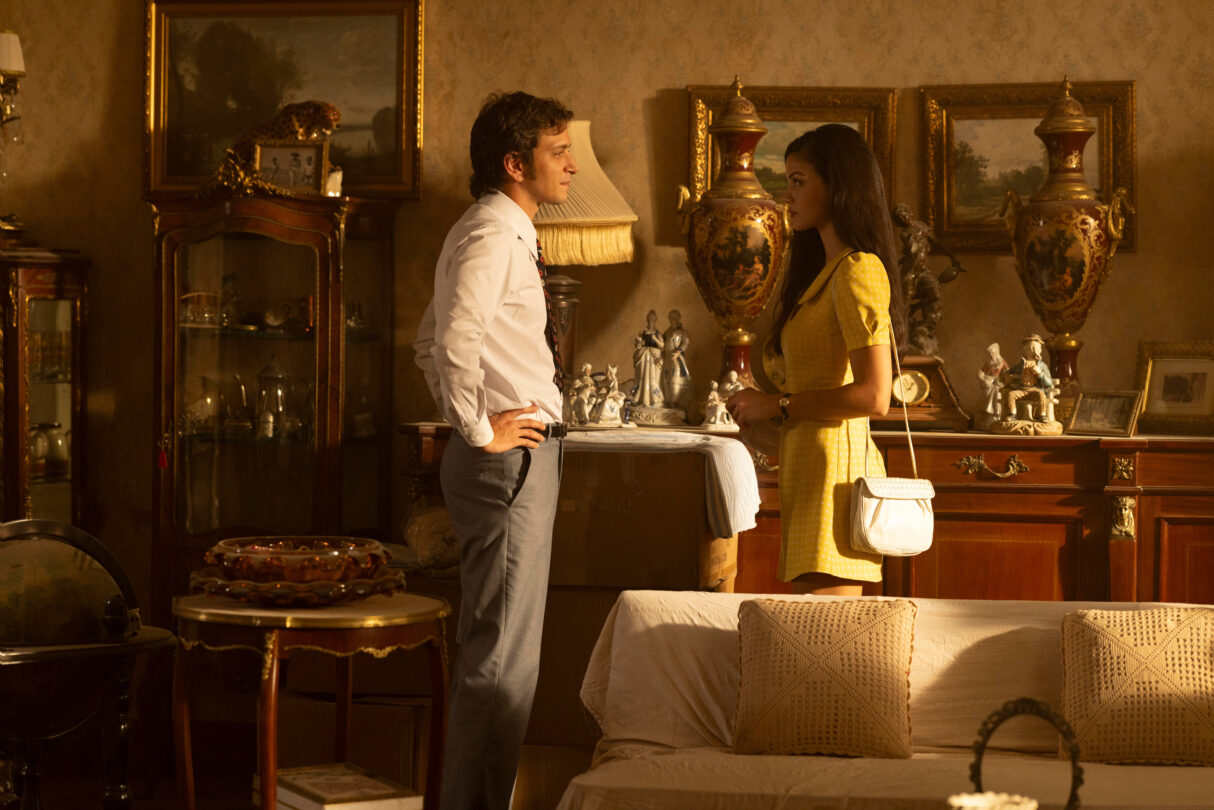
As a novel, The Museum of Innocence is, above all, a meditation on love, but it approaches this from a more masculine perspective. The protagonist, Kemal Basmacı, is a confused character as the son of a bourgeois family striving for Westernization. He is not a conscious villain, yet he is also alienated from the social circle he belongs to, constantly weighing his emotions. In the series, his psychological state, masculinity crises, and the emotional devastation he causes women are conveyed brilliantly. What would you like to say about this?
Selahattin Paşalı: I completely agree. I think the age at which you read The Museum of Innocence, the time in your life, and the experiences you bring to it drastically change your perspective. Yes, it’s written from a male point of view, and we follow a man’s inner world, but as you said, Kemal is not a conscious villain.
His longing, his pain, and his conscience place him somewhere else. That’s why I can’t simply label Kemal as “bad.” As the person portraying him, I can’t judge him as good or evil. He certainly has very disturbing traits. He’s obsessive; collecting Füsun’s belongings, following her, pursuing her relentlessly. I can’t defend those actions. But I understand Kemal from a human perspective. What he goes through is truly strange.
When I first got the role, someone asked me how I would play this “monster.” I told them I didn’t see a monster at all. Kemal is the weakest, most flawed character I know, but at the same time, strong enough to emerge from those pains. Not everyone could. That’s why he’s such a multilayered character.
Another intention we had while making this series was to provoke questions. For instance: Is love something that happens to us like a traffic accident? Should Kemal have chosen Sibel’s comfort zone or followed his passion? Kemal’s goodness or evil will be debated through these questions.
Eylül Lize Kandemir: Yes, Kemal makes life difficult for women. (Laughs) In the novel, we see all the women and the entire story through Kemal’s eyes. Therefore, access to the women’s inner worlds is limited; possible, but limited. I think the series differs in this respect. We witness the women’s existence, inner lives, and disappointments. That’s one of the elements that makes the series special, in my opinion.
Your on-screen chemistry is excellent, and there are emotionally intense, very intimate scenes in the series. Did you do any special work together before the shoot?
Eylül Lize Kandemir: I don’t really categorize scenes as intimate or distant. In every scene, we focus on making whatever needs to be real, real. Ultimately, Eylül and Selahattin are not present there, Füsun and Kemal are. We tried to reflect their reality. We had an intimacy coordinator who helped us with those kinds of scenes. I think we also benefited greatly from that.
Selahattin Paşalı: Within a framework of trust and respect, shooting emotional and intimate scenes isn’t actually that difficult, and it shouldn’t be. It’s one of the necessities of our job. Those scenes serve the story and the characters. Those scenes were necessary to convey the passion between Kemal and Füsun. Each one served a purpose and created meaning.
If you could change something about your characters, what would it be? Or are there traits you admire in them?
Eylül Lize Kandemir: I love Füsun with all her pros and cons. I’ve accepted her as she is. So I wouldn’t want to change any of her traits. But there is one aspect of her that I truly admire: she says a lot through her silence, she’s incredibly strong in her silence. Before meeting Füsun, I used to think no one could be this silent and still exist so powerfully. Her silence never places her in a passive or insignificant position. She has a very unique aura, she exists through silence. In that sense, there’s something magical and mysterious about her that deeply fascinates me.
Selahattin Paşalı: I wouldn’t change anything about Kemal either. Since I try to understand him on a human level, I don’t judge him. The trait I admire is something we actors care deeply about: emotional continuity. Kemal has none of that. He has an extremely volatile emotional state, constantly swinging between extremes, and he doesn’t really care about the consequences. Honestly, I envy that trait.
I also really liked the overall cast harmony. Both main and supporting roles were perfectly cast. What was the casting process like for you?
Eylül Lize Kandemir: We were partially aware of the casting choices. I knew who would play Kemal and Feridun, but I learned about the rest of the cast later. It’s truly an excellent ensemble, and working with such a cast was very exciting.
Selahattin Paşalı: We found out step by step. After meeting Eylül, they told me your father would be played by Bülent Emin Yarar and your mother by Tilbe Saran. Hearing those names got me really excited. Then there’s Ercan Kesal… Putting together such a cast is extremely difficult. But when it’s Orhan Pamuk’s The Museum of Innocence and the director is Zeynep Günay, people want to be there and contribute.
The Museum of Innocence will premiere on Netflix on Feb. 13.