





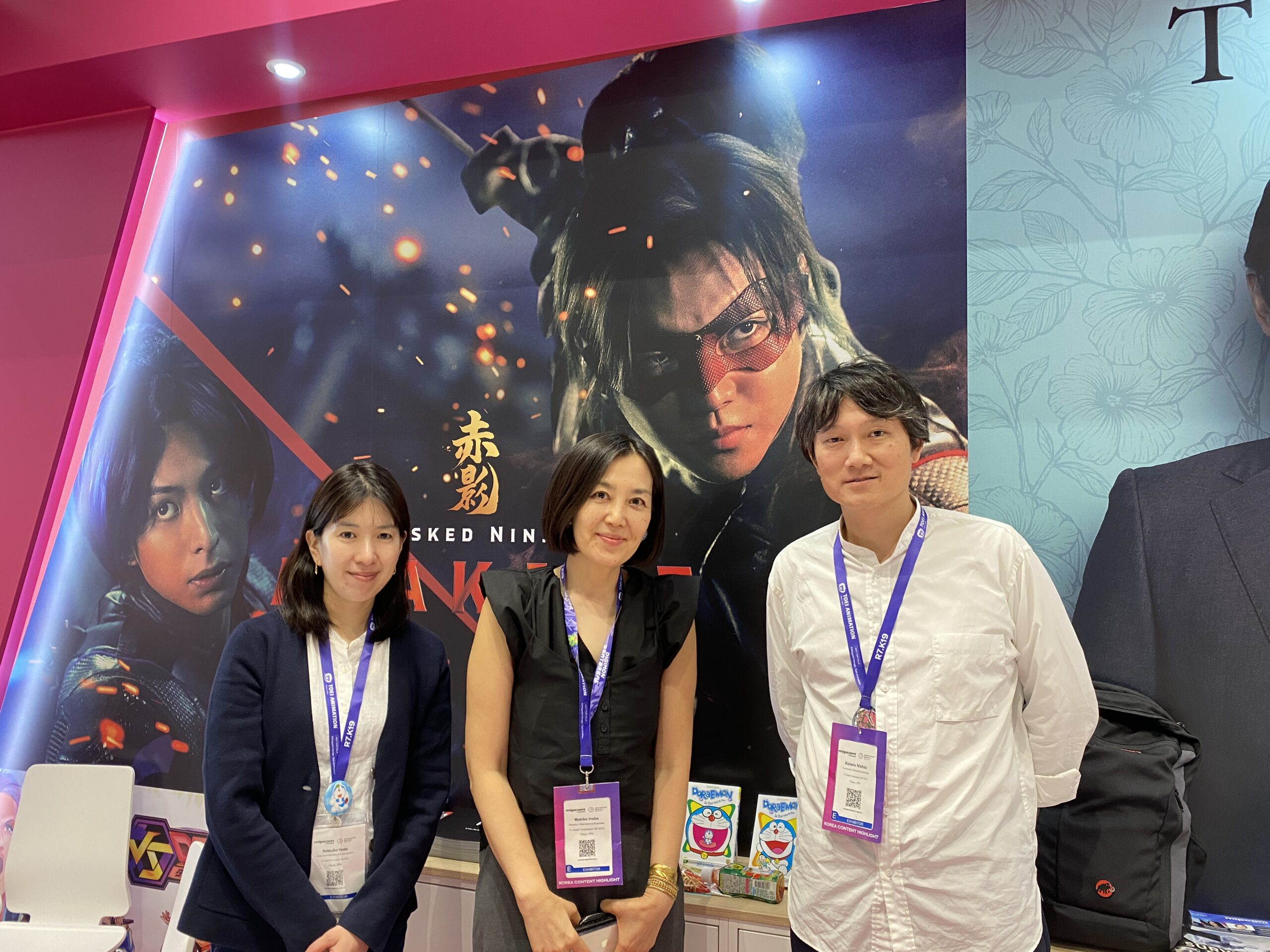
Ahead of ATF 2025, we met with TV Asahi’s Makiko Inaba, Setsuko Yoda, and Kotaro Nishio at MIPCOM in Cannes to discuss the company’s latest highlights.
- From their co-production ventures and format showcases to the relaunch of Doraemon in France, the team shared insights into TV Asahi’s international strategy and their expectations for the upcoming Singapore market.
- “When it comes to scripted and unscripted content, there’s more international interest in unscripted formats right now. Everyone’s looking for new kind of formats. And Japan is one of the countries that has fresh, unique ideas. So it’s natural that we’re getting attention in that space.”
From their co-production ventures and format showcases to the relaunch of Doraemon in France, the team shared insights into TV Asahi’s international strategy and their expectations for the upcoming Singapore market.
As we approach the end of 2025, how would you summarize this year for your company?
We did our first co-production with a U.S. producer; it’s an unscripted format called Songs vs. Dance. We’ve been working toward this kind of co-production for the last few years, because it’s not just about timing or distribution anymore. We also co-produced a drama series with a Korean company, an animation project with an Indian company, and a BL drama with a Thai partner. That Thai project was our first time doing a co-production in that genre. We teamed up with U.S. producer Craig Plestis, who is the main producer for the American version of The Masked Singer.
So, we’ve been involved in several co-productions across different genres and countries. That’s been our main challenge from 2024 to 2025. Also, as you might know, the Japanese fiscal year is a little different, it starts in April and ends in March, so we’re technically in the middle of our 2025 year. But yes, production-wise, that’s been one of the biggest challenges we’ve taken on.
When it comes to scripted and unscripted content, there’s more international interest in unscripted formats right now. Everyone’s looking for new kind of formats. And Japan is one of the countries that has fresh, unique ideas. So it’s natural that we’re getting attention in that space.
How do you see the current appetite for Japanese content, formats, and storytelling in the international market?
Without question, it’s animation, as everyone knows. But I think Japanese animation has grown so much that it’s already a big global category on its own.
“When it comes to scripted and unscripted content, there’s more international interest in unscripted formats right now. Everyone’s looking for new kind of formats. And Japan is one of the countries that has fresh, unique ideas. So it’s natural that we’re getting attention in that space.”
What were your highlights at this year’s MIPCOM?
We had two main focuses. First, our unscripted format team gave a presentation during a pitch event on Monday. We pitched one title there, but the team actually brought around ten new ideas that will continue to be developed.
The second highlight was Doraemon. We launched a new French dub and reintroduced it to the French market. Doraemon had been on air in France about ten years ago but had disappeared for a while, so we started relaunching it last year, and it’s been quite successful.
This year, we created a new French dub, the first in 14 years, and even hosted a small tea party with the new voice actors. So, from the unscripted side and the animation side, those were our two main goals for MIPCOM this year.

Could you also talk a bit about your long-running series AIBOU? How would you describe the series?
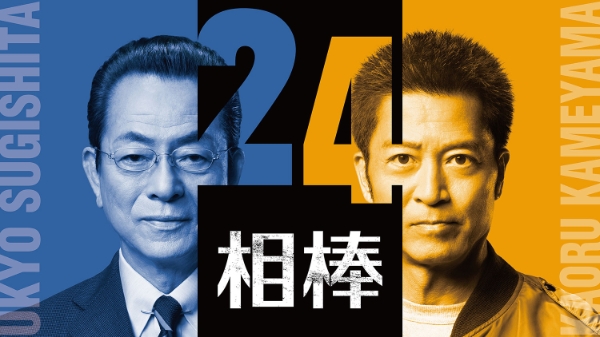
Actually, the new season just started today, it’s season 24, with the first episode airing now. AIBOU is a very long-running series in Japan; there’s really nothing else like it here.
The main character is very well developed, intelligent, active, and the dynamic between the two leads makes the show work so well. That chemistry helps them solve cases or get out of tricky situations, and it’s a big part of the drama’s success.
Also, the writers are excellent. They’ve written hundreds of episodes, often inspired by real crime stories from newspapers and other sources. There’s a main scriptwriter, but several others work as a team, and each episode feels unique. They review each other’s scripts, which keeps the quality high.
The two pillars of the show’s success are the main characters, one constant lead, and the strong crime storytelling. The team has produced nearly 500 episodes, all different from one another. I don’t know how they manage to keep every episode fresh, but they do, always creating new narratives and maintaining the show’s identity.
You’ll be attending ATF Singapore. Could you talk about your expectations for the event and its importance for your company?
We’re planning to bring new series, especially Their Marriage, which aired on Netflix. Our upcoming title will also go to Netflix, we usually have one title with them every season. These are original productions from TV Asahi, and we hope they’ll catch the attention of international buyers. Ideally, someone might say, “This is interesting, can we remake it?” or “Can we adapt this format?” That’s one of the best ways for us to distribute globally.
In terms of distribution, we can’t sell it to other places, but you get the chance to have all the audience watching from every country. So we would like to seek for the chance to sell the format of the script.
There are a lot of Turkish adaptations of Japanese, Korean, and Asian content in Türkiye. How do you see that trend in relation to your catalogue?
Yes, we definitely want to sell. Actually, we haven’t closed any deals with Türkiye yet, but we’re very interested. The Turkish market seems to favor family-oriented and female-led stories. We have many detective dramas or male-led series, but I think Their Marriage could work well in Türkiye. We also have several family-oriented dramas, and I hope some of them will travel to the Turkish market soon.

Lastly, could you share a bit about your company’s priorities for the upcoming year?
We are opening up a new venue around the Tokyo Bayside. As a TV station, we’re not just creating or producing events, sports events, dramas, everything, but, we also want to create IP from live events. It’s like “IP 360” right?
So, we are opening up a new venue that includes a concert hall and live theatres. We already have one in the center of Tokyo, but we’re opening another one in the Bayside of Tokyo. It’s opening at the end of March, and we are preparing many kinds of events and projects that will start with this venue.
I think 2026 will be the year for creating IPs and events for that venue, ones that can maybe travel around the world.
This exclusive interview was featured in Episode Magazine’s ATF 2025 issue.